
Epithele
Epithele
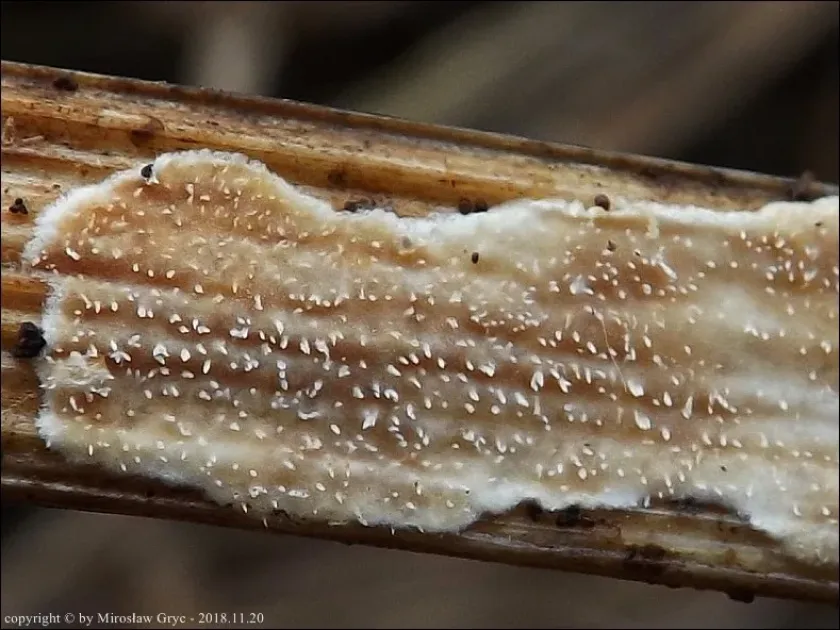
Description
Symptoms
The primary symptom of an Epithele infection is the appearance of thin, white to creamy or ochre-colored patches on the bark of trees and shrubs.
As the infection progresses, these patches develop into a more robust, leathery, or papery crust that is firmly attached to the surface, showing clear signs of fungal colonization.
Local cracks and necrotic areas may form under the fungal growth, indicating that the organism is interfering with the protective tissues of the host plant.
In advanced stages, the underlying wood may appear discolored or darkened, suggesting that the fungus has begun to penetrate deeper into the vascular and structural tissues of the tree.
- Crust-like, leathery patches on bark.
- Discoloration (whitish to creamy) of the stem surface.
- Cracking and localized necrosis of bark.
- Penetration of the fungus into sub-surface wood layers.
Pathogen
Epithele is a genus of fungi within the order of corticioid fungi. In agricultural and forestry terms, it is recognized as a wood-decaying organism that primarily affects the bark and outer layers of woody stems and branches.
The fungus functions as a saprotroph or a facultative parasite, breaking down complex organic compounds like lignin and cellulose, which are essential structural components of the tree's outer layer.
Biological development involves the formation of thin, crust-like fruiting bodies. These structures attach firmly to the host tissue, where they release spores to propagate the infection across new areas.
While often found on dead or decaying wood, the fungus can colonize living plants that have been weakened by environmental stress, poor pruning practices, or previous mechanical injuries.
Identifying this pathogen requires specialized mycological examination, as the physical characteristics of Epithele can often be confused with other common crust fungi found in garden or forest environments.
Conditions for development
The development of Epithele is highly dependent on humidity levels. High ambient moisture in the canopy or within dense, poorly ventilated tree stands provides the ideal environment for its spread.
Prolonged periods of rain or fog encourage the germination of spores, which are then easily dispersed by wind or water droplets across the entire orchard or landscape area.
Mechanical damage is a significant risk factor. Wounds from frost, sunscald, or improper pruning serve as entry points where the fungal spores can easily settle and initiate growth.
Plants suffering from nutritional deficiencies or those growing in drought-stressed conditions exhibit reduced natural resistance, making them significantly more prone to fungal colonization.
Optimal growth usually occurs under moderate temperatures, typically between 15°C and 22°C, which align well with the spring and autumn growing seasons for many woody plants.
Why it matters
The primary impact of Epithele is the gradual weakening of the host plant, as the fungus consumes protective tissue and hinders the natural transport of nutrients through the bark.
Although it does not usually kill a healthy tree immediately, it undermines the plant's structural integrity and leaves it significantly more susceptible to secondary pests and more aggressive pathogens.
For fruit-bearing trees, the presence of this fungus can lead to reduced vigor, lower harvest yields, and poor fruit quality as the plant redirects energy to combat the localized infection.
In ornamental settings, the aesthetic value of trees is compromised by the unsightly patches on trunks and branches, which are visible indicators of a diseased tree.
If left unmanaged, the cumulative damage can lead to the systemic decline of the plant, eventually resulting in the need for tree removal to prevent the spread to adjacent healthy specimens.
Protection
The foundation of effective control is proper orchard management, including regular sanitary pruning to remove infected material and thinning of canopies to improve airflow.
All pruning wounds or accidental mechanical damages must be immediately sealed with protective wound dressings or antifungal pastes to prevent spore entry.
Maintaining strong tree vigor through balanced fertilization—particularly with phosphorus and potassium—helps fortify the tree's bark and increases its natural resistance to fungal invasion.
Preventative applications of copper-based fungicides during the dormant season are highly effective at suppressing fungal spores that may be overwintering on the tree bark.
Regular monitoring allows for the early detection of localized crusts, which should be physically scraped away and treated with disinfecting solutions to prevent the infection from spreading further.
Discussion
No discussions yet — be the first.