
Epipyxis
Epipyxis
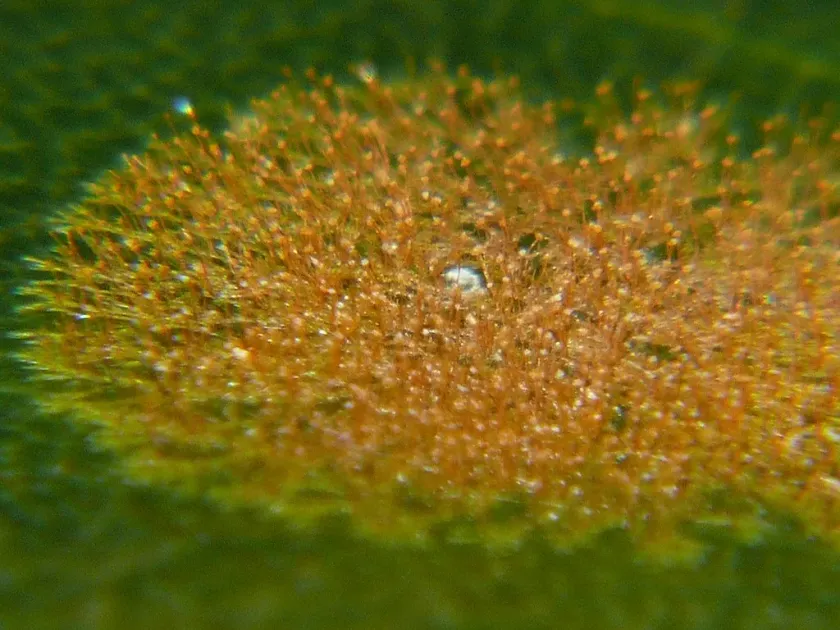
Description
Symptoms
The primary symptom is a visible brownish or yellowish film that develops on the leaves and stems of submerged plants, often feeling slimy to the touch.
Under magnification, the characteristic lorica of Epipyxis are visible, appearing as dense colonies that cover the surface of the host plant tissue.
Infected plants typically show a marked reduction in growth rates, as the thick layer of algae prevents light absorption and inhibits normal photosynthesis.
Severe infestations often result in leaf chlorosis, necrosis, and eventual plant decay due to the constant stress caused by the algal coating.
Visually, the pond or tank may exhibit a murky appearance, and the affected plants lose their aesthetic appeal and vigor compared to healthy specimens.
Pathogen
Epipyxis is a genus of golden algae (Chrysophyceae) that primarily acts as an epiphyte in aquatic environments. These organisms are characterized by their lorica, a protective housing that helps them attach to surfaces.
In terms of biology, Epipyxis are photosynthetic microalgae that thrive in various water bodies, ranging from ponds to controlled hydroponic systems.
While they are a natural part of the aquatic flora, their rapid multiplication creates a condition where they become parasitic in effect, coating other plants and limiting their ability to function.
The lifecycle involves the production of flagellated zoospores, which facilitate colonization of new substrates once conditions are right for rapid expansion.
Understanding the taxonomy and growth cycle of this genus is essential for maintaining healthy aquatic systems and preventing the degradation of plant vitality.
Conditions for development
The development of Epipyxis is strongly linked to high nutrient levels, specifically phosphorus and nitrogen, which trigger algal blooms.
Stagnant water conditions are highly conducive to the proliferation of these algae, as low flow rates allow zoospores to settle and adhere to plant surfaces easily.
Optimal growth usually occurs in cool to moderate temperature ranges, although they can adapt to a variety of environmental conditions if nutrients are plentiful.
A lack of competition from other aquatic organisms often allows Epipyxis to dominate the environment, leading to rapid expansion across all available substrates.
Low light levels that disadvantage higher aquatic plants combined with high mineral levels provide the perfect imbalance for Epipyxis to flourish.
Why it matters
The main damage is the physiological suppression of aquatic plants, which leads to lower biomass production and potential failure of the entire plant crop.
In recirculating aquaculture systems (RAS), Epipyxis can clog filtration screens and interfere with water treatment mechanisms, leading to operational downtime.
As large colonies die off, they decompose and consume dissolved oxygen, which can cause hypoxic conditions that are dangerous for fish and other aquatic fauna.
The metabolic activities of these algae can alter the chemical parameters of the water, making it unsuitable for sensitive species.
Furthermore, the cleanup process for affected systems can be costly and requires significant labor to restore the original ecological balance.
Protection
Preventative management should focus on nutrient loading control, ensuring that runoff and fertilizers do not introduce excess minerals into the water.
Implementing active aeration and water circulation systems helps to discourage the attachment of algal colonies and keeps the water healthy.
Biological control methods, such as utilizing algae-eating organisms, can provide a sustainable way to keep Epipyxis populations under control.
Mechanical removal and sanitation are necessary in the early stages of an outbreak to prevent the further spread of the golden algae within the system.
- Regular testing of water quality and nutrient content.
- Optimizing light exposure to favor the growth of host plants.
- Application of selective, environmentally friendly algaecides if necessary.
Discussion
No discussions yet — be the first.