
Ephebe lanata
Ephebe lanata
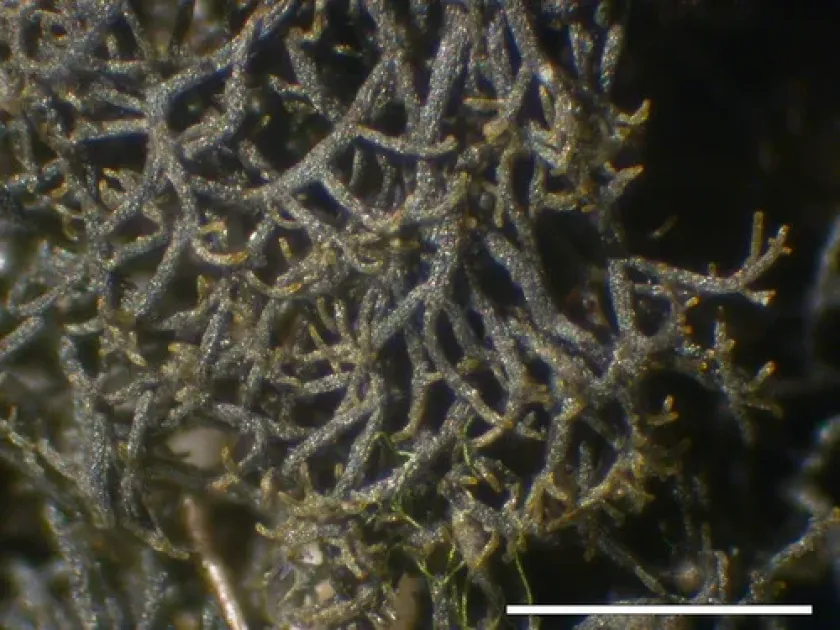
Description
Pathogen
It is important to clarify that Ephebe lanata is not a plant disease or a pathogen. It is a species of lichen and does not affect the health or growth of any cultivated crops.
The organism belongs to the Lichinaceae family and consists of a symbiotic relationship between a fungus and a cyanobacterium. It does not exhibit parasitic behavior towards agricultural plants.
There are no symptoms of infection caused by this organism on crops, as it does not interact with agricultural systems. It is entirely harmless to forestry, horticulture, and agronomy.
Morphologically, it forms small, dark, shrub-like clumps on stone surfaces. Its common association with "disease" in some databases is a taxonomic or indexing error, as it is a non-pathogenic organism.
As a non-pathogen, it requires no chemical control or agricultural intervention. It serves as a natural component of biodiversity in specific non-agricultural environments.
Conditions for development
This species is strictly epilithic, meaning it grows exclusively on rock surfaces. It is typically found in high-latitude regions or high-altitude mountain environments.
Optimal growth conditions involve constant moisture and access to clean air. It is known to be an indicator of excellent air quality, as it cannot survive in polluted environments.
The distribution of Ephebe lanata is limited to regions with harsh climates where standard agriculture is impossible. It thrives in arctic and subarctic ecosystems.
The organism is highly resilient to freezing temperatures, often remaining dormant during the winter season. It does not require soil as a growth medium, absorbing nutrients from air and rainfall.
Development is extremely slow, which is characteristic of lichens in these regions. The species is highly susceptible to habitat disruption, which prevents its presence in any form of disturbed or farmed land.
Discussion
No discussions yet — be the first.