
Elytroderma needle cast
Elytroderma torres-juanii
Description
Symptoms
The most prominent symptom of this disease is the discoloration of needles. Infected needles typically turn yellow and then reddish-brown before prematurely falling off the tree.
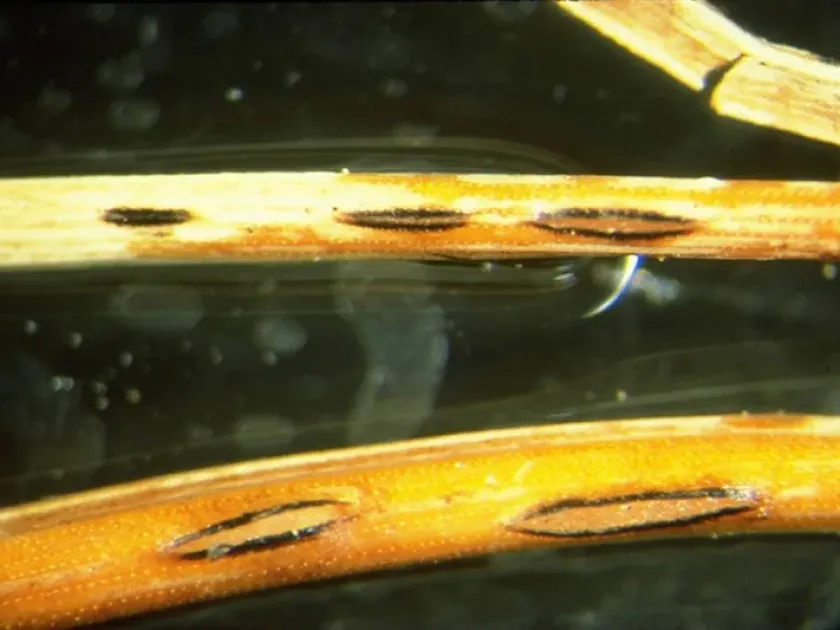
The presence of thin black lines or small spots on the needles is a diagnostic indicator. These marks represent the fungal fruiting bodies breaking through the surface of the needle.
Affected trees often show structural deformities, such as distorted or twisted branches. In severe cases, the development of "witches' brooms" in the canopy is observed.
The overall appearance of the tree becomes sparse. As the infection progresses, the lower parts of the crown often lose most of their foliage, creating a thin look.
Damage is not limited to needles; the fungus can also colonize the bark of small branches. This leads to localized necrosis and subsequent branch death.
Pathogen
The disease is caused by the ascomycete fungus Elytroderma torres-juanii. This pathogen is specialized in infecting various conifer species, primarily targeting the needles and small twigs.
The fungus produces apothecia, which are small fruiting bodies that erupt through the epidermis of the infected needles. These structures are essential for the dispersal of spores.
The life cycle of Elytroderma torres-juanii involves the development of mycelium within the host tissue. This endophyte-like behavior allows the fungus to remain latent for certain periods.
Primary infection occurs when ascospores are released and land on healthy needles during periods of high humidity. The fungus then penetrates the needle tissue and begins to colonize it.
Laboratory identification of the fungus relies on the specific morphology of the fruiting bodies and spores. Understanding the biology of this pathogen is crucial for accurate diagnosis in the field.
Conditions for development
High humidity and mild temperatures are the primary environmental conditions that favor the development of Elytroderma torres-juanii. Frequent rainfall during the summer months accelerates spore release.
Dense stand architecture significantly contributes to disease spread. Poor airflow within the canopy keeps the foliage wet for longer periods, which is ideal for the pathogen.
Tree stress, often caused by drought, poor soil quality, or competition for nutrients, makes conifers more susceptible to infection. Healthy trees are better able to defend against colonization.
Wind is the primary mechanism for long-distance dispersal of fungal spores. Rain splash is also instrumental in moving the pathogen within the canopy of a single tree.
The most active period for infection coincides with the maturation of spores, which usually occurs in the second half of the growing season. Protective measures should be timed accordingly.
Why it matters
The primary harm caused by Elytroderma needle cast is the reduction of the photosynthetic capacity of the tree. This leads to a decline in growth rate and overall tree vitality.
Chronic infection results in the progressive dieback of branches. This weakens the tree and makes it highly susceptible to attacks by secondary pests like bark beetles.
In ornamental forestry, the disease significantly degrades the aesthetic value of the trees. Neglected infections can lead to the complete death of the host plant.
The cumulative impact of this fungus in forest nurseries can cause severe losses. It threatens the health of young seedlings, which are the future of the forest.
Decreased vigor makes the entire population less resilient to environmental stressors, including severe cold and prolonged dry spells.
Protection
Sanitation pruning is a critical management practice. Removing infected branches helps to significantly reduce the inoculum load within the area.
Fungicide applications may be used to protect high-value or ornamental conifers. These treatments are most effective when applied preventively before the main infection window.
Improving stand health through proper silvicultural practices, such as thinning, is essential. Increased airflow and light penetration help reduce favorable conditions for the fungus.
Selecting and planting resistant cultivars is a long-term strategy for managing this disease. Avoiding species that are highly prone to infection helps maintain forest diversity.
Regular monitoring of nursery and plantation health is vital for early detection. Prompt action upon identifying the first symptoms can prevent widespread outbreaks.
Discussion
No discussions yet — be the first.