
Soybean anthracnose
Elsinoë glycines
Description
Symptoms
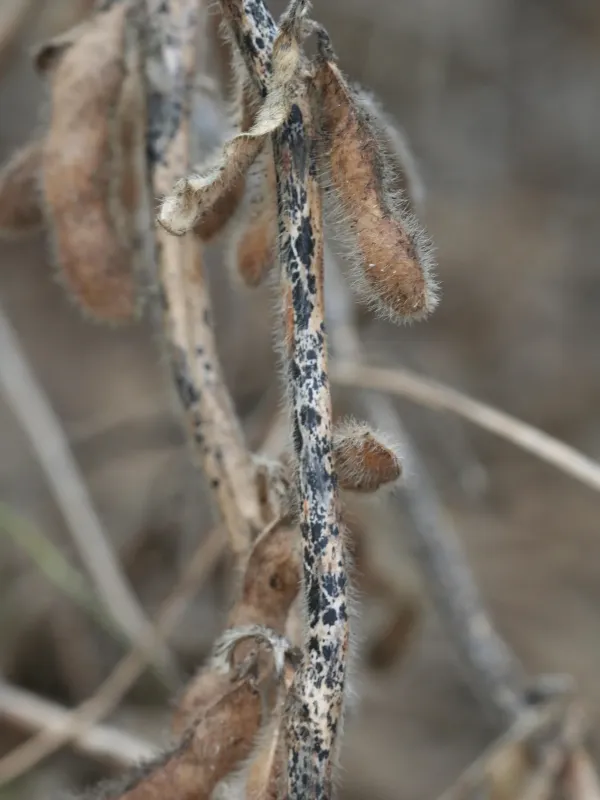
Symptoms typically appear as irregular dark brown to black lesions on stems, petioles, and leaves, which can expand and coalesce over time.
A diagnostic feature is the presence of small black structures called acervuli, which bear hair-like setae visible under magnification.
Infected pods often turn dark, become shriveled, and produce poorly developed, discolored, or completely blighted seeds covered in fungal growth.
Under high humidity, a pinkish or greyish mass of conidia may be observed on the lesion surfaces, indicating active sporulation of the fungus.
Severe infestations lead to premature leaf drop, stunted growth, and in some cases, the total death of the plant during the pod-filling stage.
Pathogen
The causal agent of soybean anthracnose is the fungus Colletotrichum truncatum (often identified as Colletotrichum dematium). It is a widespread pathogen capable of affecting soybeans at all developmental stages.
The fungus survives in infected crop debris, contaminated seeds, and the soil. These reservoirs make it a persistent threat in agricultural environments.
Dissemination primarily occurs through conidia, which are spread by splashing rain, wind, and mechanical vectors like insects moving through the field.
Once it colonizes the plant tissue, the mycelium breaks down cell walls using enzymatic activity, leading to tissue death and the characteristic necrotic symptoms.
The pathogen is highly opportunistic, often attacking plants that are already stressed by unfavorable weather or poor soil fertility.
Conditions for development
Anthracnose thrives in warm and humid conditions, with optimal temperatures for infection ranging between 20°C and 28°C.
Prolonged wet weather, especially during flowering and pod development, is the primary driver for rapid disease spread across soybean fields.
High planting densities create a dense canopy that traps moisture and limits airflow, significantly increasing the risk of localized outbreaks.
Mechanical damage from hail, insects, or tractor passes provides entry points for the pathogen to colonize the interior of the stems.
Nutrient-deficient soils, particularly low potassium levels, can exacerbate the susceptibility of the plants to the fungus.
Why it matters
Soybean anthracnose can lead to significant yield losses, ranging from 10% up to 50% depending on the timing of the infection and seasonal conditions.
The disease reduces seed weight and quality, making the harvested product less suitable for market and significantly decreasing its germination potential.
By compromising the integrity of stems and pods, the fungus interferes with the plant's ability to transport nutrients, leading to poor seed set.
The disease cycle can lead to a buildup of inoculum in the soil, affecting the profitability of future soybean crops grown in the same field.
Total plant death or lodging can occur in severe cases, making harvest operations difficult and inefficient.
Protection
An integrated pest management (IPM) approach is essential for controlling soybean anthracnose and minimizing its long-term impact on productivity.
The primary control measure is the use of high-quality, disease-free seed, often treated with effective fungicides to prevent seedling blights.
- Crop rotation with non-host crops for at least 3-4 years to reduce soil inoculum.
- Deep tillage to bury crop residues, accelerating their decomposition.
- Foliar fungicide applications during R3 (beginning pod) to R5 (beginning seed) stages when weather favors disease.
- Managing insect populations to prevent mechanical wounding.
- Promoting optimal soil fertility to boost plant defense mechanisms.
Regular scouting of fields during the critical growth stages helps in making timely decisions regarding chemical interventions.
Maintaining balanced field health through appropriate agronomic practices ensures better resistance and resilience against fungal pathogens.
Discussion
No discussions yet — be the first.