
Elsinoë fecunda
Elsinoë fecunda
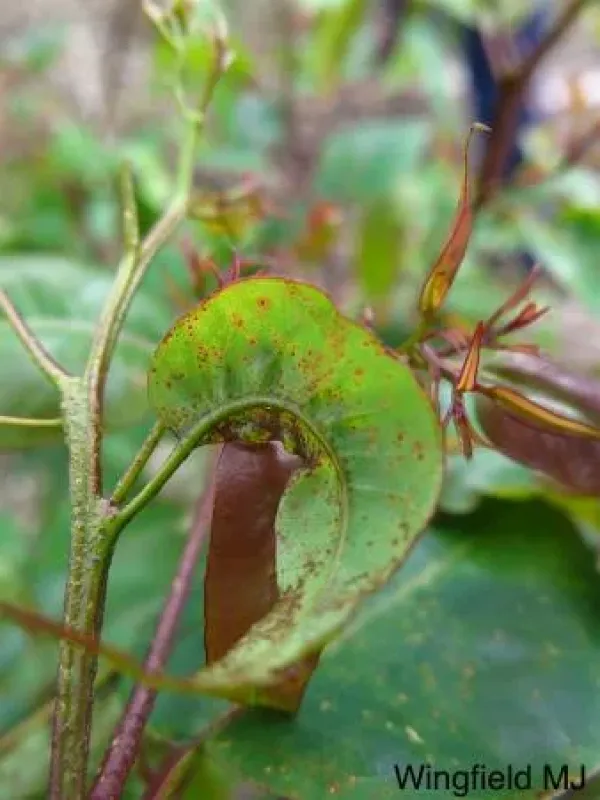
Description
Symptoms
The primary symptom includes the development of small, depressed spots on leaves, stems, and fruits. These spots gradually expand and change color from light green to brown or grey, often bordered by a distinct margin.
As the infection progresses, the lesions may become corky or scab-like, causing the skin of fruits to crack. This deformation significantly compromises the physical integrity of the affected plant parts.
Leaf infection often leads to severe chlorosis and curling. In some cases, the tissue in the center of the spots dies and falls out, resulting in a shot-hole appearance that reduces the photosynthetic area of the plant.
Stems infected by the fungus exhibit elongated, sunken lesions that can eventually girdle the branch. This disrupts the translocation of nutrients and water, leading to the wilting and eventual death of the distal parts of the stem.
In highly humid conditions, a sparse, powdery coating—representing the fungus's conidial sporulation—may appear on the surface of the lesions, indicating active development and high risk of secondary spread.
Pathogen
The causative agent of this disease is the ascomycete fungus Elsinoë fecunda, belonging to the order Myriangiales. This pathogen is a specialized parasite that primarily targets the green parts of susceptible tropical and subtropical plants.
The fungus reproduces through conidia, which serve as the primary source of infection during the growing season. These spores are easily disseminated by wind and water splash, allowing the pathogen to spread across a plantation rapidly.
Once the conidia land on a host plant, they penetrate the epidermis and develop a mycelial network within the plant tissues. This results in cellular disruption and the eventual formation of necrotic lesions typical of the disease.
The fungus overwinters as stroma on plant debris, infected branches, or mummified fruits. As temperatures rise and humidity increases, the overwintered structures produce new spores, initiating the seasonal infection cycle.
Elsinoë fecunda is known for its ability to persist in diverse environmental conditions, making it a challenging pathogen to manage in commercial agricultural settings where host plants are densely cultivated.
Conditions for development
High relative humidity, typically exceeding 85%, is the most critical factor for the development of the disease. Frequent rainfall, mist, and heavy morning dew facilitate the germination and infection processes.
Optimal temperatures for the fungus generally range from +20°C to +28°C. During these periods of warmth and moisture, the rate of mycelial growth and spore production is highest, often leading to rapid disease spread.
Poor ventilation within the plant canopy, caused by overcrowding or lack of pruning, creates microclimates that retain moisture for longer durations, thereby promoting fungal survival and infection.
Agronomic mismanagement, such as excessive nitrogen fertilization, results in rapid growth of soft, succulent tissues. These tissues are particularly susceptible to fungal penetration due to their underdeveloped cuticle layer.
Additionally, the presence of untreated infection sources, such as fallen debris or wild host plants nearby, continuously provides inoculum, making it harder to control the disease in the field.
Why it matters
The economic impact of the disease is substantial, primarily due to the loss of marketable fruit yield. Fruits affected by lesions are often deformed, undersized, and discarded due to poor quality.
Chronic infection weakens the overall health of the plant. Defoliation caused by the fungus reduces the plant's ability to produce carbohydrates, leading to stunted growth and lower vigor in subsequent seasons.
Stems damaged by the fungus become brittle and susceptible to secondary infections, such as wood-rotting fungi or bacterial soft rots, which can lead to the death of entire limbs or the plant itself.
Post-harvest losses are significant, as infected fruits have a reduced shelf life and are prone to rapid decay. This makes storage and transport operations much more difficult and costly for producers.
Furthermore, the need for intensive fungicide applications to manage the disease increases production costs and complicates the implementation of integrated pest management (IPM) strategies.
Protection
The first line of defense is the use of disease-resistant varieties. Planting healthy, certified nursery stock significantly reduces the risk of introducing the pathogen into a clean area.
Strict sanitation practices, including the prompt removal and burning of infected branches and fallen leaves, are essential. Reducing the amount of inoculum available on the ground decreases the likelihood of early-season infection.
Fungicide programs involving protective (copper-based) and systemic chemicals are vital during periods of active growth and favorable weather. Applications should be timed to cover vulnerable stages like flowering and fruit set.
Improving orchard management by pruning to enhance air circulation and light penetration is highly effective. Maintaining optimal moisture management also helps keep the leaf surface dry, hindering spore germination.
Regular scouting is required to detect early signs of the infection. Targeted applications of control agents can prevent the spread of the fungus from small focal points to the entire plantation.
Discussion
No discussions yet — be the first.