
Citrus Scab
Elsinoë fawcettii
Description
Symptoms
Initial symptoms are characterized by small, translucent, raised spots on the leaves, which eventually develop into distinct, corky, wart-like outgrowths.
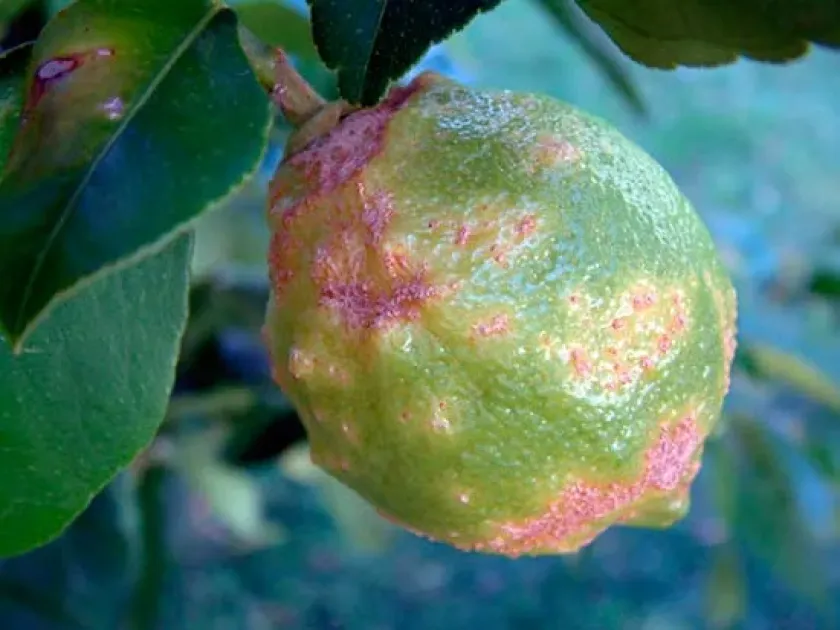
On infected fruits, the disease appears as raised, scabrous lesions that can coalesce, causing significant distortion and blemishes to the peel.
Young shoots suffering from the infection often become twisted, stunted, and distorted, which interferes with normal growth patterns.
Severe infections lead to significant physiological stress, resulting in the premature abscission of both leaves and developing fruits.
- Small, wart-like protuberances on young foliage.
- Corky, irregular scabs on the fruit rind.
- Distorted and stunted twig development.
- Increased drop of fruit sets and leaves.
Pathogen
Citrus scab is caused by the Ascomycete fungus Elsinoë fawcettii, which is characterized by its conidial stage, known as Sphaceloma fawcettii.
The fungus specifically attacks the tissues of young, growing citrus organs, such as emerging leaves, tender shoots, and young fruit sets.
The pathogen survives within the lesions of infected branches and leaves, acting as a persistent reservoir of inoculum throughout the year.
Dissemination of the fungal spores occurs primarily via rainfall splashes, heavy dew, and overhead irrigation, allowing the fungus to spread rapidly.
Once settled, the fungus invades the epidermis, triggering abnormal cell division and the production of characteristic scab-like lesions on the plant surface.
Conditions for development
Citrus scab thrives in environments with high relative humidity and consistent rainfall, particularly during the critical early growth stages.
The fungus is highly active within a temperature range that promotes rapid vegetative development of citrus trees, typically between 15°C and 25°C.
Extended periods of leaf wetness after rain provide the necessary moisture for conidia germination and subsequent infection of plant tissues.
Poor orchard sanitation and dense canopy foliage contribute to microclimates with stagnant, humid air, which significantly accelerates disease spread.
Susceptible varieties in orchards without proper ventilation are at a higher risk of experiencing rapid, large-scale disease outbreaks.
Why it matters
The primary economic impact is the severe reduction in the aesthetic quality of the fruit, rendering them unsuitable for the premium fresh market.
Chronic infection weakens the tree canopy, reducing the overall photosynthetic area and limiting the tree's long-term productivity and fruit yield.
In nursery settings, the pathogen can cause significant stunting of seedlings, leading to increased costs and rejection of nursery stock.
Distorted growth and loss of foliage expose the tree to further stress, potentially increasing its susceptibility to other secondary pathogens and pests.
Increased production costs due to the necessity of repeated fungicide applications represent a significant burden for commercial citrus producers.
Protection
Sanitation is a vital control measure, involving the systematic pruning and removal of all heavily infected plant materials to lower the inoculum load.
Proper canopy management through pruning improves airflow and sunlight penetration, which helps foliage dry quickly and discourages fungal growth.
Protective sprays using copper-based fungicides are essential, particularly during the most vulnerable periods of flowering and early fruit development.
Transitioning from overhead irrigation to drip or localized root-zone irrigation prevents the splashing of spores onto the susceptible canopy tissues.
Long-term management strategies should prioritize the planting of resistant or tolerant citrus varieties to minimize the dependence on chemical interventions.
Discussion
No discussions yet — be the first.