
Citrus Scab
Elsinoë citricola
Description
Symptoms
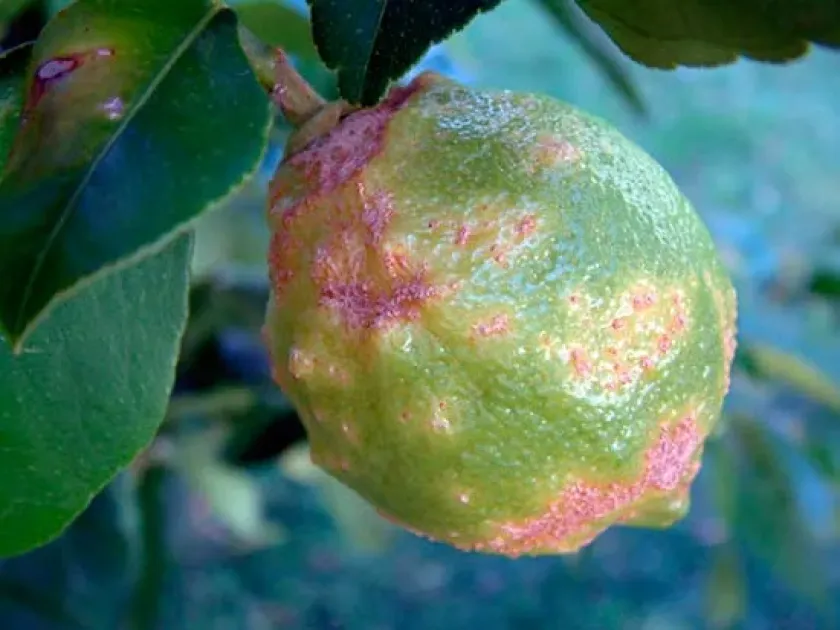
The characteristic symptoms of citrus scab are small, raised, corky pustules that form on leaves, shoots, and fruit. These lesions typically start as light-colored spots and mature into grayish-brown, rough, wart-like growths.
Fruit infestation is the most economically damaging. The fruit skin develops irregular, elevated scabs that can merge to cover large areas, severely deforming the fruit and making it unsuitable for fresh market sale.
On leaves, the infection manifests as small, light-brown spots often surrounded by a chlorotic halo. In cases of severe infection, leaves become twisted, distorted, and may fall prematurely, weakening the entire canopy.
Infected young shoots are stunted, curled, and frequently undergo tip dieback. The presence of these lesions on the stems can interfere with the tree's vascular transport system, further hampering development.
The wart-like texture is the definitive diagnostic feature of citrus scab. Unlike other fungal infections, these protrusions are hard, woody, and persistent, often remaining on the tree even after the active stage of the fungus has passed.
Pathogen
The causal agent of citrus scab is the ascomycete fungus Elsinoë citricola (anamorph: Sphaceloma fawcettii). This pathogen specifically targets the developing tissues of citrus species, invading the epidermis and parenchyma of leaves, stems, and fruits.
The fungus overwinters in infected plant tissues. Dormant mycelium resides in the scabby lesions on branches or on fallen leaves and fruit, serving as a primary source of inoculum when favorable weather conditions arrive.
Transmission occurs through conidia (spores) that are effectively dispersed by wind, splashing rain, or human intervention during pruning and orchard maintenance. Its ability to spread rapidly makes it a significant threat in commercial citrus groves.
The pathogen demonstrates a degree of host specificity, with different strains affecting various citrus cultivars. Younger, rapidly growing tissues are particularly susceptible due to their thin cuticle and high metabolic activity.
The life cycle of the fungus is tightly synchronized with the host's vegetative growth phases. Once the tree initiates new flushes of growth, the fungus quickly colonizes these vulnerable areas, leading to visible signs of infection within a short timeframe.
Conditions for development
Citrus scab thrives in conditions characterized by high humidity and prolonged rainfall. These moisture-rich environments are essential for the germination of fungal spores and their successful colonization of host tissues.
Optimal temperatures for the development of Elsinoë citricola range from +15°C to +25°C. Within this range, the pathogen's development accelerates, leading to rapid disease outbreaks if preventative measures are not in place.
Poor orchard hygiene and dense canopy management create a conducive microclimate for the fungus. When branches overlap, air circulation is reduced, maintaining higher humidity levels within the canopy for longer periods.
Free water on the plant surface is a prerequisite for spore germination. Consequently, overhead irrigation systems, particularly in humid regions, significantly increase the risk of disease spread by facilitating the movement of inoculum.
In greenhouse settings, inadequate ventilation often leads to condensation on leaves and fruit. These moisture droplets provide the necessary medium for the spores to germinate, creating hotspots of infection inside the structure.
Why it matters
The primary impact of citrus scab is the devaluation of the harvest. Cosmetic damage caused by the scabs renders fruit unacceptable for the premium fresh fruit market, resulting in substantial financial losses for growers.
Chronic infection leads to significant defoliation and a reduction in photosynthetic efficiency. This weakened state limits the tree's ability to produce quality fruit in subsequent seasons, creating a downward trend in yields.
For young trees and nursery saplings, citrus scab can be lethal or cause severe stunting. The destruction of the primary growth points hinders the formation of a healthy scaffold, potentially ruining the tree's structural integrity.
Open lesions caused by the fungus facilitate the entry of secondary pathogens, such as bacteria or other opportunistic fungi. This leads to increased twig dieback and potential decline of the tree over time.
High management costs, including frequent fungicide applications and labor-intensive sanitation, increase the overall production expenses, making it difficult for sensitive varieties to remain profitable in high-pressure areas.
Protection
Sanitation is the cornerstone of effective citrus scab management. All infected plant material, including fallen fruit and pruned branches, must be removed and destroyed to drastically reduce the amount of primary inoculum in the orchard.
Pruning should be focused on improving air circulation and light penetration within the canopy. By maintaining an open structure, the humidity levels around the foliage are lowered, creating an environment unfavorable for the fungus.
Copper-based fungicides are the standard chemical control measure. These should be applied preventatively, especially during the onset of new vegetative flushes, to protect young tissues from initial spore attacks.
Irrigation management is crucial; switching from overhead systems to drip irrigation reduces leaf wetness and lowers the risk of infection significantly. This simple shift in management can have a major impact on disease pressure.
Using certified, disease-free nursery stock is essential for preventing the introduction of the pathogen to new sites. Regular monitoring of the orchard, particularly during periods of active growth, allows for early intervention before the disease becomes widespread.
Discussion
No discussions yet — be the first.