
Grape anthracnose
Elsinoë ampelina
Description
Symptoms
Initial symptoms appear as small, circular, reddish-brown spots on leaves. As the disease progresses, these spots enlarge, turn grey in the center, and may drop out, leaving a shot-hole appearance on the leaf blade.
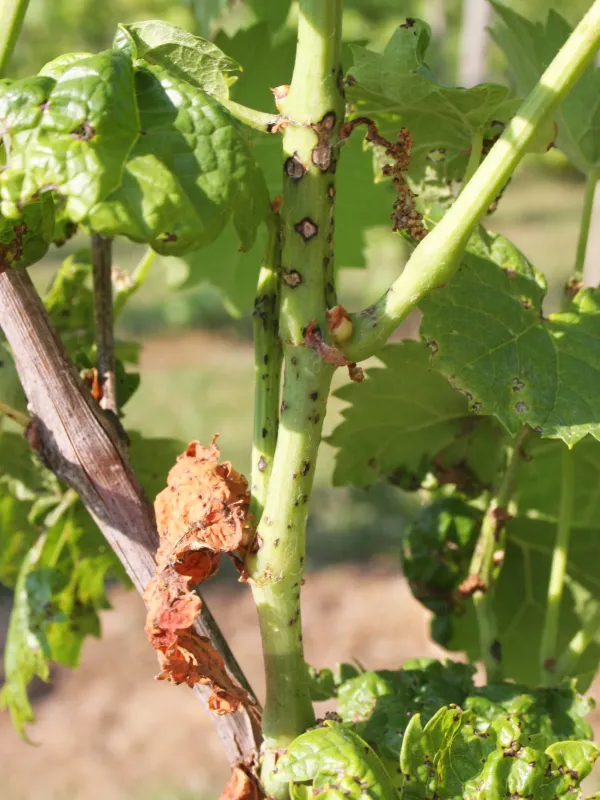
On shoots, the disease manifests as sunken, dark lesions that often merge to form large, cracked areas. These structural weaknesses can lead to shoot breakage during periods of high wind or rapid growth.
Inflorescences are highly susceptible; infection causes them to wither and dry up completely. If berries are affected, they develop distinct lesions known as bird's-eye spots, characterized by a grey center and a dark, red-purple margin.
Severe fruit infection causes the berries to deform, crack, and eventually drop. The integrity of the cluster is compromised, making it susceptible to secondary decay organisms such as botrytis bunch rot.
- Dark necrotic spots on young leaves.
- Sunken lesions (cankers) on growing canes.
- Blight and desiccation of flower clusters.
- Characteristic bird's-eye spots on ripening fruit.
- Premature defoliation in highly susceptible varieties.
Pathogen
Grape anthracnose is caused by the fungus Elsinoë ampelina. This ascomycete pathogen specifically targets young, succulent tissues of the grapevine, including leaves, shoots, tendrils, and fruit clusters.
The pathogen overwinters as mycelium within the infected lesions on the dormant canes. When spring arrives, favorable moisture levels trigger the production of conidia, which serve as the primary inoculum for the season.
Under suitable conditions, the fungus spreads through splashing rain or irrigation water. It penetrates the host tissue, where it rapidly colonizes cells, causing necrotic lesions that serve as sources for secondary cycles of infection.
The fungus is capable of producing multiple generations of spores throughout the growing season. This reproductive strategy allows it to proliferate rapidly in favorable microclimates within the vineyard.
Biologically, Elsinoë ampelina is highly persistent. Once established in a vineyard, it remains in the woody tissues of the vines, making it a recurring challenge for vineyard managers each spring.
Conditions for development
Anthracnose development is heavily dependent on moisture. Frequent rainfall, high humidity, and prolonged leaf wetness periods create the perfect conditions for spore germination and infection.
Temperatures ranging from +15°C to +25°C are optimal for the pathogen. In such temperatures, the fungus can complete its infection cycle in a matter of a few days if free water is available.
Poor vineyard hygiene and lack of proper canopy management contribute significantly to disease spread. Dense canopies trap humidity, hindering the drying process after rainfall and creating a disease-prone microclimate.
The period of rapid spring growth is the most critical time for infection. Succulent new shoots provide the ideal substrate for the fungus to establish its primary infections of the season.
Sprinkler irrigation, if not managed carefully, can exacerbate the spread by splashing spores from lower, infected leaves to the healthy developing fruit and shoots higher up on the canopy.
Why it matters
The economic impact of grape anthracnose is significant, as it can result in near-total crop loss in severe outbreaks. Infected fruit is unmarketable and unsuitable for high-quality wine production.
Besides immediate crop loss, the disease causes severe shoot damage. The resulting cankers impair the vascular system of the vine, limiting nutrient flow and reducing the plant's overall vigor.
Infected vines suffer from reduced winter hardiness, making them more susceptible to cold injury and frost. Chronic infections can lead to the slow decline and eventual death of the entire grapevine.
The cost of intensive fungicide programs required to combat the disease increases production expenses. If left untreated, the disease becomes harder to eradicate with every passing year.
Reduced photosynthetic capacity of the foliage leads to poor cluster development and low sugar accumulation in the grapes. This affects the quality and consistency of the harvest season after season.
Protection
Effective control starts with sanitation. Removing and burning all infected prunings is essential to reduce the primary inoculum load in the vineyard at the start of the season.
Canopy management is crucial; practices such as shoot thinning, leaf pulling, and timely hedging improve air circulation. These steps help the vines dry faster after rain, reducing the infection window.
Fungicide applications should be timed correctly, with the first major protection applied during the early shoot growth stage. Contact fungicides are commonly used to prevent initial infections.
Choosing resistant cultivars is the most sustainable approach to managing anthracnose in areas where the disease is endemic. Proper site selection that ensures good sunlight and drainage is also beneficial.
Monitoring the vineyard for early symptoms allows for timely intervention. If disease pressure is high, switching to systemic fungicides and ensuring thorough spray coverage is necessary to maintain vine health.
Discussion
No discussions yet — be the first.