
Dumontinia
Dumontinia
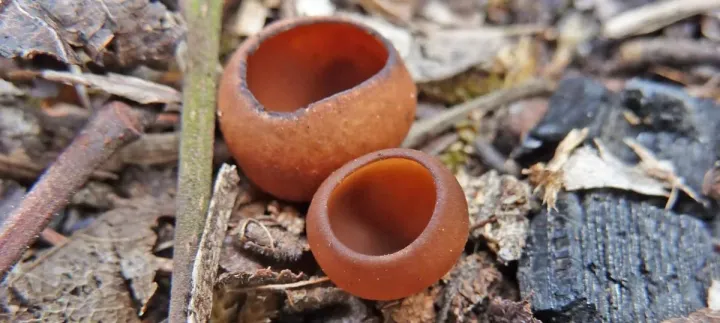
Description
Symptoms
Early symptoms appear in spring when the above-ground parts of the plant begin to grow rapidly. Affected shoots often look wilted, twisted, and exhibit stunted development.
Water-soaked or brown spots may appear on stems and petioles, which expand quickly and cover the entire circumference of the stem.
Under high humidity, a sparse white or grayish fungal mycelium may be observed on the infected areas.
Leaves of the affected plants quickly turn yellow, wither, and dry out, while the tissue at the stem base becomes soft and may start to rot.
Upon examination of the subterranean parts, dark, irregularly shaped sclerotia are often found, serving as a key diagnostic sign of the disease.
Pathogen
The disease is caused by the fungus Dumontinia tuberosa, which belongs to the class Ascomycetes. This pathogen is a specialized parasite that primarily attacks plants of the Ranunculaceae family.
The fungus's life cycle includes the formation of overwintering structures known as sclerotia, which develop inside infected tissues or near the plant's root system.
In the spring, overwintered sclerotia produce fruiting bodies called apothecia. These structures appear as brown, cup-shaped caps on long stalks that emerge above the soil surface.
Apothecia release ascospores, which are spread by air currents and cause primary infection when they land on susceptible plant tissues.
The pathogen has a high capacity for soil persistence, remaining viable for several years, which makes control on infested sites quite challenging.
Conditions for development
The development of the disease is closely linked to the temperature regime of early spring. Moderate, cool, and damp weather provides optimal conditions for sclerotia germination.
High soil and air moisture during the emergence period significantly accelerates apothecia formation and spore dispersal.
Crowded plantings promote pathogen accumulation, as the lack of proper ventilation creates a microclimate with constant excessive humidity.
The presence of plant debris from previous seasons in the soil creates a high infectious background for new plantings.
Soil type also plays a role: in heavy, poorly drained substrates, the risk of infection and successful fungal development is significantly higher.
Why it matters
Dumontinia poses a serious threat to ornamental crops, particularly to Anemone nemorosa and other forest species.
The disease causes premature death of the plant's aerial parts, preventing normal flowering and the formation of healthy seeds or replacement tubers.
In cases of mass infection, plantings can fully degrade over several seasons, as the fungus actively drains nutrients from the root systems.
Economic losses are associated with the loss of aesthetic value in gardens and the high costs of soil replacement on infested plots.
In nurseries, this disease can lead to the total rejection of planting material due to the high risk of spreading the infection to new territories.
Protection
The primary control strategy involves strict crop rotation and avoiding the cultivation of susceptible plants on the same site for several years.
It is essential to thoroughly remove and destroy all plant residues, including the surrounding soil where fungal sclerotia may be present.
Regular soil cultivation and drainage improvement are important to reduce excess moisture, creating a less favorable environment for the spores.
If infection clusters are identified, local soil disinfection with approved fungicides or deep digging with lime application is recommended.
- Use of disease-free planting material.
- Regular monitoring of plantings during the spring season.
- Prompt removal and disposal of infected specimens.
Discussion
No discussions yet — be the first.