
Dothistroma needle blight
Dothistroma septosporum
Description
Symptoms
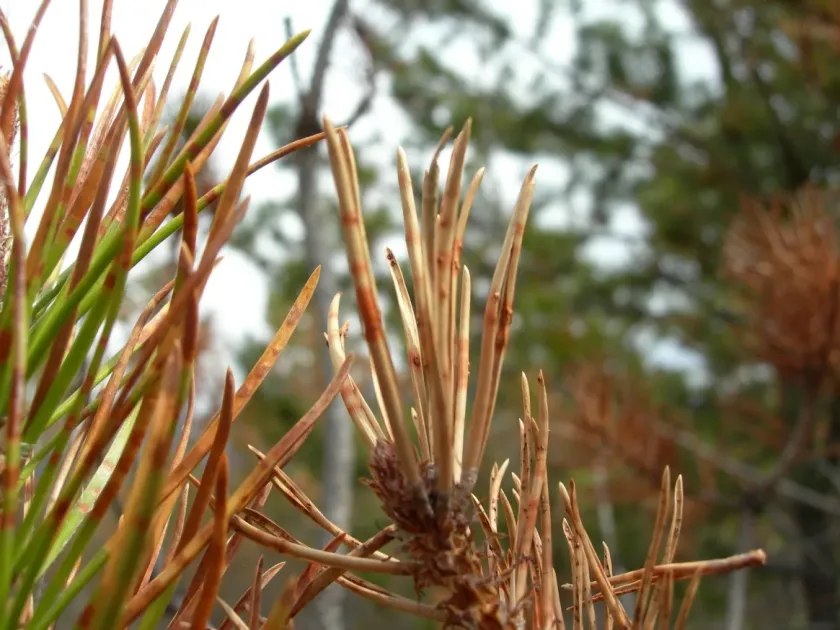
Early symptoms include yellow or pale green spots that eventually turn into characteristic red-brown or necrotic bands on the needles.
The most diagnostic feature of the disease is the presence of small, dark, raised black spots, which are the fungal fruiting bodies developing through the needle surface.
Affected needles usually exhibit premature browning and shedding, often starting from the lower parts of the crown where humidity levels remain higher.
Infected trees may show a thinning canopy, as the loss of needles over multiple years significantly reduces the tree's foliage density.
- Yellow to reddish-brown needle spots.
- Distinct dark transverse bands on needles.
- Premature defoliation of needles.
- Small black fruiting bodies visible on the needles.
- Sparse crown appearance due to prolonged needle loss.
Pathogen
The causative agent of the disease is the fungus Dothistroma septosporum (teleomorph Mycosphaerella pini). It is a serious pathogen primarily affecting various pine species worldwide.
This fungus is an ascomycete that colonizes needles of all ages. Its life cycle involves the formation of fruiting bodies called stromata, which rupture the needle epidermis to release spores.
Spores are dispersed by water splashes during rainfall, which is the primary mechanism for infecting new needles and spreading the disease within a tree canopy.
The fungus can persist in fallen needles and forest debris for several years, ensuring a continuous source of inoculum for subsequent growing seasons.
The high genetic variability of the pathogen allows it to adapt to various geographical regions, making it a persistent threat in both commercial forestry and nurseries.
Conditions for development
Dothistroma needle blight thrives in areas with high humidity, frequent rainfall, and moderate temperatures, which are optimal for spore germination.
Prolonged wet weather is critical for the infection process, as water droplets are required to transport spores from infected tissue to healthy needles.
Dense, poorly managed stands or nurseries with restricted airflow create a humid microclimate that significantly accelerates the spread of the fungus.
The fungus is most active during the growing season when young, susceptible needles are emerging and environmental conditions are favorable.
Trees stressed by poor site conditions, nutrient deficiencies, or competition for light are generally more susceptible to severe disease outbreaks.
Why it matters
The primary impact of the disease is the loss of needles, which drastically reduces the tree's photosynthetic capacity and overall vigor.
Repeated annual infection leads to significant growth suppression, reduced timber quality, and can eventually cause the death of the host tree.
In forest nurseries, Dothistroma blight can cause high mortality rates among seedlings, leading to substantial economic losses for forestry businesses.
Severe infestations weaken the trees, making them highly susceptible to secondary attacks by bark beetles and other pests that thrive on stressed hosts.
The cumulative effect of defoliation over several years can permanently damage the health of a forest, reducing its ecological and commercial value.
Protection
Sanitation is a vital control measure; removing and destroying infected fallen needles helps to reduce the local inoculum pool significantly.
Implementing proper spacing between trees and timely pruning can improve air circulation, helping the foliage to dry faster after rain and reducing fungal growth.
Chemical control usually involves the application of copper-based fungicides, which act as a protectant against spore germination on healthy needles.
Applications should be timed to coincide with the period of needle susceptibility and high rainfall to maximize the effectiveness of the treatment.
Maintaining tree vigor through appropriate fertilization and selecting resistant species or cultivars are long-term strategies for managing Dothistroma blight.
Discussion
No discussions yet — be the first.