
Diploschistes ocellatus
Diploschistes ocellatus
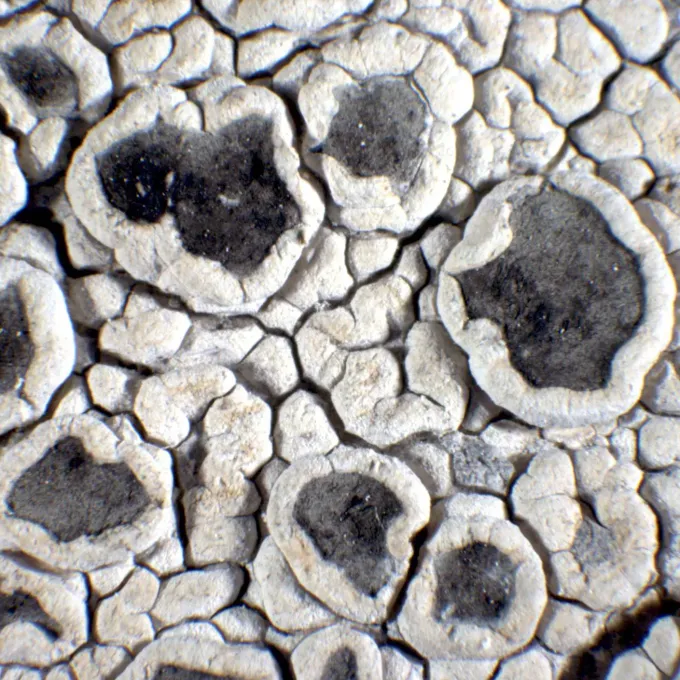
Description
Pathogen
Important clarification for agronomists: Diploschistes ocellatus is not a plant disease pathogen. This object is a species of crustose lichen belonging to the Graphidaceae family.
This lichen does not possess phytopathogenic properties and does not affect the tissues of higher plants. It is a symbiotic organism consisting of a fungal component (mycobiont) and an alga (photobiont), surviving exclusively through autotrophic nutrition.
In a biological sense, it is classified as an epilithic or epigeic lichen. It is found primarily on limestone substrates, rock outcrops, and stony soils in arid and semi-arid climate conditions.
The biology of this species is studied within the field of lichenology, not phytopathology. Its growth and development are related to the accumulation of mineral substances from the substrate, not from parasitizing living organisms.
The absence of plant damage caused by this species is confirmed by its absence in agricultural disease handbooks. It does not form spores capable of penetrating a host plant or suppressing its metabolism.
Conditions for development
This species prefers open, well-lit areas. It is most commonly found on limestone formations that heat up under the sun throughout the day.
The lichen is resistant to extreme temperatures and prolonged drought periods. It is adapted to living under high insolation levels where other microorganisms often fail to survive.
The development of Diploschistes ocellatus occurs extremely slowly. Under favorable conditions, it forms a thallus that adheres tightly to the surface of a rock or soil.
Dispersal is achieved through spores, which are carried by wind or raindrops onto available mineral patches. Landing on crop plants does not lead to the development of any pathological process.
The agronomic significance of this lichen is neutral. It is a natural component of stony steppe biocenoses but poses no threat to fields, orchards, or vegetable crops.
Discussion
No discussions yet — be the first.