
Diplomitoporus flavescens
Diplomitoporus flavescens
Description
Symptoms
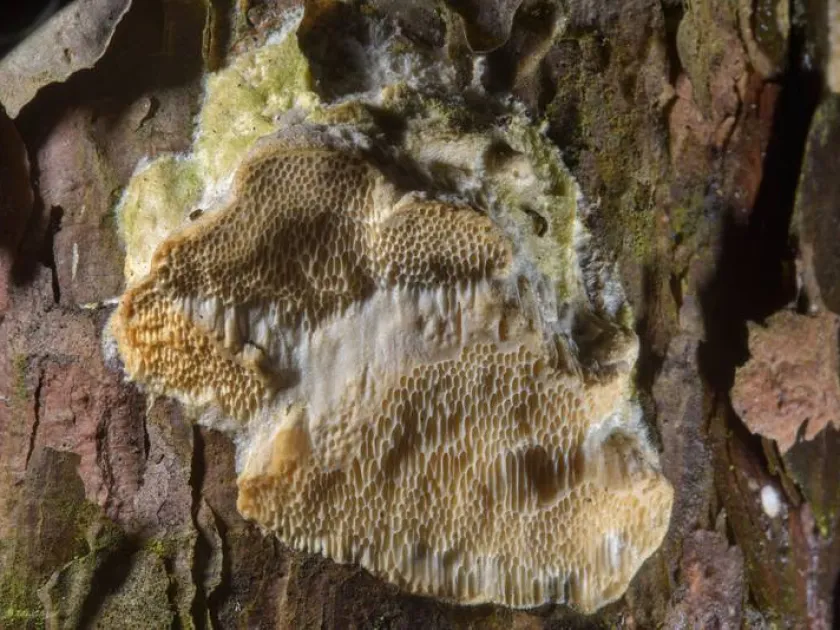
The most visible indicator of infection is the presence of yellowish, crust-like fruiting bodies found on the bark or near the base of the infected trunk.
Internally, the wood undergoes structural changes, becoming brittle and breaking into characteristic cubes, which is a classic sign of advanced brown rot.
Affected trees may show a decline in overall vigor, such as thinning crowns and premature needle drop, often preceding the death of the specimen.
Cracks and deep fissures in the bark, often near the fruiting structures, indicate the underlying destruction of the woody tissues by the fungal mycelium.
Laboratory diagnosis involves examining wood samples for the presence of specific hyphae, which confirm the activity of this particular wood-decay pathogen.
Pathogen
The disease is caused by the fungus Diplomitoporus flavescens, a wood-decay basidiomycete responsible for significant timber degradation in coniferous forests.
This pathogen specifically targets cellulose and hemicellulose, leaving the lignin behind, which results in a characteristic type of decay known as brown rot.
The fungus operates primarily as a saprotroph on dead wood but can also act as a pathogen, invading living trees through open wounds and structural weaknesses.
Reproduction occurs through the formation of resupinate or spreading fruiting bodies, which appear in shades of pale yellow or cream as the fungus matures.
The biological success of Diplomitoporus flavescens is linked to its ability to persist in forest debris, providing a continuous source of inoculum for infection cycles.
Conditions for development
The fungus thrives in environments with high humidity and moderate temperatures, which facilitate the rapid spread of its mycelial network.
Optimal growth temperatures for Diplomitoporus flavescens range from approximately +18 to +25 degrees Celsius, matching the peak growing season in many northern forests.
Coniferous forests that have experienced storm damage or pest infestations are particularly susceptible to colonization by this opportunistic fungus.
Mechanical injuries to the trunk, whether caused by wildlife, logging equipment, or weather events, create perfect entry points for the fungal spores.
Poorly ventilated forest stands with excessive debris accumulation provide a favorable microclimate for the spore germination and long-term survival of the fungus.
Why it matters
The primary damage caused by this fungus is the significant reduction in timber quality, rendering the wood structurally unsound for industrial or structural use.
In forest ecosystems, infection leads to premature tree mortality and increases the risk of windthrow due to the decay of the root and trunk base.
It acts as a threat to forest stability by creating centers of infection that can spread to healthy trees, disrupting local biodiversity and stand age structure.
The economic impact is substantial, involving both the loss of high-value timber and the increased costs associated with forest sanitation and management.
Degraded wood is essentially lost to the carbon cycle of the forest prematurely, which impacts the overall management and sustainability goals for the timber industry.
Protection
Strict forest hygiene is the most effective management strategy, requiring the prompt removal and disposal of infected trees to minimize spore dispersal.
Management plans must include the clean-up of woody debris and windthrown logs, as these are primary breeding grounds for the fungus.
Prevention of mechanical damage during logging operations is essential to protect the integrity of the bark and reduce susceptibility to invasion.
- Regular monitoring and pathology surveys in high-risk areas.
- Effective disposal of infected timber through burning or processing.
- Promoting stand diversity to naturally limit pathogen spread.
Ongoing research focuses on the potential for biological control agents, although current forest management continues to rely on preventive cultural practices.
Discussion
No discussions yet — be the first.