
Diplodina blight
Diplodina coloradensis
Description
Symptoms
The main symptoms of infection are localized necrotic spots that gradually enlarge, covering significant portions of stems or leaves. Often, these spots exhibit a darker border.
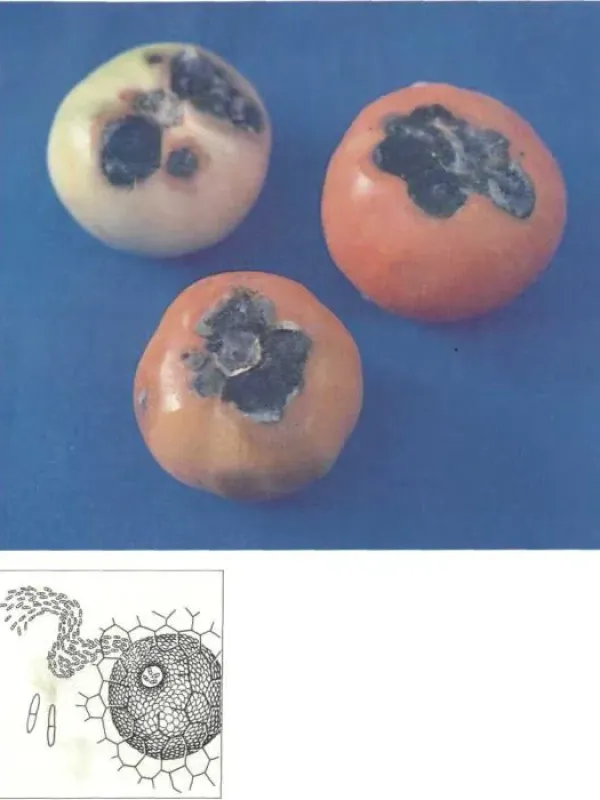
Small, barely visible black dots—the fruiting bodies (pycnidia) of the fungus—are often seen on the surface of infected tissues. These serve as a diagnostic feature to distinguish Diplodina blight from other leaf spots.
When stems are infected, nutrient transport is impaired, leading to premature wilting of specific plant parts. In severe cases, cracking of the outer skin or bark may occur.
Infection of fruits or seeds is accompanied by the appearance of sunken lesions, which can eventually lead to complete tissue rot. This significantly reduces crop quality and seed viability.
In cases of severe disease progression, leaves become deformed, yellow, and fall prematurely, negatively impacting photosynthetic activity and overall plant development.
Pathogen
The causal agent of this disease is the imperfect fungus Diplodina coloradensis, belonging to the Deuteromycetes class. This microorganism parasitizes plant tissues, entering through stomata or mechanical wounds on the epidermis.
The life cycle of the pathogen involves the formation of pycnidia, which produce conidia that spread via raindrops or wind. The fungus can persist in crop residues and infected plant parts for extended periods.
The fungus prefers tissues weakened by adverse environmental conditions or pest damage. It quickly colonizes the parenchyma by secreting specific toxins that disrupt the normal metabolism of plant cells.
The biology of the pathogen has been studied in the context of infecting specific agricultural crops, where it acts as a facultative parasite. The fungus's activity is tightly linked to the physiological state of the host plant.
An important survival mechanism for the fungus is its ability to transition to a saprotrophic phase, utilizing dead plant tissues as a food source until the next growing season.
Conditions for development
Development of Diplodina blight is favored by high humidity and moderately high temperatures. Persistent rains and fog create an ideal environment for spore germination on the leaf surface.
Dense crop stands with poor air circulation create a microclimate that promotes rapid fungal spread. Moisture remains on plant organs longer in such conditions, stimulating mycelial growth.
Excessive nitrogen fertilization, which induces rapid growth of soft vegetative tissue, makes plants more susceptible to the penetration of Diplodina coloradensis.
Mechanical damage caused by hail, insects, or improper agricultural practices provides entry points for the infection.
The optimal temperature for fungal growth ranges from 20 to 25 degrees Celsius, though it remains viable across a wide temperature spectrum, making it a threat throughout the entire growing season.
Why it matters
The primary damage results in significant loss of leaf assimilation surface, leading to a sharp decrease in yield and reduced quality of fruits and seeds.
The disease can cause the death of young seedlings and weaken mature plants, making them more susceptible to secondary infections and environmental stress.
The infection spreads rapidly across the field, affecting adjacent plants, which can cause epiphytotic outbreaks in intensive farming conditions.
Infected produce is unsuitable for long-term storage, as the disease continues to progress in warehouses, causing rot and loss of marketability.
Economic damage includes not only yield losses but also the costs of implementing protective measures necessary to save the remaining crops.
Protection
A fundamental method of control is practicing crop rotation, avoiding susceptible crops on the same field for at least 3–4 years to deplete the pathogen's food source.
Thorough destruction of all plant residues after harvest by deep plowing or burning is recommended to eliminate the primary source of overwintering infection.
Applying modern systemic fungicides can stop disease development at early stages. It is crucial to treat the field at the very first signs of spotting.
- Using healthy, certified planting material.
- Balanced application of potassium and phosphorus fertilizers.
- Timely control of insect pests.
- Maintaining spatial isolation from infected fields.
Growing resistant varieties is the most effective form of protection. Regular field monitoring allows for early detection of problems and minimization of potential losses.
Discussion
No discussions yet — be the first.