
Diplodia rot of citrus
Diplodia citricola
Description
Symptoms
The main symptom on branches is the formation of necrotic patches on the bark, which eventually crack and expose the wood. Gumming (oozing of viscous sap) is frequently observed at the site of infection.
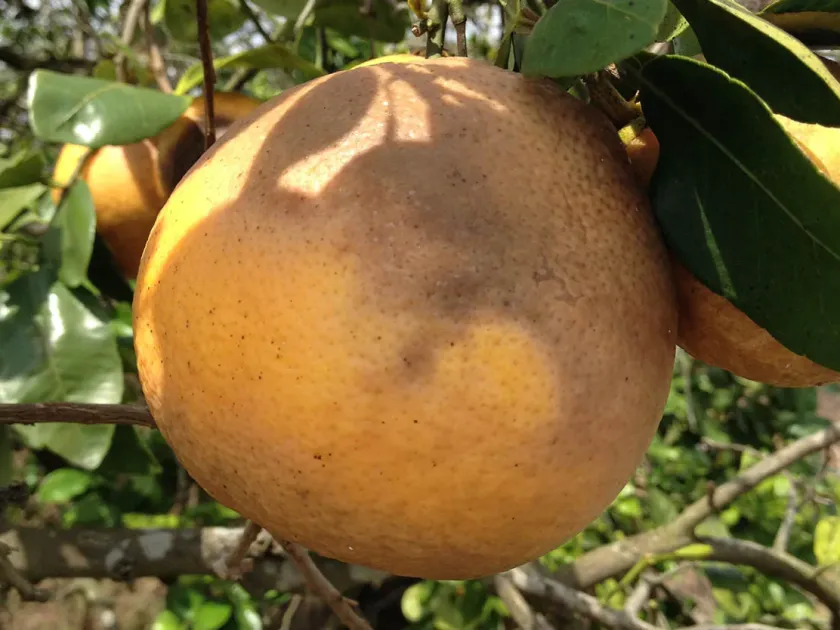
On fruits, the disease appears as rapidly expanding dark spots that soon cover the entire surface. The internal pulp becomes watery, darkens, and develops an unpleasant odor, eventually turning into a black, decayed mass.
Leaves on infected branches turn yellow and drop prematurely. Wilting often starts at the twig tips and progressively spreads to the main branches, leading to the gradual death of the entire tree.
In humid weather, a grey or olive-colored fungal growth (sporulation) appears on the bark or fruit peel. In dry conditions, the infected areas look like sunken, dry ulcers.
- Darkening of the fruit peel with clear margins.
- Cracking of the trunk and primary branches.
- Premature fruit and leaf drop.
- Internal fruit decay with blackening of segments.
Pathogen
The causative agent of this disease is the fungus Diplodia citricola (often associated with Lasiodiplodia theobromae). This pathogen belongs to the class of ascomycetes and primarily affects weakened woody tissues and fruits of various citrus species.
The infection enters the plant through wounds in the bark, pruning cuts, or natural openings. The fungus colonizes the intercellular spaces, gradually destroying the structural integrity of the host plant tissues.
Pathogen spores are disseminated by wind, rain splashes, insects, and contaminated pruning tools. The high viability of these spores allows the pathogen to survive for long periods in soil and decaying plant debris.
The fungal life cycle involves the formation of pycnidia, where conidia are produced. These spores act as the primary source of secondary infection during the growing season. The mycelium rapidly colonizes the plant's vascular system.
The disease affects a wide range of citrus crops, including lemons, oranges, mandarins, and grapefruits. It poses a significant threat to orchards in subtropical and tropical climatic regions.
Conditions for development
Diplodia rot development is favored by high temperatures (+25...+30°C) and high humidity. Under these conditions, the fungus shows maximum aggressiveness and spore germination rate.
Stress factors such as drought, waterlogging, nutrient deficiencies, or cold damage weaken the trees and make them significantly more susceptible to the pathogen.
Poor canopy ventilation due to lack of proper pruning creates a microclimate with stagnant air, which is highly conducive to spore germination and disease spread.
Fresh wounds resulting from harvesting or routine maintenance work, if left untreated, serve as direct entry points for the fungal infection.
The presence of infected plant debris in orchard aisles ensures a persistent reservoir of inoculum, leading to disease outbreaks whenever weather conditions become favorable for the fungus.
Why it matters
Diplodia rot causes significant economic losses by destroying harvests both in the orchard and during postharvest storage and transportation.
Infection of the main branches and trunk causes chronic exhaustion and eventually the death of mature trees, requiring costly orchard replanting.
Infected fruits become completely unmarketable within days, as the disease progresses rapidly, rendering large batches of fruit unsellable.
The loss of foliage reduces the tree's photosynthetic capacity, which negatively impacts flower bud formation and future crop yields for several seasons.
The high costs of protective treatments and the removal of diseased trees significantly increase the overall production cost of citrus fruits.
Protection
The primary control measure is regular sanitary pruning and the immediate removal or burning of all infected branches and mummified fruits.
Maintaining high standards of agronomy, including balanced fertilization and irrigation, is essential to keep the trees' natural immunity strong.
Preventative spraying with copper-based fungicides is recommended during periods when environmental conditions favor fungal growth.
All pruning cuts should be treated with wound-healing pastes or fungicide-infused compounds to block spore entry into the plant tissues.
Postharvest management is critical; sorting fruits carefully and disinfecting storage facilities and crates helps prevent the spread of rot during distribution.
Discussion
No discussions yet — be the first.