
Diplodia walnut blight
Diplodia bulgarica
Description
Symptoms
The earliest symptom is the localized darkening and cracking of the bark, which often exhibits a sunken appearance compared to the surrounding healthy tissue.
Small black fruiting bodies (pycnidia) become visible on the surface of the affected bark as the disease progresses, indicating the maturation of the fungus.
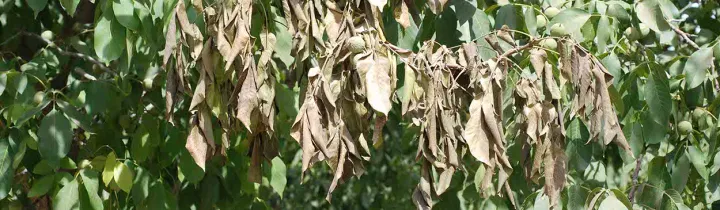
Leaves on infected branches show signs of wilting, chlorosis, and subsequent necrosis, often remaining attached to the branch even after the branch dies.
In cases where the disease affects the fruit, the husk turns black and develops rot, causing premature fruit drop and significant reduction in nut quality.
As the infection advances, the branch develops a characteristic "dieback" appearance, with total necrosis eventually spreading from the tips downward to the main scaffold branches.
Pathogen
The disease is caused by the fungus Diplodia bulgarica, a pathogen that primarily acts as a facultative parasite, surviving in woody tissues and plant debris.
The fungus produces pycnidia — small, black reproductive structures — within the bark of dead or dying branches, which serve as the primary source of inoculum.
Spores are dispersed by water droplets, rain splashing, and wind currents, making the spread of the disease highly dependent on meteorological conditions during the growing season.
Infection usually begins through wounds, pruning cuts, natural fissures, or areas weakened by abiotic stress factors like sunburn or frost damage.
Once inside the host, the mycelium colonizes the vascular tissues, effectively disrupting the flow of water and nutrients to the distal parts of the tree branch.
Conditions for development
High humidity and moderate temperatures are the most critical factors favoring the germination and successful colonization of the pathogen on walnut trees.
Prolonged spring rains provide ideal moisture levels for spore dispersal and the infection of vulnerable succulent shoots and pruning sites.
Poor orchard sanitation, where dead wood is left on the tree or on the ground, creates a continuous reservoir of inoculum for subsequent infection cycles.
Trees subjected to environmental stress, such as drought or waterlogging, exhibit suppressed immune responses, making them significantly more susceptible to blight.
Dense planting schemes that reduce air movement and leaf drying times significantly increase the probability of severe localized outbreaks of the disease.
Why it matters
The disease causes severe dieback, which leads to the loss of productive wood and significantly reduces the total yield capacity of the walnut orchard.
Fruit infection leads to economic losses as nuts become unmarketable, and premature drop complicates harvest processes and orchard management.
In young trees, the fungus can progress rapidly into the main trunk, potentially killing the entire tree and resulting in complete stand loss in orchards.
The necessity for frequent pruning and chemical protection increases operational costs, affecting the overall profitability of the walnut production enterprise.
Chronic infections weaken the tree's overall vigor, predisposing it to secondary infestations by wood-boring insects and other opportunistic fungal pathogens.
Protection
The most effective strategy is a combination of rigorous sanitary pruning and the protection of healthy plant tissue against potential ingress of the pathogen.
All infected branches should be cut back well into healthy wood, and all tools must be disinfected between trees to prevent the cross-contamination of spores.
Applying copper-based fungicides during the dormant season (late autumn and early spring) is essential to reduce the baseline inoculum level in the orchard.
Implementing a balanced fertilization program and providing optimal irrigation ensures that trees remain resilient and capable of resisting fungal invasion.
- Removal and destruction of all infected prunings and fallen debris.
- Sealing large pruning wounds with protective fungicides or sealants.
- Regular monitoring and rapid removal of newly symptomatic twigs.
Discussion
No discussions yet — be the first.