
Maple didymosporiosis
Didymosporina aceris
Description
Symptoms
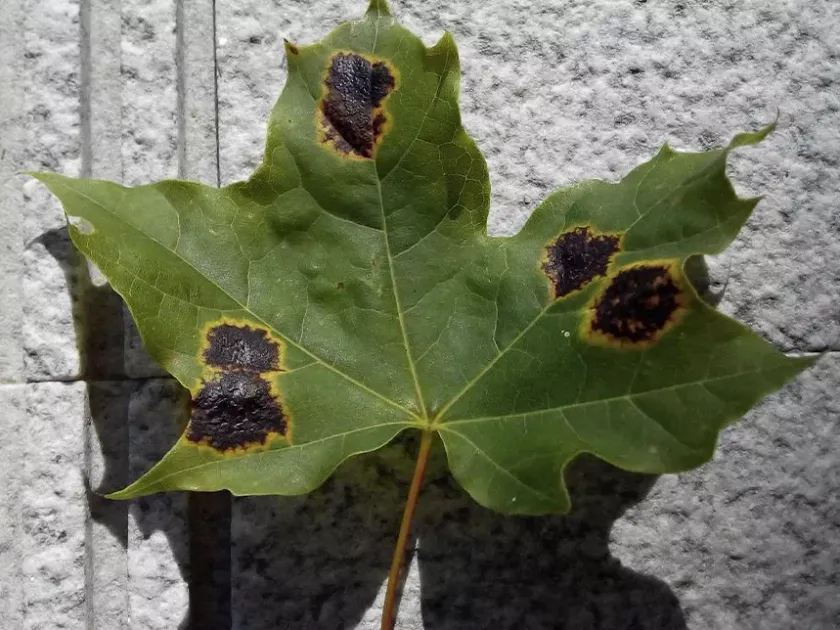
Symptoms typically become visible during the mid-summer period, appearing as distinct spots on the maple leaves.
These spots are often irregular or circular in shape, characterized by a dark border and a lighter, necrotic center where the tissue has died.
As the infection progresses, small black fruiting bodies, known as acervuli, develop within the lesions, appearing as dark specks on the leaf surface.
Severe infestations lead to yellowing of the foliage and premature leaf drop, which can significantly alter the tree's appearance.
In some cases, the petioles of the leaves can also be affected, leading to wilting and premature detachment of the foliage from the branches.
Pathogen
The disease is caused by the fungus Didymosporina aceris, which is classified as a pathogen responsible for leaf spot symptoms in various maple species.
This fungus survives as mycelium within fallen leaves throughout the winter, waiting for favorable spring conditions to resume its life cycle.
During the growing season, the pathogen produces conidia in acervuli, which rupture the epidermis of the leaf to release spores into the environment.
The spread of the infection is primarily mediated by water splashes from rainfall and wind, which distribute spores to healthy parts of the tree.
Taxonomically, it belongs to the group of fungi that thrive in humid environments and specifically target the foliage of deciduous trees.
Conditions for development
Maple didymosporiosis is favored by warm and highly humid weather conditions, which are essential for spore germination and colonization.
Dense canopies and poor air circulation within the tree foliage create a microclimate that traps moisture and facilitates the rapid spread of the fungus.
Prolonged wet weather, including frequent rains, significantly increases the risk of an outbreak during the active growth phase of the trees.
Stress factors such as nutritional deficiency or physical damage make trees more susceptible to invasion by the pathogen.
The presence of overwintering inoculum in old leaf debris on the ground is a major factor in triggering new infections each spring.
Why it matters
The primary concern with this disease is the degradation of the aesthetic value of maple trees, particularly in landscaping and ornamental gardening.
Premature leaf loss affects the tree’s photosynthetic capacity, which can lead to reduced vigor and stunted growth over several seasons.
Repeated yearly infections drain the tree's energy reserves, leaving it less prepared to withstand cold winters or drought periods.
In nursery settings, this disease can lead to significant economic losses due to the reduced quality and marketability of the young trees.
The weakening of the tree's immune system due to persistent infection may also make it more vulnerable to secondary pests and bark-boring insects.
Protection
The most important control measure is the thorough collection and removal of all fallen leaves at the end of the season to eliminate overwintering sites.
Pruning should be performed to improve air circulation within the canopy, which helps to keep the foliage dry and inhibits fungal growth.
Preventive fungicide treatments, especially those containing copper, can be applied early in the spring to protect the new foliage from infection.
If symptoms are detected, the use of systemic fungicides can help contain the spread of the fungus and minimize further damage to the leaves.
- Rigorous sanitation of the planting area.
- Proper spacing to allow for optimal airflow.
- Balanced fertilization to boost tree vitality.
Discussion
No discussions yet — be the first.