
Diaporthe wilt of grapevine
Diaporthe vitimegaspora
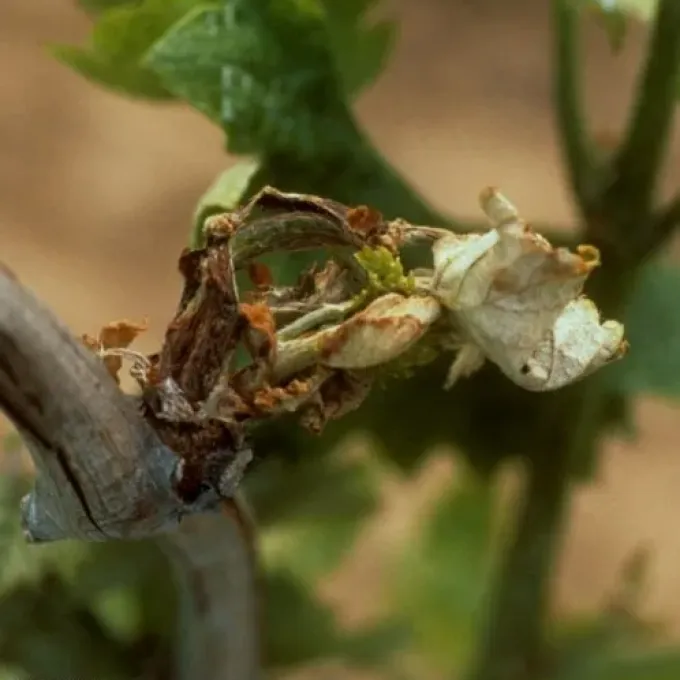
Description
Symptoms
The most prominent sign of Diaporthe wilt is the sudden wilting of individual canes or entire cordons. Affected foliage quickly loses turgor, turns yellow, and eventually dries out while remaining attached to the vine.
Closer inspection of the wood reveals necrotic lesions and longitudinal bark cracking. These areas often appear dark, indicating the presence of fungal mycelium beneath the surface layer.
Cross-sections of infected shoots typically show significant browning of the vascular tissues. This internal discoloration confirms the disruption of the plant's hydraulic system, which leads to the characteristic wilt.
During periods of high humidity, the pathogen may produce small, black fruiting bodies on the surface of the bark. These structures release spores that can lead to further infection cycles within the vineyard.
- Sudden flagging and wilting of shoots.
- Yellowing and browning of leaves.
- Development of necrotic streaks on the bark.
- Stunted growth and death of developing grape clusters.
- Internal vascular browning visible on cross-sections.
Pathogen
The causal agent of this disease is the fungus Diaporthe vitimegaspora, which is classified as an ascomycete. This pathogen is known for its ability to persist in plant debris and infected vines for extended periods.
The fungus completes its life cycle by producing spores in specialized structures, allowing for dispersal via wind and rain splashes. Once it lands on susceptible tissue, it colonizes the host's vascular system.
Infection typically occurs through open wounds, pruning cuts, or natural physiological openings in the grapevine. Once inside, the fungal mycelium spreads, disrupting the transport of water and nutrients.
The pathogen is highly adapted to the grape plant's metabolic cycle, allowing it to remain active throughout the growing season. Its survival strategy relies on over-wintering within the bark of infected canes.
The biological complexity of Diaporthe vitimegaspora makes it a persistent threat in many viticultural regions. Its ability to colonize woody parts of the vine complicates eradication efforts.
Conditions for development
The development of Diaporthe wilt is heavily dependent on moisture. High humidity and frequent rainfall provide the necessary conditions for fungal spore germination and penetration of plant tissues.
Temperatures ranging from 20–25°C are optimal for the pathogen's growth. These conditions allow the fungus to spread rapidly and colonize healthy vine tissues within a short time frame.
Poor ventilation within the vineyard canopy creates an ideal environment for the disease. Dense foliage prevents the rapid drying of the vine, keeping surfaces moist and susceptible to infection.
Physical injuries caused by pruning, mechanical harvesting, or insect feeding serve as primary entry points for the fungus. Maintaining vine health is essential to minimize the risk of pathogen entry.
Improper nutritional balance, particularly high nitrogen application, can lead to soft, succulent growth that is more vulnerable to infection. A balanced fertilizer program helps strengthen the plant's natural defenses.
Why it matters
The economic impact of Diaporthe wilt is primarily seen in the loss of permanent woody structures. Persistent infection requires heavy pruning or vine removal, leading to significant yield loss.
Fruit quality is also severely compromised, as the restriction of nutrient flow leads to smaller, shriveled berries with poor sugar accumulation. Such fruit is often unsuitable for high-quality wine production.
The overall vigor of the grapevine is reduced, making it more susceptible to environmental stressors and other diseases. This cumulative damage can significantly shorten the productive lifespan of the vineyard.
The spread of the disease can be rapid, potentially affecting large sections of a vineyard if left unmanaged. Control efforts, including fungicide applications and specialized labor, increase overall production costs.
Ultimately, the threat of Diaporthe wilt necessitates a proactive approach to vineyard management to maintain long-term profitability and vine health.
Protection
Integrated disease management is essential to control Diaporthe wilt. The primary step involves strict sanitary pruning, where all infected woody materials are removed and burned to eliminate the inoculum source.
Vineyard tools must be regularly disinfected to prevent the transmission of the fungus between healthy and infected vines during pruning operations. This simple step is vital for limiting the spread.
Preventive fungicide treatments, particularly those based on copper, are effective when applied during the early stages of bud break to protect emerging green tissues from initial infections.
When the disease is detected, systemic fungicides with curative properties can be used to mitigate the severity of the infection. Rotating different chemical classes is necessary to manage resistance.
Improving canopy management, such as thinning shoots and proper trellising, increases airflow and sunlight penetration. This promotes rapid drying and helps create an environment less favorable to the fungus.
Discussion
No discussions yet — be the first.