
Phomopsis twig blight
Diaporthe vaccinii
Description
Symptoms
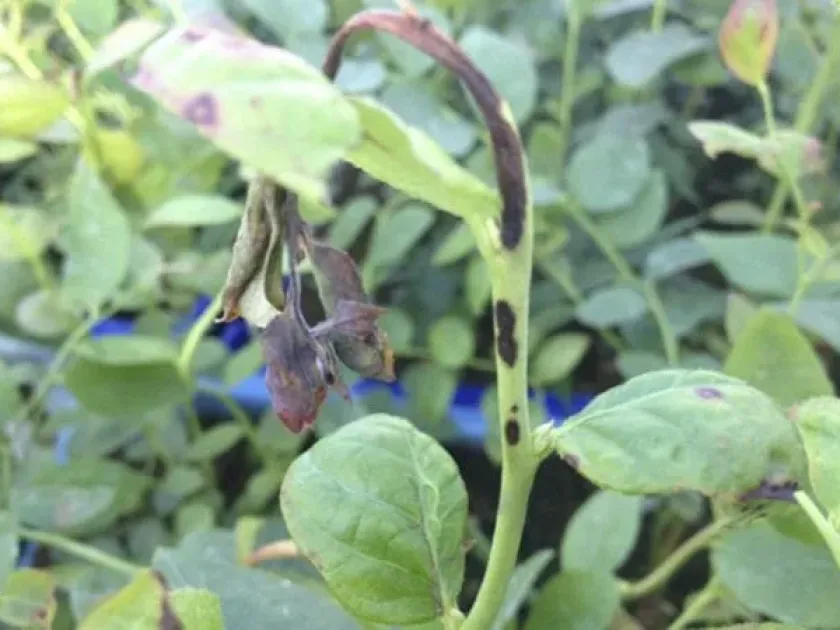
The most distinctive symptom is the sudden wilting and dieback of young twigs, often curling into a shepherd's crook shape. Leaves on affected branches turn yellow or bronze before eventually dropping.
On the bark of infected canes, growers may observe cankers or grayish-brown lesions. These areas often appear sunken or cracked, and the surrounding bark may show signs of peeling.
When an infected stem is cross-sectioned, the internal tissues will reveal significant browning and necrosis. This internal damage interrupts water and nutrient transport, leading to the rapid decline of the branch.
Under high humidity, tiny black dots known as pycnidia emerge on the surface of the lesions. These structures are reservoirs of spores that allow the disease to spread rapidly to healthy parts of the plant.
In severe cases, the fungus may infect the berries themselves, causing them to shrivel, rot, and become mummified, which severely degrades the market quality of the harvest.
Pathogen
The disease is caused by the fungus Diaporthe vaccinii (syn. Phomopsis vaccinii), an ascomycete pathogen that attacks the vascular system of blueberry plants. It is one of the most destructive diseases affecting commercial blueberry production.
The pathogen completes its life cycle by producing both conidia and ascospores. This dual reproduction strategy ensures the fungus can persist and spread across a plantation with high efficiency.
During the dormant season, the fungus survives as mycelium within the infected stems. As temperatures rise in spring, the fungus begins to produce fruiting bodies that release spores to initiate new infections.
Infection is typically facilitated by the presence of wounds, such as those caused by winter pruning, frost injury, or mechanical impact. Once inside, the fungus invades the cortex and xylem tissues.
The fungus is highly resilient and can colonize various parts of the plant, including canes, twigs, and even fruit, making it a persistent challenge for growers globally.
Conditions for development
The development of Diaporthe vaccinii is strongly favored by wet and humid weather conditions. Frequent rain showers facilitate the splashing of spores from one plant to another.
Mild to warm temperatures are ideal for the rapid germination of fungal spores on plant surfaces. The infection process is much faster in climates with high air moisture and limited sunlight.
Poorly ventilated plantations, where foliage remains wet for extended periods after rain, are significantly more susceptible to outbreaks. Dense plant growth prevents the air circulation needed to keep the canopy dry.
Mechanical injuries, particularly those caused by improper pruning or machinery use, provide easy entry points for the pathogen to bypass the plant's natural defenses.
Nutritional deficiencies or improper soil pH management can leave plants stressed and less capable of mounting an effective immune response against the advancing fungal infection.
Why it matters
Phomopsis twig blight causes significant economic losses by reducing total yield and destroying the productive capacity of infected bushes. In some cases, the entire plant may die.
The loss of fruit quality, due to direct berry infection or the weakening of fruit-bearing canes, makes the produce unsellable. This directly impacts the profitability of the operation.
An infected field acts as a constant source of inoculum. If left untreated, the disease spreads annually, eventually leading to a complete abandonment of the plantation due to high management costs.
The disease reduces the long-term vigor of the blueberry bush, making it more susceptible to environmental stressors like winter cold and extreme heat, creating a cycle of decline.
Increased expenditures for fungicides, additional labor for sanitation, and potential land decontamination represent a heavy financial burden for any agricultural producer.
Protection
The cornerstone of control is strict sanitation. All infected canes must be pruned out, ensuring cuts are made into healthy, green tissue to remove all signs of fungal growth.
Chemical control programs involving the strategic application of fungicides are essential. Treatments are most effective when applied during early spring and after flowering to prevent new infections.
Planting healthy, pathogen-free nursery stock is the first step in avoiding the introduction of Diaporthe vaccinii into a new orchard environment.
Improving canopy airflow through proper pruning and planting density management helps keep the foliage dry, which is critical for limiting the success of fungal spore germination.
- Sanitizing pruning tools with alcohol to prevent cross-contamination.
- Removing and destroying all pruned debris to limit inoculum.
- Applying preventive copper-based fungicides when necessary.
- Providing adequate fertilization to maintain robust plant health.
Discussion
No discussions yet — be the first.