
Diaporthe necrosis of branches
Diaporthe strumella
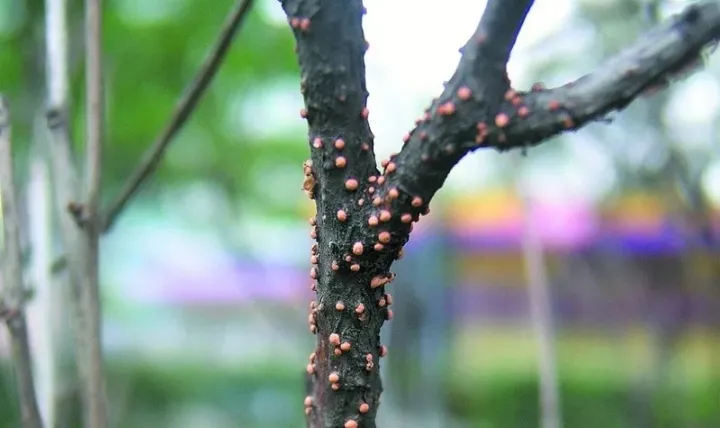
Description
Symptoms
The initial symptom of infection is the appearance of localized necrotic spots on the bark, which gradually turn into a greyish-brown color.
Tiny black fruiting bodies (pycnidia) of the fungus become visible on the affected bark, protruding through the epidermis as the disease progresses.
As the infection worsens, branches begin to crack and dry out, eventually leading to the death of the specific affected limb.
Leaves on infected shoots often exhibit premature yellowing and curling, accompanied by leaf drop before the end of the season.
Upon peeling back the bark of an affected branch, the underlying wood often shows dark or brownish discoloration, indicating deep colonization by the fungal mycelium.
Pathogen
The causative agent of the disease is the ascomycete fungus Diaporthe strumella, which primarily targets the bark and woody tissue of perennial berry shrubs.
The pathogen completes its life cycle by forming pycnidia and perithecia within the infected plant tissues, allowing it to survive through the dormant season.
The fungus overwinters as mycelium, remaining dormant in infected twigs, dead bark, or organic debris left on the soil surface.
Infection spreads through conidia, which are disseminated by wind, rain splashes, or insect vectors during the active growing season.
It is a facultative parasite, meaning it can survive on dead plant material for long periods, waiting for the right conditions to infect healthy hosts.
Conditions for development
High humidity and frequent rainfall are the primary environmental drivers that facilitate the germination and spread of Diaporthe strumella spores.
Dense, poorly ventilated plantings prevent proper air circulation, creating a microclimate that strongly favors fungal development and infection.
Plants that are stressed due to poor soil fertility, drought, or general neglect show decreased resistance to fungal pathogens.
Temperature ranges between 18°C and 25°C provide the optimal metabolic environment for the fungus to expand its mycelial network within the plant.
Mechanical injuries from pruning, frost cracks, or pest damage create entry points for the fungus to colonize the host plant's internal vascular system.
Why it matters
The primary threat is the rapid death of branches, which significantly reduces the yield and berry quality of infested shrubs.
The disease is chronic; without proper intervention, the infection can spread throughout the entire plant, leading to its complete death within a few years.
Disruption of the plant's vascular system hampers nutrient and water transport, leading to the overall physiological decline of the host shrub.
Rapid localized spread can turn into an epidemic within an orchard or garden, necessitating the destruction of infected plants to protect healthy ones.
Economic damage is substantial, encompassing the loss of current harvests and the long-term cost of replacing and rehabilitating nursery stock.
Protection
The most effective strategy is rigorous sanitation: pruning and immediately burning all infected, dead, or damaged branches.
Pruning cuts must be sealed with professional pruning paste or oil-based paint to prevent secondary infections through open wounds.
Early spring applications of copper-based fungicides are recommended as a preventative measure to limit spore germination before the growing season.
Maintaining optimal plant spacing and a balanced fertilization program helps improve the natural resistance of the plants against the necrosis.
- Disinfecting all pruning tools between plants.
- Removing and destroying all fallen leaves during autumn cleaning.
- Monitoring the garden for early signs of branch dieback.
Discussion
No discussions yet — be the first.