
Diaporthe dieback
Diaporthe nobilis
Description
Symptoms
Early symptoms include the yellowing and premature wilting of leaves on affected branches. Although the leaves dry out and turn brown, they often remain attached to the twigs for an extended period.
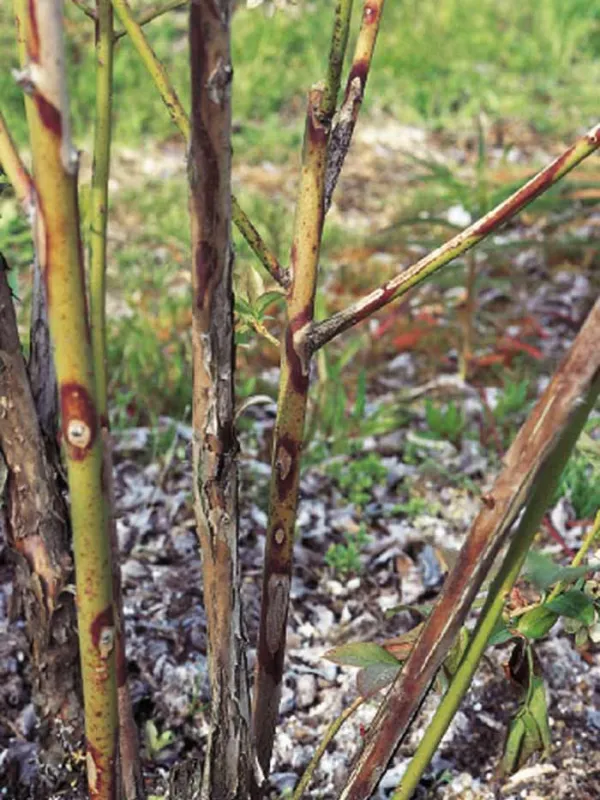
On the bark, distinct sunken necrotic lesions appear. Over time, these lesions develop into deep cracks or ulcers, which eventually girdle the branch, causing it to die completely.
Internally, the wood exhibits discoloration, often turning dark brown or black, indicative of fungal decay. Small, dark, fruiting bodies of the fungus may emerge through the bark in these necrotic areas.
In high-humidity conditions, the surface of the infected bark may show signs of fungal mycelium or spore masses. This visible growth serves as a source for further spread via water droplets or wind.
As the disease progresses, the symptoms move from small twigs to larger branches, eventually compromising the integrity of the main trunk and leading to plant death.
Pathogen
The causal agent of this disease is the ascomycete fungus Diaporthe nobilis, which belongs to the Sordariomycetes class. It is a persistent pathogen that functions both as a parasite and a saprotroph.
The life cycle involves the formation of pycnidia and perithecia, producing conidia and ascospores. These spores are primary agents of infection, enabling the fungus to spread across host populations.
It is classified as a necrosis-inducing disease. The fungus targets the xylem and phloem, colonizing wood tissue and interrupting the plant's essential physiological processes.
This fungus is biologically versatile, capable of surviving in dead wood for long periods. Its persistence makes complete eradication from infected areas a significant challenge.
The pathogen is highly opportunistic, often awaiting a breach in the plant's bark to initiate colonization. Once inside, it deepens its invasion, systematically destroying the wood structure.
Conditions for development
Diaporthe nobilis thrives in prolonged warm and humid environments. Moisture is the critical factor for spore germination and the initial establishment of the fungal infection.
Plants under environmental stress, such as those suffering from drought, mechanical damage, or temperature fluctuations, are significantly more susceptible to infection by this fungus.
Spore dissemination occurs via air currents and rainfall splash. Contaminated pruning tools are one of the most common vectors for transmitting the fungus between plants in managed landscapes.
Dense, poorly ventilated plant canopies create stagnant air conditions that promote disease development. High humidity levels within the canopy facilitate the rapid spread of the pathogen.
Infected plant debris left in the garden or orchard acts as a reservoir for the pathogen. Failure to clean up dead wood during the off-season ensures a higher risk of recurrence the following year.
Why it matters
Diaporthe dieback is highly damaging to various ornamental and fruit-bearing woody plants. It causes irreversible tissue destruction and can significantly reduce plant vigor and yield.
By compromising the plant's vascular system, the disease leads to a gradual starvation of the branches. This results in dieback that destroys the plant's symmetry and long-term health.
The presence of necrotic lesions attracts secondary pests, such as wood-boring insects, which further weaken the host, accelerating the eventual decline of the tree or shrub.
For agricultural and horticultural businesses, this disease results in severe economic losses due to the need for plant removal and reduced aesthetic or commercial quality of the crop.
Once the pathogen is established, it requires intensive and costly management programs to prevent the complete loss of the infected specimen or neighboring plants.
Protection
Sanitary pruning is the most critical management practice. Infected branches must be removed, cutting well into the healthy tissue, and discarded far from the planting site.
Rigorous disinfection of pruning tools is essential after every cut to avoid spreading fungal spores. Using a 70% ethanol solution or a bleach solution helps keep tools sterile.
Providing proper irrigation, fertilization, and site maintenance builds plant resilience. A strong, well-nourished plant is naturally better equipped to resist infection by fungal pathogens.
Preventive application of fungicides, particularly those containing copper or systemic active ingredients, can help protect susceptible plants during high-risk seasons.
- Regular inspection for early signs of lesions.
- Painting large pruning wounds with protective sealants.
- Selecting and planting resistant cultivars when available.
Discussion
No discussions yet — be the first.