
Phomopsis cane and leaf spot
Diaporthe neoviticola
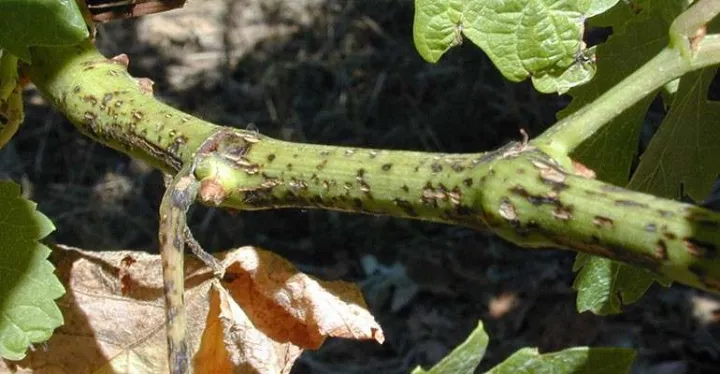
Description
Symptoms
The first symptoms appear on young shoots in spring as small, dark brown or black spots, which later develop into longitudinal cracks or lesions in the bark.
On leaves, the disease manifests as small necrotic spots surrounded by a yellow halo. As the leaf expands, the necrotic tissue often tears, leaving jagged holes in the lamina.
Infection of the rachis leads to brittleness and premature dropping of the berries. Berries infected by the fungus may shrivel, turn dark purple, and eventually rot.
Nodes on the shoots often show necrosis, which can lead to premature defoliation. Affected canes develop a whitish, bleached appearance and are covered with minute black dots, which are the fungal pycnidia.
- Dark spots on young shoots.
- Cane cracking and bleaching.
- Leaf deformation and spotting.
- Rachis brittleness and berry loss.
- Visible black pycnidia on wood.
Pathogen
The causal agent of Phomopsis cane and leaf spot is the fungus Diaporthe neoviticola (formerly known as Phomopsis viticola). It is a destructive pathogen that attacks all green parts of the vine, leading to the condition commonly called black spot.
The fungus is a specialized parasite capable of surviving in the woody tissues of the vine during the dormant season. During the growing season, it spreads via pycnidia, which release infectious conidia.
The fungal mycelium colonizes the epidermis and cortical parenchyma, causing cell death and disrupting the plant's vascular system. The pathogen demonstrates high adaptability, making it difficult to eradicate once it establishes in a vineyard.
Infection remains present in both annual shoots and perennial wood, turning the disease into a chronic issue for the vineyard. Spores are dispersed through rain splashes, wind, and even vineyard tools.
The pathogen's life cycle is strictly synchronized with the vine's phenological phases, with the highest susceptibility period occurring during the early stages of shoot development.
Conditions for development
High humidity and rainfall during the early growing season are the primary drivers of Phomopsis development. Optimal infection occurs at temperatures between +15°C and +25°C.
Persistent wet weather in spring provides the necessary film of water for fungal spores to germinate and penetrate the plant tissues successfully.
Poor canopy management, such as dense foliage and lack of proper aeration, maintains high moisture levels that favor fungal proliferation.
Nutritional imbalances, particularly nitrogen excess, weaken the natural defense mechanisms of the vine, making it more prone to infections.
Inadequate sanitation, where infected vine debris is left in the vineyard, provides a continuous reservoir of inoculum for subsequent seasons.
Why it matters
The main impact of Phomopsis is the premature dieback of fruit-bearing shoots, which significantly reduces total yield and compromises the quality of the harvested grapes.
Severe infection weakens the entire vine, leading to reduced cold hardiness and the potential loss of permanent cordons or whole plants during harsh winters.
Affected wood loses structural integrity and becomes brittle, making it susceptible to breakage during heavy crop loads or routine maintenance activities.
Wine quality is adversely affected due to the disruption of physiological ripening processes and the increased risk of secondary fungal rot infections.
Neglecting the disease for several years results in the degradation of vineyard productivity, significantly shortening the economic lifespan of the plantation.
Protection
Effective management begins with sanitation: all infected canes must be pruned and removed or burned to drastically reduce the fungal inoculum.
Applying contact and systemic fungicides at the early bud break stage (the "green tip" phase) is the most critical intervention for preventing primary infections.
Proper canopy management, including vertical shoot positioning and thinning, is essential to ensure good air circulation and rapid drying of tissues after rainfall.
Timely green operations like suckering and hedging help remove excessive foliage, promoting better sunlight penetration and reducing the disease-favorable microclimate.
Selecting varieties with natural genetic resistance to Phomopsis is the most sustainable strategy for long-term vineyard health and reduced chemical inputs.
Discussion
No discussions yet — be the first.