
Diaporthe canker of Douglas fir
Diaporthe lokoyae
Description
Symptoms
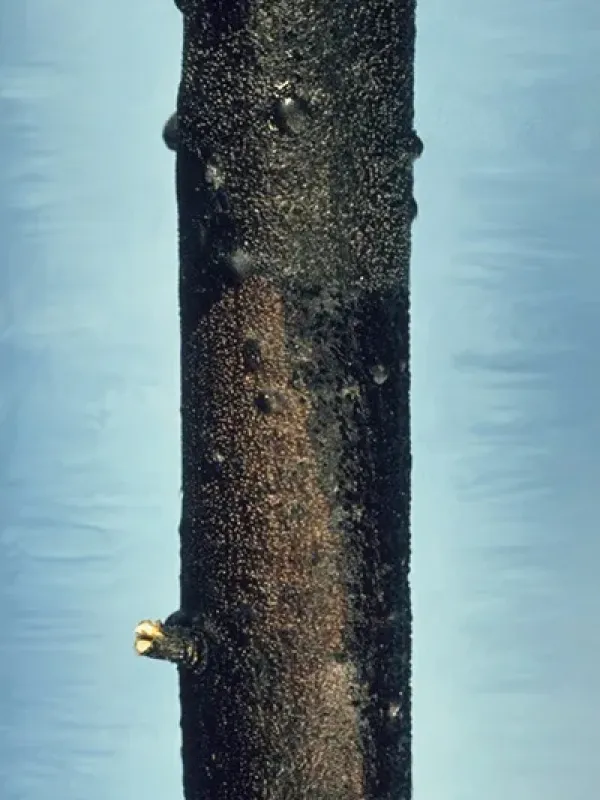
The initial symptom of infection is the emergence of small necrotic lesions on the bark of young twigs and shoots, which darken and become sunken over time.
Characteristic resinous cankers often form around the infected areas, indicating the tree's attempt to localize the pathogen through resin production.
As the disease progresses, needles on the affected shoots turn yellow, followed by a reddish-brown discoloration and premature shedding, leading to localized crown dieback.
Tiny black spots, representing the fungal pycnidia, can be observed on the dead bark surface; these erupt through the epidermis and release spores for secondary infections.
In young trees, if the main stem is girdled by the canker, it results in the death of the entire plant portion located above the site of infection.
Pathogen
The disease is caused by the fungus Diaporthe lokoyae (anamorph: Phomopsis lokoyae). It is an ascomycete that primarily parasitizes the bark and cambial tissues of various conifer species.
The fungus survives within infected branches and stems as mycelium, eventually producing fruiting bodies known as pycnidia, which become visible on the bark surface after wet weather.
The pathogen's life cycle is closely linked to environmental humidity; spores are disseminated primarily by rain splash and wind, infecting susceptible areas of the tree.
This microorganism acts as a specialized parasite, often exploiting mechanical injuries or stress-induced weakness in the host tree to establish infection.
The genetic diversity of the fungal population allows it to adapt to various climatic conditions, making long-term monitoring and containment in forest nurseries difficult.
Conditions for development
The development of Diaporthe canker is favored by high relative humidity and moderate temperatures, typical of autumn and spring seasons in Douglas fir habitats.
Plants weakened by drought stress, frost damage, or insect attacks are highly vulnerable, as their compromised immune systems cannot effectively resist fungal invasion.
Dense, poorly ventilated stands create a microclimate that is ideal for spore germination and the rapid colonization of host tissues by the pathogen.
Waterlogged soils and a lack of proper silvicultural management significantly increase the risk of disease outbreaks and the spread of the infection across a site.
Infection often occurs through micro-cracks in the bark, which may be caused by sudden temperature fluctuations common during early spring or late autumn.
Why it matters
Diaporthe canker poses a severe threat to young Douglas firs in nurseries, where the disease can cause mass mortality of seedlings within a single growing season.
In mature trees, the disease leads to stem deformation and a substantial reduction in wood quality due to the development of deep cankers and associated resin pockets.
Loss of foliage and crown dieback reduces the overall photosynthetic capacity, which negatively impacts the height and diameter growth increments of the tree.
Infected stands serve as persistent reservoirs of inoculum, facilitating the spread of spores to healthy areas and increasing the overall scale of infestation.
The economic impact includes not only the direct loss of timber but also the substantial costs associated with sanitation felling and the application of chemical treatments.
Protection
The primary control method involves rigorous sanitation, which includes the prompt removal and destruction (by burning) of all infected branches and dead trees.
Effective prevention strategies include selecting suitable planting sites with adequate aeration and drainage to prevent the development of stagnant, humid zones.
In nursery settings, it is recommended to maintain optimal planting density, avoiding overcrowding to ensure natural ventilation within the tree canopy.
Chemical control measures include the application of copper-based fungicides or other systemic treatments during high-risk periods, strictly following label instructions.
The use of biological control agents, such as antagonistic fungi, is an emerging area of research that may offer environmentally sustainable solutions for forest management.
Discussion
No discussions yet — be the first.