
Diaporthe necrosis
Diaporthe cytosporella
Description
Symptoms
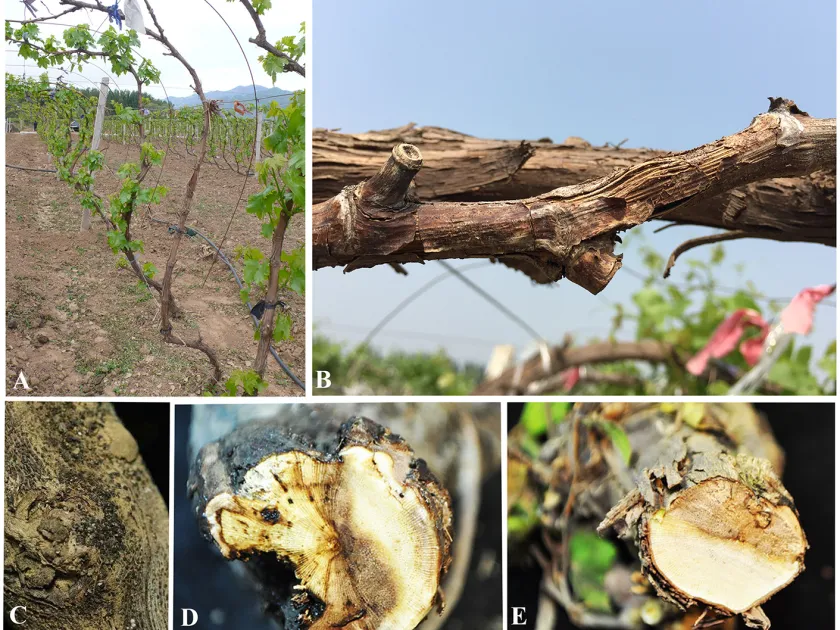
Symptoms often start as small, discolored, slightly sunken lesions on the bark of twigs, branches, or the main trunk of the tree.
As the infection progresses, the bark begins to crack and peel, revealing dark brown necrotic tissue underneath the damaged surface.
Small, pinhead-sized black dots, representing the fungal fruiting bodies, eventually become visible on the surface of the withered bark.
Leaves on affected branches may show signs of chlorosis, followed by wilting and premature drying while remaining attached to the twig.
Advanced stages of the disease manifest as girdling of the stems or branches, resulting in sudden dieback and death of the distal parts of the tree.
Pathogen
The disease is caused by the ascomycete fungus Diaporthe cytosporella, often occurring in association with its conidial Phomopsis stages.
This pathogen acts as a necrotrophic parasite, primarily invading the bark, phloem, and cambium layers of woody plants and shrubs.
The fungus colonizes the host tissue by secreting enzymes that break down cell walls, eventually leading to the death of the cambium and underlying xylem.
It survives in dead bark and twig debris, producing fruiting bodies such as pycnidia and perithecia which serve as inoculum sources for new infections.
Dissemination is facilitated by splashing rain and high humidity, which trigger the release of spores onto vulnerable parts of the host plant.
Conditions for development
Development of Diaporthe necrosis is favored by warm, humid weather conditions, particularly during the active growth period of the host.
Trees that are already stressed due to drought, poor soil fertility, or winter injury are significantly more susceptible to infection.
Wounds caused by pruning, mechanical harvesting, or insect feeding act as the primary entry points for the fungal spores.
Dense canopies with poor air circulation create high-humidity microclimates that are ideal for spore germination and colonization.
Prolonged spring rains provide the necessary moisture to facilitate the discharge of spores and their spread throughout the canopy.
Why it matters
The disease causes significant damage by obstructing the vascular system, which leads to water and nutrient deficiency throughout the plant.
It severely reduces the growth vigor of the host, leading to reduced yields and inferior fruit quality compared to healthy specimens.
Infected trees exhibit reduced hardiness, making them more prone to secondary damage from frost or extreme temperatures in winter.
If not managed, the disease can lead to the systemic death of entire branches, permanently disfiguring the canopy and reducing tree lifespan.
The economic impact includes high management costs for tree surgery, fungicide applications, and potential loss of entire tree stands.
Protection
Sanitation remains the most critical control measure, requiring the immediate pruning and destruction of all dead or symptomatic branches.
All pruning equipment should be sanitized between trees using an appropriate disinfectant to prevent the spread of fungal spores.
Protective fungicide sprays, especially copper-based compounds, should be applied during the early spring to protect healthy bark tissues.
Applying tree wound dressings after pruning can provide a physical barrier against spore penetration while allowing the plant to heal.
Implementing a comprehensive pest management program helps prevent mechanical injuries that facilitate the entry of Diaporthe pathogens.
Discussion
No discussions yet — be the first.