
Diaporthe dieback of papaya
Diaporthe caricae-papayae
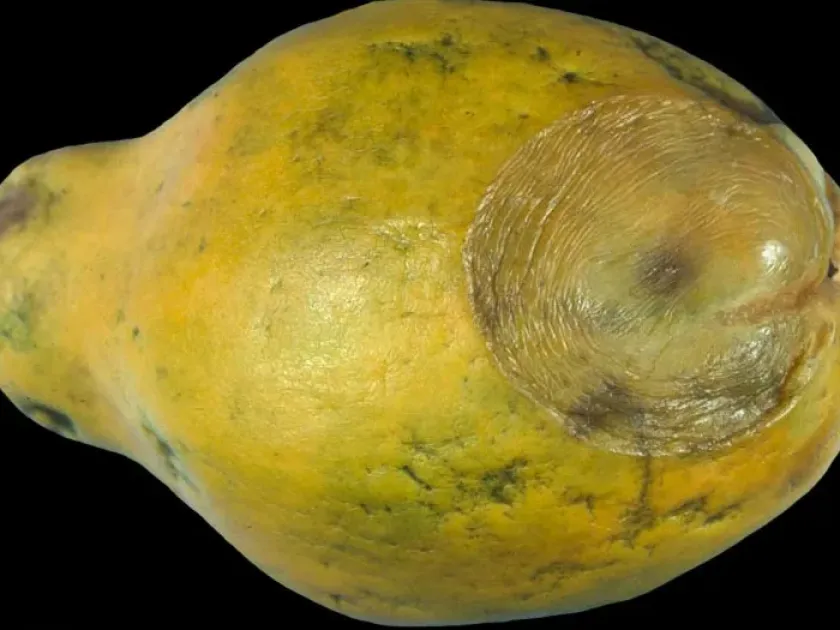
Description
Symptoms
The most prominent sign is the rapid wilting of the upper foliage, which appears as if the plant is suffering from drought despite adequate soil moisture.
Water-soaked lesions appear on the stems, which gradually enlarge and turn dark brown or black, resulting in tissue necrosis.
The internal vascular system shows clear discoloration and decay upon cross-sectioning the stem, confirming the colonization of the fungus.
As the disease progresses, leaves turn chlorotic, wilt, and eventually drop off, leaving the top of the plant stunted and unproductive.
In advanced stages, the structural integrity of the stem is compromised, leading to the collapse or lodging of the tree under its own weight.
Pathogen
The disease is caused by the fungus Diaporthe caricae-papayae, an ascomycete pathogen specifically associated with papaya plantations. It is highly aggressive in tropical environments.
The pathogen completes its life cycle by producing both sexual and asexual spores. Conidia serve as the primary inoculum for spreading the disease during wet weather conditions.
The fungus invades the host plant through mechanical injuries, wounds caused by pests, or natural openings. Once inside, it colonizes the vascular tissues, specifically the xylem vessels.
Mycelial growth blocks water transport throughout the plant, leading to the characteristic wilting symptoms observed in infected papaya trees.
The fungus can survive for extended periods in crop debris and infected stems, making sanitation a critical aspect of disease management strategies.
Conditions for development
High humidity and temperatures ranging from 25°C to 30°C are ideal for the rapid development and sporulation of Diaporthe caricae-papayae.
Frequent rainfall episodes are major contributors to the spread of the pathogen, as water droplets facilitate the movement of spores across the plantation.
Poorly drained soils that remain saturated for long periods create a stress environment for papaya trees, increasing their susceptibility to fungal infections.
Crowded planting schemes restrict airflow, maintaining high humidity levels around the stems, which is highly conducive to fungal outbreaks.
Lack of proper pruning and canopy management leads to increased contact between wet plant parts, further promoting the transmission of the disease.
Why it matters
Diaporthe dieback can cause significant yield loss, ranging from partial reduction in fruit quality to the total death of the tree.
The disease forces growers to remove entire plants, which disrupts production schedules and decreases the overall output of the fruit plantation.
Infected fruits are often smaller and of poor quality, failing to meet market standards for weight, appearance, and shelf life.
The persistence of the pathogen in the environment necessitates long-term management efforts, increasing production costs due to pesticide application.
Failure to control the disease early can lead to rapid spread across a whole orchard, causing devastating financial consequences for producers.
Protection
The primary control measure is the use of disease-free planting material, often obtained from reputable nurseries that employ sterile growing techniques.
Sanitation practices are essential, including the immediate removal and destruction of infected stems to prevent further spore dissemination.
- Regular application of systemic fungicides to protect healthy tissue.
- Maintaining optimal spacing to improve air circulation and reduce humidity.
- Ensuring proper soil drainage to prevent waterlogging around the root zone.
- Cleaning and disinfecting all agricultural tools to avoid mechanical transmission.
Monitoring the orchard for early symptoms allows for timely intervention, preventing the disease from reaching a stage where the tree cannot recover.
Discussion
No discussions yet — be the first.