
Diaporthe birch necrosis
Diaporthe betulicola
Description
Symptoms
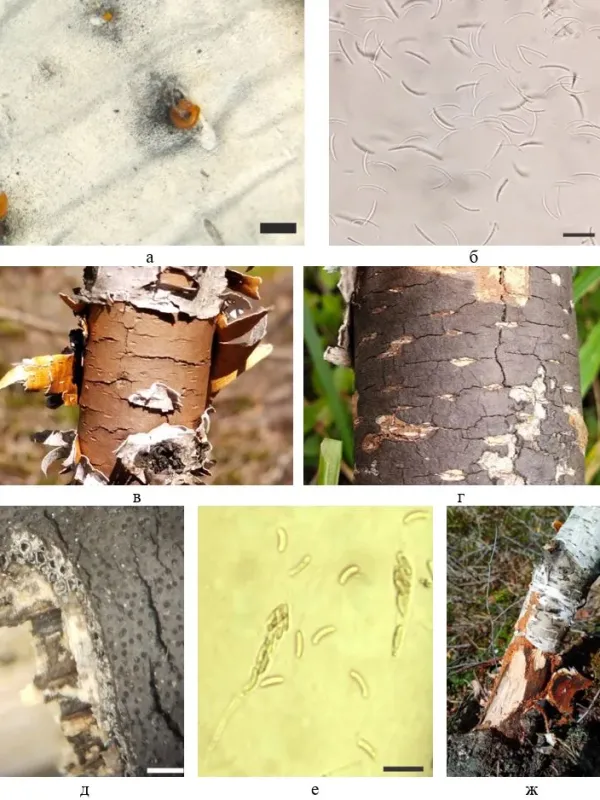
The primary symptom is the appearance of localized necrotic spots on the bark, which gradually expand and change color to brown or dark brown.
As the disease progresses, the bark cracks and forms deep, sunken ulcers, revealing necrotic tissue that eventually leads to the dieback of the surrounding area.
In the spring and summer, tiny black dots (pycnidia) appear on the surface of the lesions; these are the fungal fruiting bodies bursting through the periderm.
Branch dieback is a common sign of systemic infection, characterized by premature yellowing and withering of leaves, indicating that the vascular system is severely impaired.
If the necrosis encircles the entire trunk, the section of the tree above the lesion will eventually die, leading to the overall decline and potential death of the specimen.
Pathogen
The causative agent of this disease is the ascomycete fungus Diaporthe betulicola, which acts as a pathogen attacking various species of birch trees in forests and urban landscapes.
The life cycle of the fungus involves the development of stroma containing perithecia, which serve as the primary source of infection and allow the pathogen to survive through winter in the bark of infected trees.
Spore dispersal occurs primarily via wind and rainfall, which carry conidia to healthy woody tissues. The fungus is capable of persisting on fallen branches and woody debris, which serve as reservoirs for future outbreaks.
The fungus is biologically linked to the host's physiological state. Diaporthe betulicola frequently attacks weakened trees, invading the cambium and phloem layers, effectively obstructing the transport of water and nutrients.
During its growth, the fungus secretes specific enzymes that degrade cellulose and lignin, causing significant structural damage to the cell walls of the host plant.
Conditions for development
High humidity and moderate temperatures are the most critical factors favoring the development of the disease, as they provide ideal conditions for spore germination on the bark.
Trees weakened by environmental stresses, such as drought, pollution, or insect infestations, exhibit reduced immunity, making them significantly more susceptible to Diaporthe betulicola.
High planting density restricts airflow in the canopy, creating a microclimate that promotes the rapid spread of the pathogen between adjacent trees.
Mechanical injuries to the bark—caused by weather events like hail or heavy snow, or by poor pruning practices—provide entry points for the fungal spores.
Prolonged rainy periods are directly correlated with the intensity of spore production, often leading to sudden outbreaks of the necrosis across forest tracts.
Why it matters
Diaporthe necrosis causes significant economic and ecological damage by reducing the health, aesthetic value, and biological sustainability of birch populations.
Widespread infection leads to top-dieback, which decreases timber growth rates and degrades the quality of the wood for commercial use.
In forest nurseries, this disease can cause mass mortality among seedlings, necessitating expensive control operations and replanting efforts.
Weakened trees become highly vulnerable to secondary pests, such as wood-boring insects, which finalize the destruction of the infected tree.
In landscaping, infected trees lose their aesthetic appeal and pose safety risks due to the potential for large, dead branches to fall on public areas.
Protection
Regular sanitation measures, including the removal and disposal of infected branches and severely damaged trees, are the primary methods for reducing the disease inoculum.
Proper planting density and canopy management are essential to ensure adequate ventilation, which helps reduce the moisture levels that favor fungal growth.
Disinfecting pruning tools between every single tree is mandatory to prevent the mechanical transmission of fungal spores from diseased to healthy wood.
In nursery settings, preventive fungicide applications during periods of high humidity and spore activity can effectively protect young trees from infection.
Maintaining optimal tree health through proper fertilization and watering supports the tree’s natural immune response, making it more resilient against fungal pathogen colonization.
Discussion
No discussions yet — be the first.