
Diaporthe blight of juniper
Diaporthe asheicola
Description
Symptoms
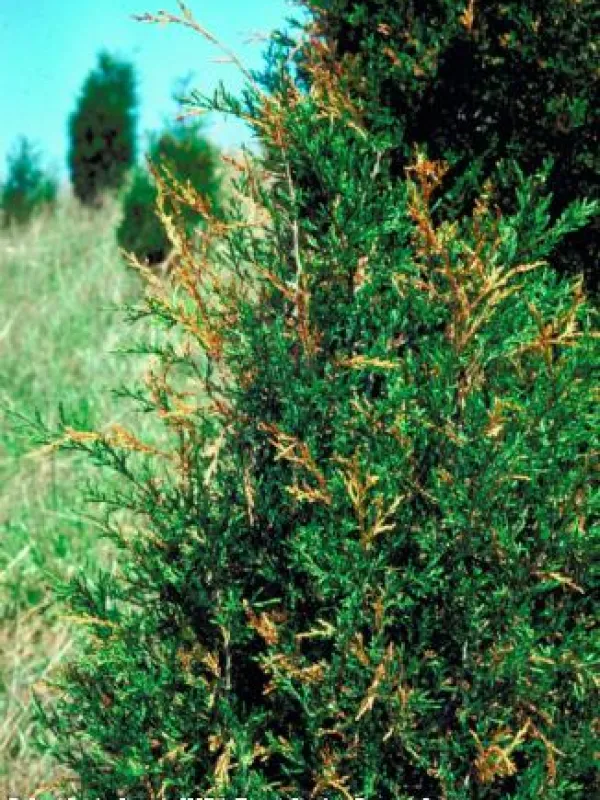
The primary symptom is the yellowing and subsequent browning of needles on individual branches. These symptoms often appear progressively, starting from the base of the branch.
Infected bark typically exhibits sunken lesions or cankers. Over time, these areas may develop cracks, and the wood underneath may appear discolored or dead.
Tiny black fruiting bodies, known as pycnidia, may be visible on the surface of infected bark, especially under humid conditions. These release spores during wet weather.
As the disease progresses, the distal parts of the branches dry out and wither. If the fungus reaches the main stem, it can cause the entire section of the plant to die.
Differentiating this from other environmental stressors requires careful inspection of the stem for specific canker formations and fungal structures.
Pathogen
The disease is caused by the fungus Diaporthe asheicola. This pathogen is a specific fungal species that targets members of the Cupressaceae family, including various juniper species.
The fungus acts as a parasite, invading the bark and cambium layers of the branches. It reproduces by forming small structures that release spores into the environment.
It is classified as a dieback disease. By colonizing the woody tissues, the pathogen disrupts the flow of nutrients and water, eventually leading to tissue necrosis.
The mycelium of the fungus can overwinter in dead branches and plant debris. This reservoir of inoculum allows the infection to persist in the garden year after year.
The life cycle of Diaporthe asheicola is highly dependent on favorable environmental conditions and the vulnerability of the host plant's defense system.
Conditions for development
High humidity and prolonged wet periods are the most critical factors for the spread of Diaporthe asheicola. Moisture is essential for spore germination.
Poor air circulation within dense canopies creates a microclimate that promotes fungal growth. Overcrowded plantings are significantly more susceptible to outbreaks.
Physical injuries caused by pruning tools, insects, or winter damage provide entry points for the pathogen. Fresh wounds are particularly vulnerable to colonization.
Plants under stress from poor nutrition, drought, or waterlogging have weaker defense mechanisms, making them easier targets for the fungal infection.
Seasonal fluctuations, particularly cool and wet spring conditions, are ideal for the primary infection period, leading to a surge in visible symptoms shortly thereafter.
Why it matters
The disease causes significant aesthetic damage to junipers, which are often prized for their shape and color. Brown, dying branches ruin the plant's ornamental appeal.
Persistent infections can severely weaken the juniper, making it more vulnerable to secondary pests and other diseases, ultimately leading to plant mortality.
The spread of the fungus to neighboring healthy plants poses a high risk to the entire landscape collection, necessitating expensive remediation or removal.
Loss of foliage impacts the photosynthesis process, thereby reducing the plant's energy reserves and inhibiting its growth and overall vigor.
Economic losses include the costs associated with repeated fungicide applications, the labor for careful pruning, and the potential replacement of dead landscape features.
Protection
Strict sanitation is the foundation of management. Infected branches must be pruned well below the site of infection and destroyed to prevent spore spread.
Always disinfect pruning tools with alcohol or a bleach solution between cuts to ensure that the fungus is not mechanically transferred to healthy branches.
Copper-based fungicides applied during the growing season can help protect healthy tissue. Regular treatments are particularly effective during rainy spring months.
- Maintain good spacing to ensure optimal air circulation;
- Avoid overhead irrigation to keep the foliage as dry as possible;
- Provide balanced fertilization to encourage robust growth;
- Remove and destroy all fallen debris from the base of the plant.
A proactive approach involving routine monitoring and environmental management is essential for long-term control of this fungal pathogen.
Discussion
No discussions yet — be the first.