
Diaporthe fungi
Diaporthales
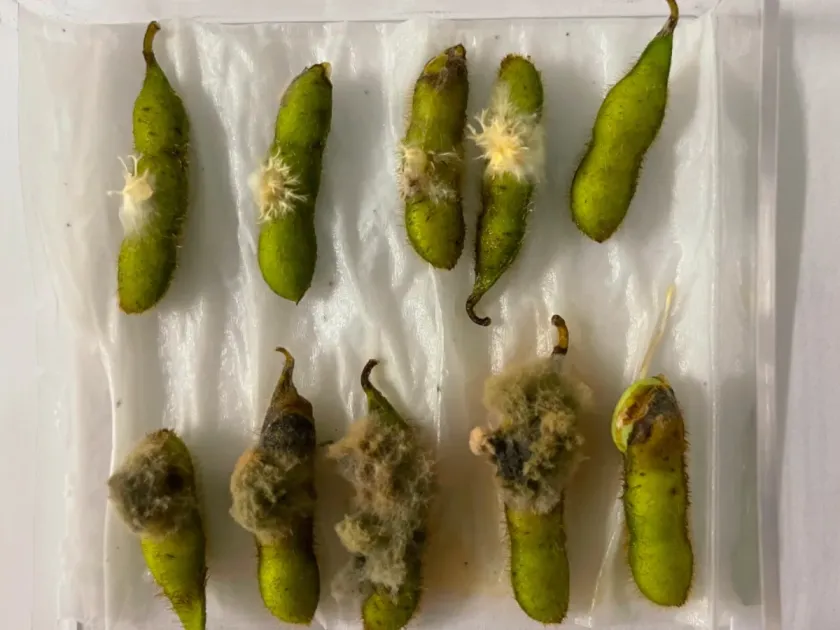
Description
Symptoms
Disease symptoms typically manifest as localized necrotic lesions on stems, leaf petioles, and foliage, which gradually enlarge over time.
Small, raised black structures known as pycnidia often appear on the surface of the lesions, serving as a diagnostic feature for identification.
Wilting and premature senescence of parts or the entire plant are common symptoms resulting from the colonization of the vascular tissue and production of phytotoxins.
Stem weakening, specifically at node junctions, leads to lodging and breakage, which significantly impacts the harvest efficiency and crop quality.
In some species, such as those causing stem canker, severe discoloration and cracking of the cortex can be observed, leading to plant death.
Pathogen
The order Diaporthales includes a wide range of ascomycetous fungi that are significant pathogens of various agricultural and horticultural crops worldwide.
Many species, particularly those in the Diaporthe and Phomopsis genera, exhibit complex life cycles involving both sexual reproduction in perithecia and asexual sporulation in pycnidia.
These fungi often behave as endophytes, residing within plant tissues without causing immediate damage, and transitioning to necrotrophic pathogens under stressful environmental conditions.
The pathogen spreads through the release of conidia, which are splashed by rain or wind onto healthy plant parts, initiating new cycles of infection throughout the growing season.
Survival of the fungus occurs in infected crop residues, weeds, and occasionally on or within the seeds, serving as a primary inoculum source for subsequent seasons.
Conditions for development
Diaporthales development is highly dependent on moist conditions; high humidity and frequent rainfall are critical for spore germination and colonization.
Temperatures ranging from 20°C to 28°C provide an ideal environment for the aggressive spread of the mycelium throughout the host plant.
Poor aeration in dense crop canopies creates a microclimate with stagnant, humid air, which significantly accelerates the rate of infection spreading between plants.
Wounds or physical damage caused by hail, insect feeding, or agricultural machinery provide easy access for the pathogen to penetrate the plant epidermis.
Long periods of overcast weather combined with high moisture levels often trigger severe outbreaks, especially in fields with a history of the disease.
Why it matters
The damage caused by Diaporthales fungi leads to substantial yield reductions, often decreasing both the quantity and the test weight of the harvested seeds.
Premature death of the foliage impairs the plant's ability to photosynthesize, directly impacting the filling of grains or the development of fruits.
In perennial crops, the disease causes canker formation on woody tissues, which stunts growth and may eventually necessitate the removal of affected trees.
The presence of these pathogens often lowers the quality of the harvested produce, sometimes making it unsuitable for processing due to discolored or shriveled seeds.
Economic losses arise from both direct crop destruction and the added expenses of intensive chemical control programs needed to manage persistent outbreaks.
Protection
Effective management begins with the use of certified, disease-free seed lots to prevent the initial introduction of the pathogen into new areas.
Crop rotation remains a fundamental practice to break the disease cycle by reducing the inoculum load present in the field soil.
- Deep incorporation of crop debris into the soil to accelerate decomposition and reduce survival sites.
- Management of weeds that may serve as alternative hosts for the fungal pathogens.
- Application of protective fungicides during critical stages of plant development to prevent infection.
Planting resistant or tolerant cultivars is the most sustainable strategy for reducing the reliance on chemical inputs and maintaining stable yields.
Regular field scouting and rapid diagnosis allow for timely interventions, preventing the disease from reaching levels where significant crop damage occurs.
Discussion
No discussions yet — be the first.