
Dialonectria episphaeria
Dialonectria episphaeria
Description
Symptoms
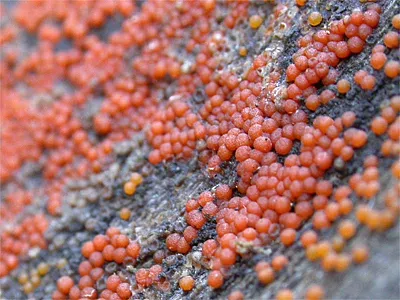
The most prominent sign of Dialonectria episphaeria infection is the appearance of small, bright red perithecia clustered on the surface of the bark. These clusters often form small, raised bumps or dots.
Infected areas of the bark typically undergo color changes, becoming dry, brittle, and prone to cracking. During periods of high humidity, a fine spore-producing layer may become visible on the surface of these patches.
The disease progresses as the fungus colonizes the bark, eventually causing the death of twigs and small branches. The underlying wood can become darkened or discolored due to the associated decay processes.
Infection sites are frequently associated with cracks, frost damage, or areas previously damaged by wood-boring insects. Over time, these small individual lesions can merge into larger, more severe necrotic patches.
Diagnosis is primarily visual, based on the presence of these distinctive red perithecia on the stromata of other fungi. Early identification is crucial for effective orchard or forest management.
Pathogen
Dialonectria episphaeria is an ascomycete fungus belonging to the Hypocreales order. It is primarily recognized as a mycoparasite that thrives on the stroma of other pyrenomycetes fungi inhabiting the bark of deciduous trees.
The biology of this pathogen is deeply intertwined with the presence of its primary hosts. Its fruiting bodies, known as perithecia, are distinctively bright red or orange-red, making them relatively easy to spot during visual inspections of infected tree surfaces.
This fungus exhibits saprotrophic or weakly parasitic behavior. It colonizes damaged or decaying bark tissue, utilizing the pre-existing fungal colonies or necrotic tissue as a substrate for its development.
The life cycle encompasses both conidial and sexual spore production, ensuring the pathogen can spread rapidly when environmental conditions are favorable. It is well-adapted to survive in various temperate climates.
In phytopathological assessments, the presence of Dialonectria episphaeria acts as an indicator of an underlying health problem in the tree, suggesting that the plant's defense mechanisms have already been compromised by other pathogens or stressors.
Conditions for development
High relative humidity and frequent rainfall are the most critical factors for the development of Dialonectria episphaeria. The fungus requires moisture on the bark surface to germinate and produce its fruiting bodies.
The disease spreads most actively during wet seasons when sustained moisture allows for the prolific release and dispersal of spores. The fungus thrives in environments with poor air circulation.
The existence of other fungi acting as primary hosts is a fundamental requirement for the widespread occurrence of this pathogen. It rarely colonizes perfectly healthy, undamaged bark without a primary infection site.
Stressed trees, particularly those suffering from improper pruning, mechanical injury, or poor nutrition, are significantly more susceptible to colonization. A lack of regular maintenance increases the risk of infection.
Temperature plays a secondary role, with moderate spring and autumn temperatures providing the optimal conditions for the fungus to complete its reproductive cycles efficiently.
Why it matters
The primary harm caused by Dialonectria episphaeria is the acceleration of the decline of already weakened branches or trees. While acting as a secondary agent, it exacerbates the damage caused by primary pathogens.
The infection compromises the structural integrity of the bark, creating entry points for even more aggressive fungi and insects. This cumulative effect significantly shortens the lifespan of affected branches.
In ornamental settings, the presence of these red fungal bodies reduces the aesthetic value of trees and shrubs. The decay can also negatively affect the quality and strength of the timber in forest plantations.
Massive infections in dense forest stands can lead to a overall reduction in tree vigor, making the trees more susceptible to windthrow and snow damage during extreme weather events.
Chronic infestation weakens the plant's physiological condition, leading to premature drying of the crown and, in severe cases, the death of the entire plant if the infection reaches the main trunk.
Protection
The cornerstone of control is maintaining overall tree health and vigor through proper cultural practices. Regular pruning to remove dead or dying branches is essential to reduce the inoculum level.
Preventing mechanical damage to the bark is critical, as injuries serve as primary infection courts. All significant pruning wounds should be treated with appropriate sealants or fungicides to prevent colonization.
Sanitation measures, including the removal and destruction of infected wood, are necessary to limit the spread of the fungus. Keeping the site clean prevents the accumulation of spore sources.
Improving air circulation within the canopy by proper spacing and thinning helps to maintain a less favorable environment for fungal growth. This reduces the time the bark surface remains moist.
- Regular inspection for early signs of infection.
- Disinfection of pruning tools after working on infected trees.
- Effective pest control to prevent bark injury.
- Balanced fertilization to maintain strong tree immunity.
Discussion
No discussions yet — be the first.