
Dermatophilosis
Dermatophilus congolensis
Description
Symptoms
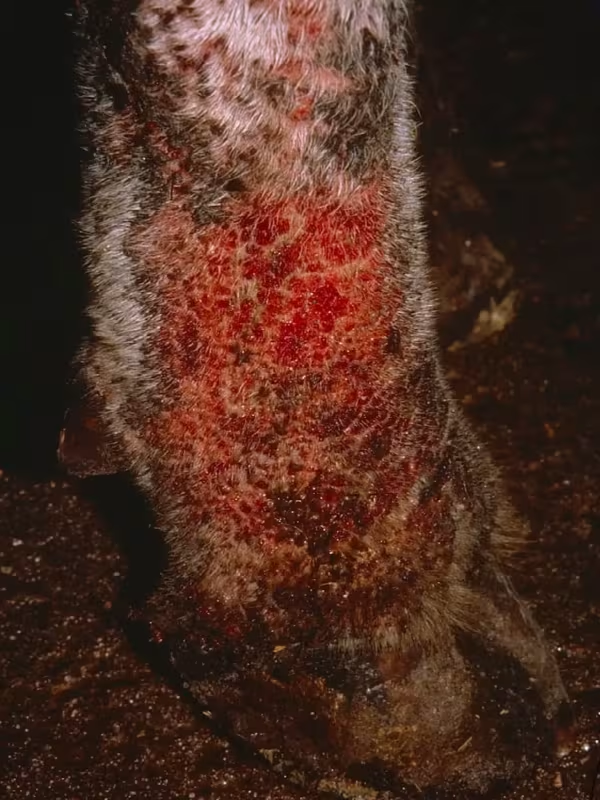
Clinical signs are characterized by the development of exudative dermatitis, which results in the formation of dense, matted crusts on the animal's skin.
When these crusts are removed, they often leave a moist, raw surface, leading to the condition being colloquially known as "lumpy wool" or "strawberry foot rot" in some species.
The lesions are typically localized on the back, legs, and muzzle, where moisture tends to accumulate and persist for longer periods.
Affected animals exhibit significant skin irritation, resulting in pruritus, hair loss, and the appearance of rough, corrugated skin patches.
In advanced stages, secondary bacterial infections can complicate the clinical picture, causing more extensive tissue damage and generalized inflammation.
Pathogen
The causative agent of dermatophilosis is Dermatophilus congolensis, a gram-positive, filamentous, facultative anaerobic bacterium classified as an actinomycete.
The pathogen is an obligate parasite of the skin of mammals, exhibiting a unique developmental cycle that includes the formation of motile zoospores.
These zoospores are released in the presence of moisture and play a crucial role in the spread of the infection between hosts or through the environment.
The organism is notably resilient and can survive for extended periods within skin scabs and crusts, making environmental sanitation a challenge.
It is important to clarify that this pathogen is not an agricultural plant disease; rather, it is a significant veterinary issue that impacts the productivity of animal farming.
Conditions for development
The development and spread of dermatophilosis are heavily dependent on high humidity and rainfall, which provide the necessary conditions for zoospore mobility.
The prevalence of blood-feeding insects, such as flies and ticks, acts as a major catalyst by creating skin wounds that serve as entry portals for the bacteria.
Inadequate housing conditions, characterized by overcrowding and poor hygiene, significantly facilitate the transmission of the pathogen within the herd.
Factors that compromise the animal's immune system, such as malnutrition or environmental stress, increase the susceptibility to infection.
The disease is most commonly observed in tropical and subtropical regions, though outbreaks can occur in any climate if conditions allow for prolonged moisture on the skin.
Why it matters
The primary economic impact is the significant devaluation of hides and skins, which sustain permanent damage, making them unsuitable for the tanning industry.
Farmers face financial losses due to reduced growth rates in young livestock and decreased overall productivity of the herd.
The costs associated with veterinary consultations, medication, and intensive animal care significantly increase the overhead of the farm operations.
Severe and persistent infections often result in the culling of affected animals, which represents a direct reduction in the farm's capital and inventory.
Dermatophilosis is a zoonotic disease, meaning it poses a health risk to handlers and workers who come into direct contact with infected animals.
Protection
The most effective strategy for managing the disease is the isolation of infected individuals and the rigorous disinfection of their living areas.
Regular treatment of the skin with antibacterial and antiseptic agents is recommended to promote healing and stop the spread of the infection.
Implementing an integrated pest management program to control ticks and flies is essential for preventing the transmission of the bacteria.
Ensuring animals have access to dry shelter during wet weather is a key environmental control measure to inhibit the pathogen's life cycle.
Maintaining high standards of biosecurity and conducting frequent health monitoring allows for the early detection and successful containment of outbreaks.
Discussion
No discussions yet — be the first.