
Daldinia eschscholzii
Daldinia eschscholzii
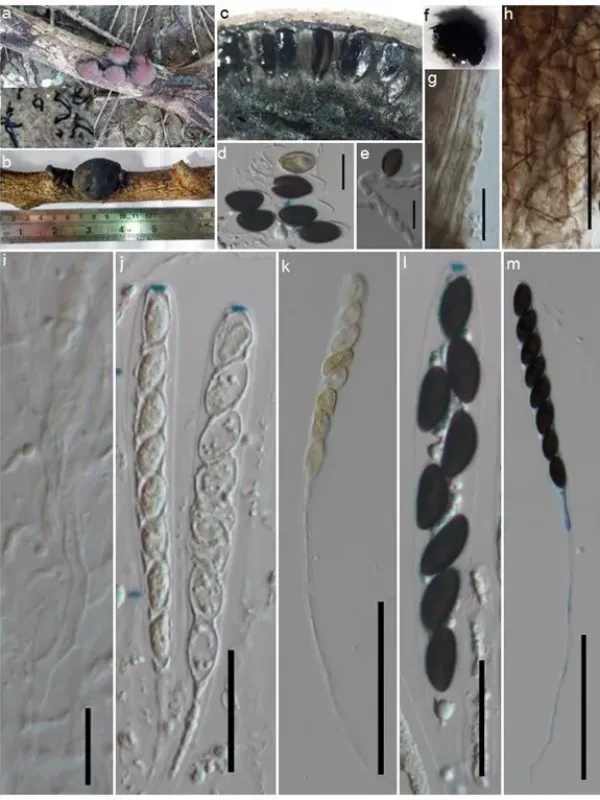
Description
Symptoms
The most visible symptom is the presence of distinctive, blackened, hemispherical fruiting bodies on the surface of branches or trunks, often referred to as 'charcoal spots'.
Internally, the infected wood undergoes significant structural changes. It typically exhibits signs of white rot, appearing bleached and fragile as the fungal mycelium digests the lignin.
Cracks in the bark often appear where the stromata emerge. These ruptures provide further evidence of underlying tissue decay and localized structural failure.
Infected trees may show signs of canopy decline, such as yellowing foliage and premature leaf drop, resulting from the compromised vascular system and nutrient transport.
Branches affected by the fungus lose their elasticity and tensile strength, which often leads to breakage during high winds or heavy rainfall events.
Pathogen
The pathogen Daldinia eschscholzii is a member of the Xylariaceae family. This fungus acts as a wood-decaying organism, primarily colonizing dead or stressed plant tissues.
Biologically, it functions as a saprotroph that can opportunistically become a weak parasite. It secretes specific enzymes capable of breaking down the complex lignocellulosic matrix of wood.
The life cycle involves the formation of spherical or hemispherical stromata. These fruiting bodies are hard, charcoal-like structures that emerge through the bark once the fungus is established.
Spores are dispersed primarily by air currents. Upon landing on a suitable host, they germinate and form a mycelium that infiltrates the xylem, leading to internal degradation.
Widely distributed in tropical and subtropical regions, this fungus is a common inhabitant of forest ecosystems and is frequently observed on deciduous wood species.
Conditions for development
Daldinia eschscholzii thrives in environments characterized by high humidity and warm temperatures, typically ranging from 20°C to 30°C for optimal mycelial growth.
Physical injuries to the tree, such as frost cracks, pruning wounds, or damage caused by insects, serve as the primary entry points for fungal spores to settle and germinate.
The physiological status of the host tree is a critical factor. Trees suffering from drought stress, nutrient deficiency, or overcrowding are significantly more susceptible to colonization.
High planting density contributes to the spread of the disease by creating stagnant microclimates that maintain the moisture levels necessary for fungal survival.
Poorly managed orchards, where decaying organic matter is left on the ground, provide a permanent reservoir of spores that can easily infect healthy trees during periods of rainfall.
Why it matters
The primary economic impact is the reduction of tree longevity and wood quality. Progressive internal decay reduces the commercial value of timber and fruit-bearing potential.
In landscape management, infected trees pose a physical safety hazard due to the risk of falling limbs or sudden structural collapse as the wood integrity deteriorates.
The disease weakens the tree's overall immune response, leaving it vulnerable to secondary attacks by wood-boring beetles and other opportunistic pathogens.
In tropical plantations, the spread of this fungus can lead to significant yield losses and may necessitate the removal and destruction of affected specimens to protect the grove.
If left untreated, the fungus can spread through root grafts or contact between branches, turning small localized infections into large-scale infestations across an area.
Protection
Sanitation is the most effective management strategy. Any branch showing fruiting bodies should be pruned back to healthy, non-infected wood and disposed of promptly.
All pruning tools must be sanitized between cuts using an appropriate disinfectant to prevent the transfer of spores from diseased to healthy plant parts.
- Maintaining tree vigor through balanced fertilization.
- Sealing large pruning wounds with antifungal protectants.
- Removing deadwood and forest debris from the orchard.
- Promoting airflow through proper canopy thinning.
Applying copper-based fungicidal pastes to wounds creates a protective barrier that prevents spore colonization in the vulnerable exposed xylem tissues.
In severe cases where the pathogen has reached the main trunk or root collar, the removal of the entire tree is often necessary to eliminate the primary source of inoculum.
Discussion
No discussions yet — be the first.