
Daldinia concentrica
Daldinia concentrica
Description
Symptoms
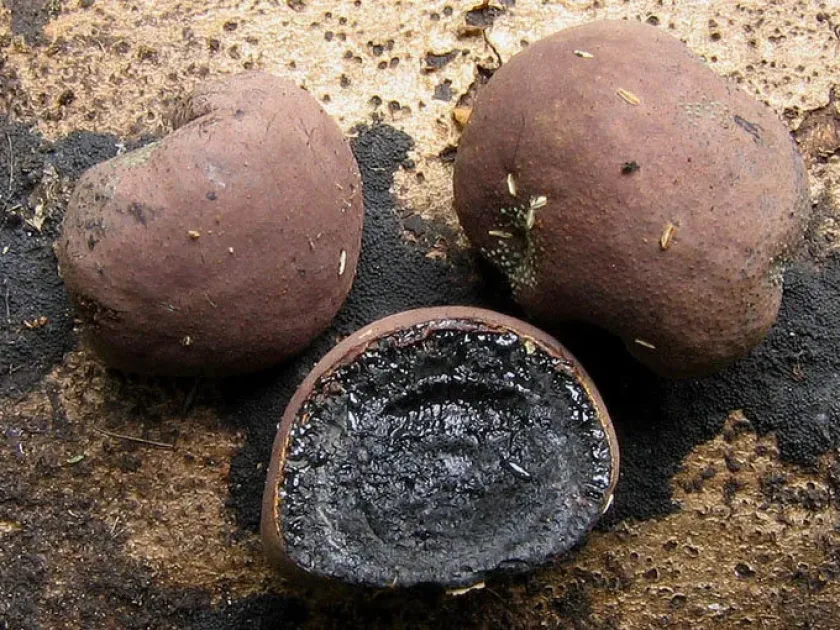
The most visible symptom of an infestation is the presence of firm, carbonaceous, black fruiting bodies protruding from the surface of the bark on dead or dying limbs.
A cross-section of the affected wood often reveals a characteristic concentric zonation within the fruiting body and signs of wood decay inside the branch.
The wood tissue attacked by the fungus becomes soft, brittle, and lighter in color, eventually crumbling under moderate mechanical pressure.
Declining trees may show symptoms such as premature leaf drop, dieback of the crown, and the failure of individual branches during windy weather.
As the fungus matures, the fruiting bodies can persist on the host for several years, continuing to produce spores and expand their colony area on the wood.
Pathogen
Daldinia concentrica, commonly known as King Alfred's Cakes, is a saprotrophic and facultative parasitic fungus belonging to the Xylariaceae family.
The fungus typically invades trees through wounds in the bark, broken branches, or improper pruning cuts, starting its colonization process from the exposed wood.
It acts as a white-rot pathogen, secreting enzymes that degrade lignin and cellulose, effectively breaking down the internal structure of the woody tissue.
Its life cycle involves the production of distinct, dark, hemispherical fruiting bodies that are often compared in appearance to burnt charcoal or small cakes.
These fruiting bodies contain layers of spores that are released into the environment, allowing the pathogen to spread to adjacent trees or forest areas.
Conditions for development
High humidity and consistent moisture levels are key factors that facilitate the germination of spores and the subsequent development of fungal mycelium.
Trees that are already stressed due to environmental factors, pests, or mechanical damage are significantly more susceptible to infection by this pathogen.
The fungus thrives in moderate temperature ranges, with optimal growth occurring in mild, wet climates typical of many temperate forests and woodland gardens.
Poor horticultural practices, such as leaving large open wounds without protective sealant, create excellent entry points for the pathogen to establish itself.
Daldinia concentrica is frequently observed on deciduous wood, including ash, birch, alder, and beech trees that have already entered a state of senescence.
Why it matters
The primary danger posed by this fungus is the gradual structural decay of the wood, which significantly compromises the stability of the tree's limbs and trunk.
By disrupting the internal transport of water and nutrients, the fungus accelerates the decline of the host tree, eventually leading to its premature death.
In orchards or forestry, the presence of this fungus represents an ongoing source of inoculum, increasing the risk of infection for surrounding susceptible trees.
Structural integrity loss can lead to sudden branch failure, which poses a safety hazard to people and property located near infected park or garden trees.
Timber quality is severely degraded by the action of the fungus, making affected wood unsuitable for construction or high-value carpentry purposes.
Protection
Regular monitoring of trees for the presence of fruiting bodies allows for early intervention, such as the surgical removal of infected bark and wood tissue.
Maintaining tree vigor through proper fertilization, irrigation, and care is the most effective way to help the tree naturally defend against fungal colonization.
All pruning tools used on infected areas must be thoroughly disinfected to prevent the cross-contamination of spores to healthy trees during regular maintenance.
Applying protective wound dressings to significant cuts or mechanical injuries is a crucial preventative measure against the establishment of wood-rotting fungi.
In cases of severe infestation, the most appropriate management strategy involves the safe removal and destruction of the infected wood via burning to kill spores.
Discussion
No discussions yet — be the first.