
Spruce Cytospora Canker
Cytospora kunzei
Description
Symptoms
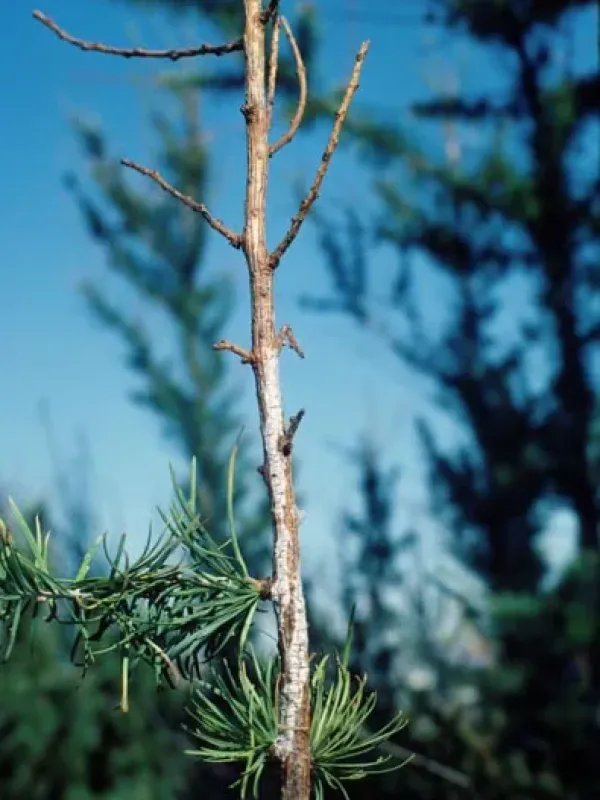
The initial symptom of the disease is the discoloration of needles on individual branches, which turn reddish-brown and eventually drop off. Typically, the infection progresses upward from the lower branches of the canopy.
Upon closer inspection of the affected branches, characteristic cankers or sunken areas can be found. The bark in these regions often turns brown or greyish and may develop small, pimple-like black structures known as pycnidia.
Early in the infection process, a noticeable crack or resin flow may appear at the margin between the healthy and diseased bark, representing the tree's defensive attempt to wall off the invading pathogen.
During periods of high humidity, yellowish or orange spore tendrils may exude from the pycnidia. This specific sign is a key diagnostic feature used by forest pathologists to identify the presence of the Cytospora fungus.
In advanced stages of the disease, the infection may spread to the main trunk, creating large, expanding cankers that eventually girdle the stem, causing the death of the entire tree crown.
Pathogen
The causative agent of this disease is the ascomycete fungus Cytospora kunzei, which acts as a parasite infecting the bark and wood of conifer trees. The fungus typically enters the host plant through mechanical wounds, frost cracks, or insect feeding sites.
The life cycle of the pathogen relies on the formation of pycnidia, which are small fruiting bodies developing beneath the bark surface. Under moist conditions, these structures release spores that are disseminated by rain splash, wind, or insect vectors.
The fungus functions primarily as a necrotrophic parasite, causing the death of the cambium and phloem tissues. By colonizing the inner bark, the mycelium disrupts the transport of water and nutrients, leading to the gradual dieback of infected branches.
This pathogen is highly specialized and preferentially attacks stressed or weakened trees. In dense stands, the infection can spread more rapidly due to the close proximity of branches, allowing spores to easily bridge the gap between trees.
The biology of the fungus allows it to remain viable within the bark of infected branches for several years. Even after the branch has died, the mycelium continues to grow, utilizing the host tissue as a reservoir to maintain the infection's potential.
Conditions for development
The development of Cytospora canker is strongly favored by any stress factor that reduces the tree's natural resistance. Mechanical damage from poor pruning practices or extreme weather events serves as a primary entry point.
High humidity and moisture are critical for the mass dispersal and germination of fungal spores. The disease is particularly aggressive during seasons characterized by prolonged spring rains and moderate temperatures.
Poor horticultural management, including improper irrigation or nutrient deficiencies, leaves trees vulnerable. Spruces growing in compacted or poorly drained soils are at a significantly higher risk of infection.
Crowded planting schemes create a stagnant microclimate with poor air circulation, which keeps the foliage and bark wet for longer periods. This moisture retention is essential for the rapid colonization of the pathogen.
Temperature fluctuations and sunscald during late winter can cause cracks in the bark. These injured areas provide a perfect niche for the fungus to establish itself and initiate the canker development cycle.
Why it matters
Cytospora canker poses a severe threat to ornamental spruce trees, as it causes irreversible damage to the canopy structure. The loss of lower branches significantly degrades the aesthetic value of the landscape.
Persistent fungal infection drains the tree's energy reserves. Because the metabolism is impaired, the tree loses its vigor and frequently becomes susceptible to secondary infestation by bark beetles and wood-boring insects.
If the infection reaches the main leader, it can lead to total tree mortality. Young, immature trees are especially at risk, as they often lack the established defensive mechanisms required to contain the expanding necrotic lesions.
The economic impact involves the high cost of sanitary pruning, tree removal, and replacement. In commercial nurseries, the disease can lead to the loss of large batches of stock if not managed properly.
Furthermore, infected trees serve as continuous sources of inoculum for surrounding healthy vegetation, creating an epidemiological risk that can lead to widespread disease outbreaks in forests or home gardens.
Protection
The cornerstone of management is strict adherence to cultural practices. It is essential to prevent bark injury during maintenance and ensure optimal water management to avoid moisture stress or root-zone waterlogging.
Upon detecting the first signs of the disease, sanitary pruning of infected branches is necessary. Tools must be disinfected with alcohol or a fungicide solution after each cut to prevent the transfer of spores.
Preventive applications of copper-based fungicides during the early spring, before bud break, are recommended. This helps suppress the population of spores that have overwintered on the tree bark.
For active infections, the application of systemic fungicides may be required. Treatments should be repeated according to label instructions, rotating active ingredients to manage the risk of fungal resistance.
Maintaining tree vigor through regular fertilization with balanced nutrients, particularly potassium and phosphorus, is crucial. A healthy tree with a strong immune system is significantly better at containing and resisting fungal mycelium growth.
Discussion
No discussions yet — be the first.