
Japanese cytospora
Cytospora japonica
Description
Symptoms
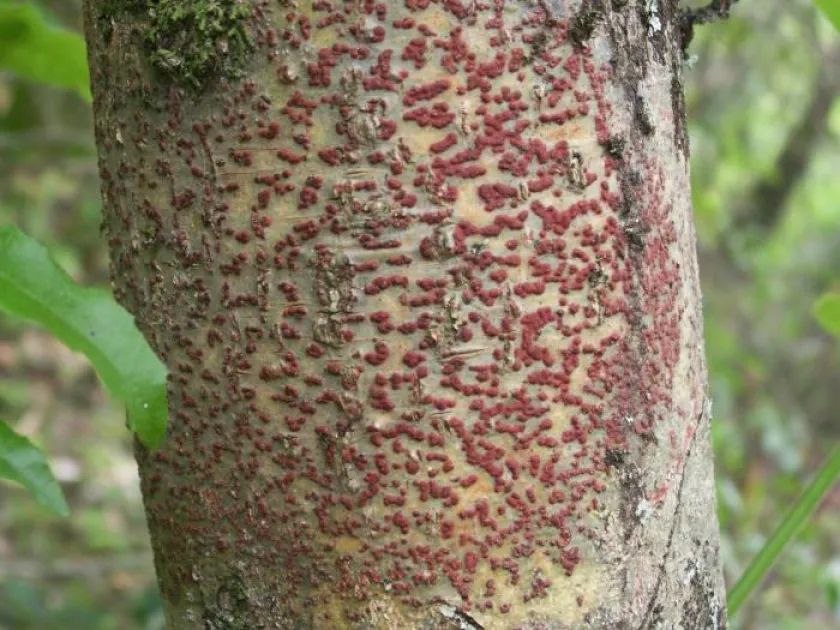
The primary symptom is the formation of sunken, reddish-brown to dark lesions on the bark, which can eventually encircle branches or stems.
As the infection progresses, the affected bark becomes brittle and may crack, revealing the underlying woody tissue which often shows signs of necrosis.
Small, pinhead-sized eruptions, known as pycnidia, appear on the surface of the lesions. Under high humidity, these release spores in visible, sometimes coiled, threads.
Branches distal to the infection site show symptoms of wilting, premature yellowing of leaves, and dieback as the vascular system becomes compromised.
Gummosis is often observed in the affected areas, representing the tree's physiological attempt to wall off the infection and prevent deeper penetration of the fungus.
Pathogen
The causal agent of this disease is the fungus Cytospora japonica, which belongs to the class of fungi known as Coelomycetes. It is a pathogen that specifically targets the bark and cambium of woody plants.
The fungus reproduces by forming structures called pycnidia, which emerge on the surface of infected bark. Inside these, a massive number of conidia are produced.
The pathogen survives primarily as mycelium within the infected tissues of the host tree, allowing it to endure harsh winters and activate as soon as temperatures rise.
Dissemination occurs via water splashes during rain, wind currents, or insect vectors that move spores from infected areas to vulnerable sites on healthy wood.
Cytospora japonica functions as a necrotrophic parasite, secreting enzymes that degrade cell walls and kill surrounding healthy cells, creating room for further colonization.
Conditions for development
The development of the fungus is highly dependent on environmental humidity; moisture is essential for spore germination and active mycelial growth.
Trees under stress are the most vulnerable. Key risk factors include frost damage, sunburn on trunks, and improper pruning, which leave open wounds for fungal spores.
Lack of proper horticultural management, specifically nutritional deficiencies and poor drainage, makes trees significantly less capable of resisting the infection.
Dense planting schemes that reduce air circulation create microclimates with higher humidity, which favors the spread of Cytospora japonica within the orchard.
Early spring, characterized by fluctuating temperatures and humidity, is the critical period for initial colonization and rapid expansion of existing infections.
Why it matters
The disease causes significant damage by killing branches, which reduces the overall canopy size and photosynthetic potential of the fruit tree.
If the main trunk is infected and eventually girdled by the necrotic lesion, the entire tree will die, leading to total loss of investment in the plant.
Infection compromises tree health, acting as an entry point for secondary wood-boring insects, which can further aggravate the structural integrity of the plant.
Yield losses are considerable, as the tree diverts its limited energy resources toward wound compartmentalization rather than fruit production and development.
Economically, the presence of Japanese Cytospora necessitates constant manual labor for pruning, chemical applications, and potential tree replacement costs.
Protection
Integrated management is essential, focusing primarily on prevention through best cultural practices and maintaining tree vigor.
Sanitary pruning is the most effective control method. Removing infected branches and burning the material prevents the build-up of the inoculum in the orchard.
All pruning wounds and bark damage should be immediately sealed with protective pastes or treated with copper-based fungicides to prevent colonization.
Whitewashing trunks is a crucial preventative measure to prevent frost-induced bark splitting and sunburn, which are the main entry points for the pathogen.
- Balanced nutrient application.
- Disinfection of pruning tools.
- Protective trunk painting.
- Application of copper-based fungicides.
- Prompt removal of dead wood.
Discussion
No discussions yet — be the first.