
Cystopage
Cystopage
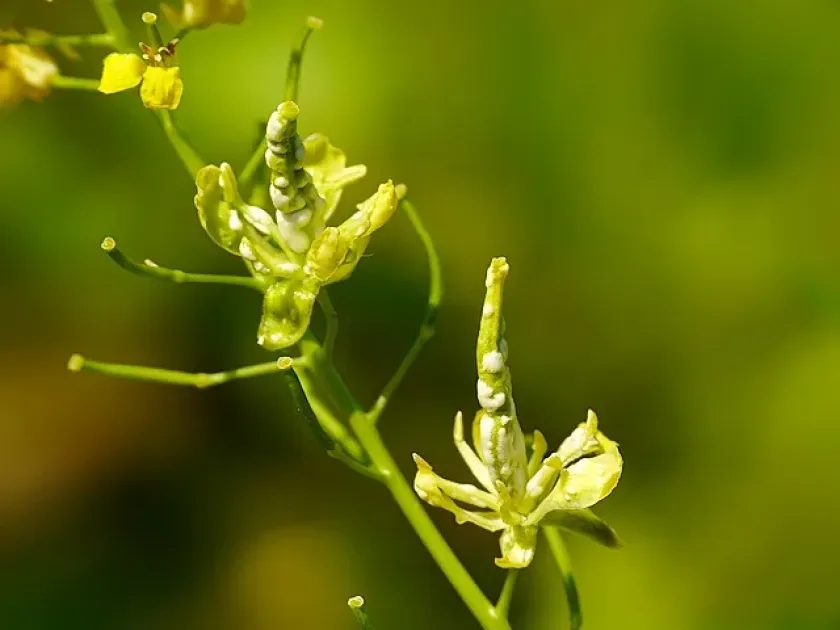
Description
Symptoms
The primary symptom of Cystopage is a significant reduction in plant vigor, often characterized by stunted growth and poor foliage development. Infected plants often show signs of chlorosis, with leaves turning yellow or pale green.
Root systems exhibit clear signs of decay and necrosis. Upon inspection, roots may appear darkened, mushy, or brittle, indicating that the fungal pathogen has successfully colonized the tissues and initiated destruction.
Wilting is a common sign, occurring even when soil moisture is adequate. This happens because the root system is no longer capable of performing its primary function of water and nutrient uptake due to the damage caused by the pathogen.
In humid conditions, a fine fungal mycelium may become visible at the base of the stem or on the soil surface near the crown. This indicates that the pathogen is actively reproducing or spreading to adjacent plants.
Patches of dead or dying plants in the field are a typical field indicator. As the disease spreads through the soil, it creates distinct clusters of affected plants, highlighting the pattern of infection within the crop row.
Pathogen
Cystopage is a type of plant disease caused by specialized fungal pathogens. These organisms typically function as soil-dwelling fungi that can impact the root systems of various plant species, disrupting their biological functions.
The pathogen is known for its ability to form complex structures that assist in the colonization of the host plant. It secretes specific enzymes that degrade organic tissues, allowing the fungus to extract nutrients from the plant's roots and the surrounding rhizosphere.
Biologically, these fungi are often classified among groups that can act as opportunistic parasites. Their life cycle is highly dependent on environmental humidity and the presence of organic matter, which serves as a secondary food source.
Microscopic analysis reveals a branching mycelium capable of penetrating root epidermis and xylem vessels. By invading the vascular system, the pathogen physically blocks the transport of water and essential minerals throughout the plant.
Research into the genetics of this pathogen is ongoing to better understand its host range and virulence factors. Managing this disease requires a deep understanding of its survival strategies in the soil environment.
Conditions for development
Development of Cystopage is heavily favored by high soil moisture and poor drainage. Water-logged soil creates an anaerobic environment that weakens the plant's roots, making them highly susceptible to fungal invasion.
Temperatures ranging from 18°C to 25°C are optimal for the pathogen's metabolic activity. Within this range, the fungus can rapidly colonize roots and produce spores, leading to widespread infection in a short timeframe.
High levels of undecomposed organic matter in the soil serve as a bridge for the pathogen. In such environments, the fungus builds up a massive population density before attacking the living roots of the primary crop.
Soil compaction is a significant factor in disease development. It limits aeration and prevents the growth of beneficial microorganisms, effectively creating a favorable niche for the pathogen to thrive and dominate.
Continuous monoculture, where the same species is grown repeatedly without rotation, is a primary driver for the accumulation of pathogen spores. Over time, the soil becomes "sick," leading to consistent disease pressure.
Why it matters
The economic impact of Cystopage is primarily felt through reduced crop yields and quality. Severe infections can lead to the total loss of seedlings, necessitating expensive replanting and disrupting the farming schedule.
Even when plants survive the initial infection, their productivity remains significantly hampered. They are more prone to secondary infections and cannot recover their full physiological potential during the growing season.
Harvest quality is often compromised, as the physiological stress leads to smaller, lower-quality fruits or produce. This results in reduced market value and storage life, impacting the grower's financial return.
For high-value nursery operations, an outbreak can be devastating, as it can ruin entire batches of plants meant for sale. This creates supply chain issues and increases the necessity for strict quarantine measures.
Over time, recurring infections contribute to the degradation of agricultural soil health. The cumulative effect of the disease depletes the resources of the farm, leading to long-term sustainability challenges.
Protection
Effective crop rotation is the cornerstone of managing Cystopage. By alternating with non-host crops, farmers can disrupt the pathogen's life cycle and significantly decrease the spore count in the soil.
Proper soil management, including deep plowing and improving drainage, helps to reduce moisture levels. Ensuring good aeration is vital for maintaining a healthy rhizosphere and supporting beneficial soil biota.
The use of certified, disease-free seed and seedlings is essential to prevent introducing the pathogen to clean fields. Seed treatment with appropriate fungicides can provide early protection for young, vulnerable plants.
Biological control agents, specifically beneficial fungi or bacteria that act as antagonists, can be applied to suppress the pathogen. This is an environmentally friendly way to maintain soil health while controlling the disease.
- Implementing strict sanitation to remove infected plant debris;
- Monitoring fields regularly to identify and treat hotspots early;
- Balancing fertilizers to improve plant natural immunity and stress resistance.
Discussion
No discussions yet — be the first.