
Cystolepiota sistrata
Cystolepiota sistrata
Description
Symptoms
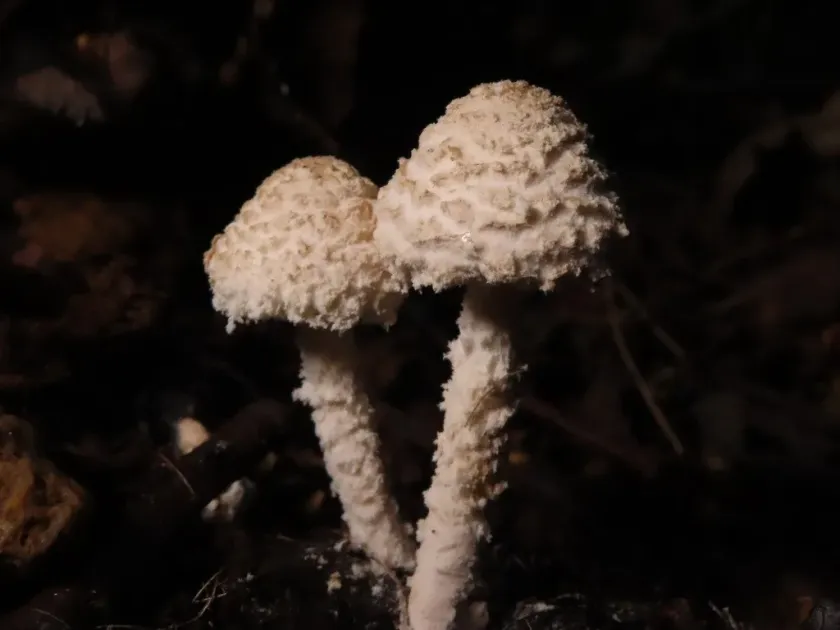
The fruit body of Cystolepiota sistrata is characterized by a finely powdery or granular texture on the surface of the cap.
The cap color is typically pale, ranging from creamy-white to light pinkish hues, often with a darker center.
Gills are usually crowded and free from the stem, appearing white or cream, which is a key identification feature for mycologists.
The stem is fragile and covered with the same powdery material found on the cap, sometimes showing a faint ring zone.
Fruiting bodies are small and delicate, often appearing in small clusters following damp weather conditions.
Pathogen
Cystolepiota sistrata is a fungal species belonging to the Agaricaceae family, functioning primarily as a soil saprotroph.
It is not a plant pathogen and does not cause diseases in agricultural crops, as it feeds exclusively on decomposing organic matter.
In ecological terms, the fungus plays a beneficial role as a decomposer, breaking down plant debris and contributing to soil health.
The fungus develops its mycelium within nutrient-rich organic layers, such as forest litter or compost piles.
Taxonomically, it is recognized as a part of the fungal diversity, with no history of agricultural damage associated with its lifecycle.
Conditions for development
This fungus thrives in high-moisture environments where there is a sufficient accumulation of leaf litter or decaying organic matter.
Optimal development of the fruit bodies occurs during periods of persistent rainfall and mild to cool temperatures.
The species prefers shady and sheltered habitats where evaporation rates are low, protecting the mycelium from desiccation.
Soil composition rich in humus is preferred, providing the necessary nutrients for its saprotrophic growth cycle.
Direct exposure to sunlight or prolonged drought inhibits the production of reproductive structures (mushrooms).
Why it matters
There is no evidence of harm to agricultural plants, as this fungus lacks any parasitic or infectious capabilities.
The presence of Cystolepiota sistrata is purely an indicator of organic matter turnover and active soil biological processes.
No agricultural economic losses are associated with this fungus, as it does not affect crop yield, quality, or plant health.
Labeling this species as a plant disease is inaccurate and contradicts standard botanical and agricultural scientific classifications.
It remains a neutral participant in the ecosystem, contributing to the carbon cycle by breaking down plant residues.
Protection
No control measures are necessary because the species poses no threat to farming activities or crop safety.
Proper field maintenance, such as removing excess debris, naturally manages the population of saprotrophic fungi.
Fungicides should not be applied to control this species, as it would cause unnecessary environmental impact without any benefit.
Maintaining a balanced, aerobic soil environment is the best way to manage any unwanted proliferation of soil fungi.
In agronomic management, this species is regarded as an non-issue and requires no specific diagnostic or protective monitoring.
Discussion
No discussions yet — be the first.