
Cystolepiota seminuda
Cystolepiota seminuda
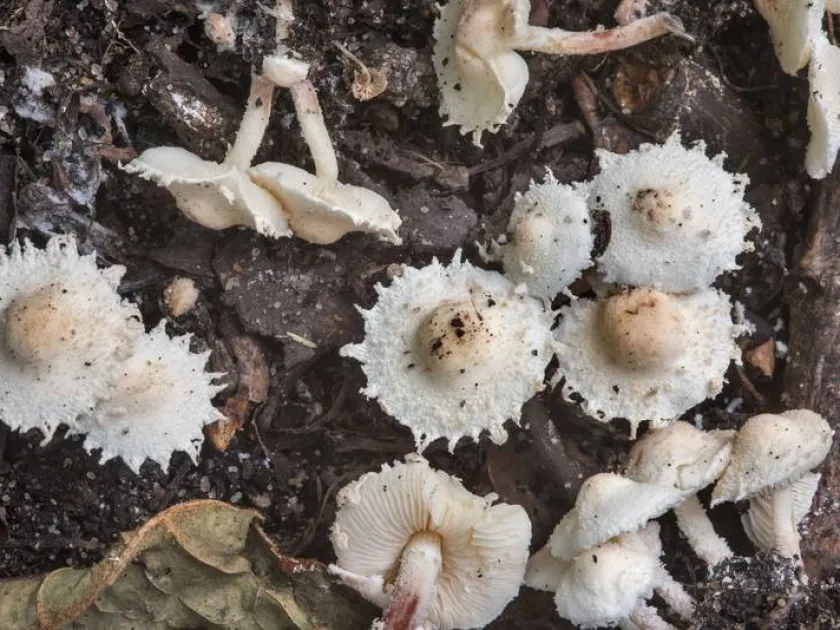
Description
Pathogen
Cystolepiota seminuda is a small gilled fungus belonging to the Agaricaceae family. It is crucial to clarify that this organism is not a plant disease and does not cause infections in crops.
The fungus functions exclusively as a saprotroph, which means it obtains nutrients by breaking down non-living organic matter. It lacks the physiological ability to invade or parasitize healthy, living plant tissues.
In biological terms, it is a decomposer that contributes to soil health by recycling nutrients from decaying plant debris, leaf litter, and woody material within the topsoil.
The fruiting bodies are characterized by a delicate, powdery, or mealy appearance on the cap surface. They do not pose any threat to the physiological functions of vegetables, fruits, or field crops.
Agricultural professionals categorize this species as an ecological component of the soil microflora. It performs a beneficial role by enhancing the humus layer and improving soil structure over time.
Conditions for development
The growth and development of Cystolepiota seminuda are highly dependent on high moisture levels. It typically flourishes in humid, shaded environments where organic accumulation is significant.
The fruiting bodies usually appear during periods of increased rainfall, particularly in late summer and autumn. When environmental conditions become dry, the fungus retreats into the mycelial state within the soil.
This fungus requires a rich substrate of decomposing plant organic matter to maintain its mycelial network. It is commonly found in woodlands, parklands, and gardens with heavy mulching.
In greenhouses, its presence is rare and usually associated with poor ventilation or excessive moisture in organic substrates. However, it remains a neutral observer of plant health rather than a causative agent of disease.
The species prefers stable temperatures and cool, damp microclimates. These conditions facilitate the rapid emergence of its small, fragile mushrooms, which are transient and short-lived.
Discussion
No discussions yet — be the first.