
Cystolepiota hetieri
Cystolepiota hetieri
Description
Symptoms
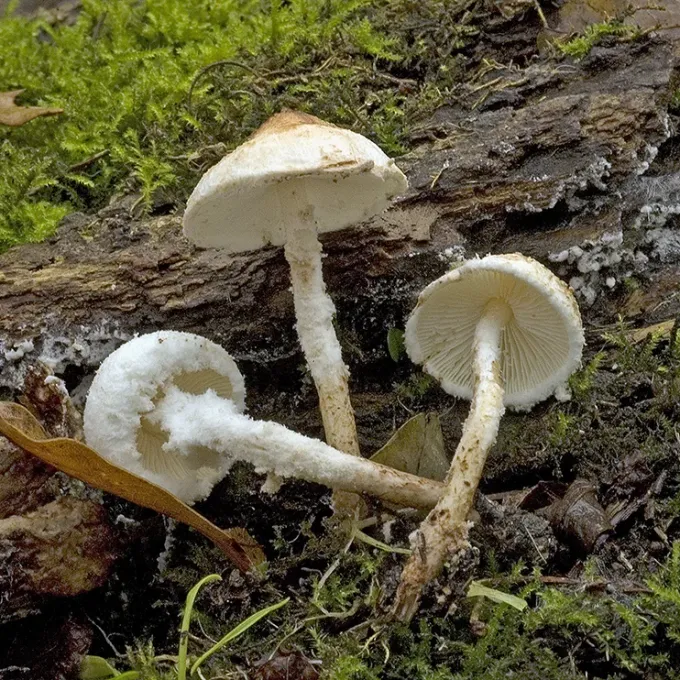
Cystolepiota hetieri is a small agaric fungus belonging to the Agaricaceae family. Its fruiting body is characterized by a pinkish or wine-red cap, often covered with fine scales.
The gills of this fungus are free, crowded, and typically cream-colored. The stem is thin, fragile, and often bears a mealy or scurfy coating, which is a remnant of the partial veil.
A key diagnostic feature is its white spore print. Because of its diminutive size, the fungus is often inconspicuous, blending into forest leaf litter or organic debris.
The flesh is very thin and lacks a distinct odor or flavor, which is typical for many saprotrophic species of this size.
The fungus plays no part in plant pathology and is not recognized as a disease agent for agricultural crops.
Pathogen
Cystolepiota hetieri is not a pathogen; it is a saprotrophic fungus that lives on decomposing organic material such as leaf litter and woody debris.
The mycelium network operates in the soil or humus layer, secreting enzymes that break down complex organic compounds into simpler nutrients.
It occupies an ecological niche defined by the decomposition of plant matter rather than the parasitism of living tissues.
Since it lacks the biological mechanisms to invade or colonize living plant cells, it poses no threat to garden or field vegetation.
Therefore, it is classified as a decomposer and a contributor to soil health rather than a plant disease pathogen.
Conditions for development
The development of Cystolepiota hetieri fruit bodies depends on high moisture levels in the substrate and moderate temperatures.
It typically favors shaded, undisturbed environments where the accumulation of organic matter provides a stable food source.
The fungus is sensitive to direct sunlight and extreme temperatures, which inhibit the growth and maturation of its mycelial network.
Optimal growth usually occurs after prolonged rainy periods when soil humidity remains consistently high.
In managed agricultural soils, this fungus is rarely encountered due to the frequent tillage and environmental disruption associated with farming practices.
Why it matters
Cystolepiota hetieri causes no damage to agricultural, horticultural, or silvicultural crops. It is not considered harmful in any agricultural context.
It does not infect plant roots, stems, or leaves, making it irrelevant to plant protection programs or crop yield management.
Its presence in a garden or field indicates a rich soil organic layer, which is generally beneficial for soil structure and microbial biodiversity.
There are no economic losses associated with this fungus, as it does not compete with crops for resources nor does it cause rot in living plants.
Consequently, it is not listed in any phytosanitary guidelines or disease registers for crop protection.
Protection
No control measures, chemical treatments, or biological interventions are necessary for Cystolepiota hetieri, as it is a harmless saprotroph.
Attempting to eradicate such fungi would be counterproductive, as they are part of the natural decomposer community that maintains soil quality.
Preventive measures are not required since the fungus does not threaten crop vitality or produce systemic infections.
In decorative landscapes, if the presence of small mushrooms is undesirable, simply improving drainage and reducing localized surface moisture will naturally discourage their growth.
Standard agronomic practices such as soil cultivation and proper debris management are more than sufficient to regulate the occurrence of all non-pathogenic soil fungi.
Discussion
No discussions yet — be the first.