
Cystolepiota bucknallii
Cystolepiota bucknallii
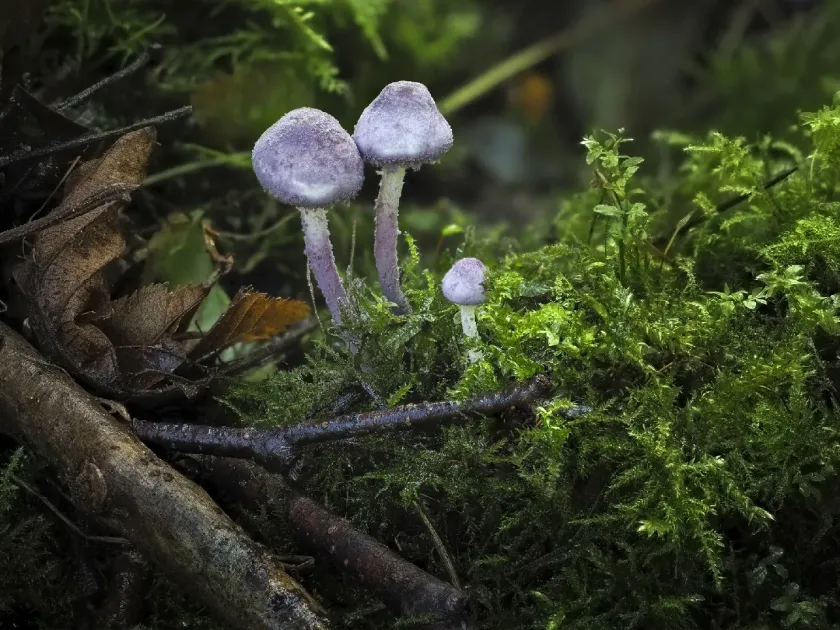
Description
Pathogen
Cystolepiota bucknallii is a mushroom species belonging to the Agaricaceae family. It is vital to clarify that this organism is a saprotroph and does not act as a pathogen for agricultural or horticultural plants.
As a saprotrophic fungus, its biological niche involves the decomposition of dead organic matter. It lacks the specialized enzymatic machinery required to infect living plant tissue.
The fungus is widely found in natural ecosystems where it functions as a primary decomposer. It does not cause diseases such as wilting, root rot, or leaf spotting in crops.
From an agronomical perspective, there is no evidence to classify this species as a plant disease. Its presence in a field or garden does not signify a phytosanitary issue.
Consequently, farmers and growers should not consider this fungus as a threat to their crop production systems, as it remains strictly within its role as an organic recycler.
Conditions for development
The fungus thrives in environments characterized by high humidity and the presence of abundant decaying organic matter, such as leaf litter or degraded woody debris.
Growth conditions typically include moderate temperatures and shaded, sheltered locations that prevent rapid evaporation of moisture from the soil surface.
Soil composition plays a major role; it prefers areas with rich humus content rather than heavily compacted or chemically treated soils, which are common in intensive industrial farming.
The life cycle of the fruiting body is usually observed during late summer and autumn, coinciding with higher rainfall levels and cooling temperatures.
In well-maintained agricultural fields, the absence of thick organic layers and the regular use of tillage operations make it difficult for this species to establish itself.
Why it matters
Cystolepiota bucknallii poses no economic risk or physical damage to cultivated plants. It does not interfere with plant metabolism, photosynthesis, or nutrient uptake.
The ecological benefit of this fungus outweighs any perceived nuisance, as it actively contributes to soil fertility by breaking down complex organic compounds into simpler forms.
There are no recorded instances of this fungus attacking crop stems, leaves, or fruits. It is strictly non-parasitic and harmless to any agricultural species.
Control measures are entirely unnecessary. Attempting to eradicate saprotrophic fungi from a site is counterproductive and may disturb the balance of soil micro-communities.
Growers are advised to focus their resources on genuine pathogens rather than harmless soil-dwelling fungi that aid in natural nutrient cycling.
Discussion
No discussions yet — be the first.