
Cystoderma granulosum
Cystoderma granulosum
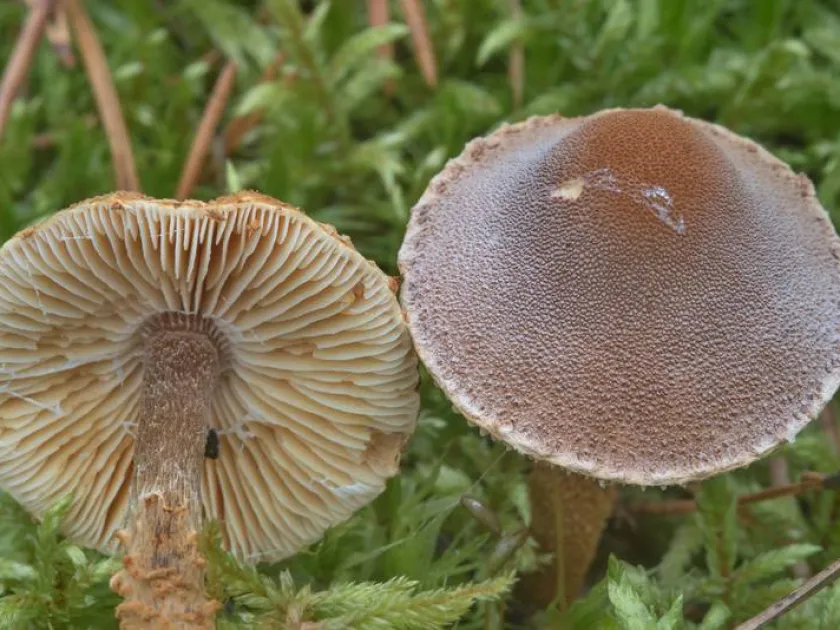
Description
Pathogen
Cystoderma granulosum is a mushroom species belonging to the Agaricaceae family. It is a saprotroph, meaning it gains its nutrients from decaying organic matter.
It is not a plant pathogen and does not infect living tissues of crops, trees, or shrubs. Therefore, it is not considered a causative agent of plant diseases.
The fungus develops from a mycelium network that colonizes the litter layer. It utilizes complex organic molecules, such as cellulose and lignin, for growth.
The reproductive structure, or the mushroom, has a granular, powdery surface texture, which is a key diagnostic feature for mycologists.
Reproduction occurs via basidiospores that are released from the gills underneath the cap, facilitating the spread of the fungus across suitable habitats.
Conditions for development
This fungus prefers moist environments rich in organic matter. It is most commonly found in woodlands, particularly under conifers or in mixed forest types.
Optimal growth occurs during the cool, damp periods of autumn when soil moisture levels are consistently high.
The species is sensitive to soil acidity and fertility levels. It thrives in soils with low pH values where other competing microflora may be limited.
Invasion of agricultural land is restricted by cultivation practices and the absence of a thick, permanent layer of leaf litter.
Competitive interactions with other soil fungi and bacteria regulate the population density of this species in its natural environment.
Why it matters
Cystoderma granulosum causes no harm to agricultural production. It lacks the enzymatic pathways required to invade healthy living host plants.
In forest ecosystems, its role is strictly beneficial as it facilitates the breakdown of biomass, which contributes to long-term soil health and nutrient cycling.
There are no recorded instances of this fungus interfering with the growth of crops, vegetables, or ornamental plants in home or industrial settings.
It does not produce mycotoxins that would pose a risk to the health of living plants or the surrounding soil microbiome.
Given its ecological role, it is classified as a benign member of the forest mycobiota rather than a threat or an agricultural pest.
Protection
Since this fungus is not a pathogen, no control measures are required. The use of chemical fungicides is explicitly discouraged for this organism.
Preventive maintenance of agricultural fields through regular tillage and crop residue management naturally limits the spread of saprotrophic fungi.
Improving soil aeration and drainage promotes a healthier microbial balance, which effectively outcompetes fungi that prefer stagnant, organic-rich conditions.
Standard horticultural practices for soil sanitation are more than sufficient to prevent any unexpected colonization of the area.
Monitoring the ecological balance of the soil is recommended to ensure that beneficial organisms remain the dominant force in the plant growing environment.
Discussion
No discussions yet — be the first.