
Cystoderma cinnabarinum
Cystoderma cinnabarinum
Description
Pathogen
Cystoderma cinnabarinum is not a plant disease or a pathogen. It is a basidiomycete fungus belonging to the Agaricaceae family, commonly found in forest ecosystems.
As a saprotroph, this organism feeds exclusively on decaying organic matter such as leaf litter, humus, or rotting wood. It lacks the biological mechanisms to infect living plant tissue.
In agricultural settings, it is often misidentified as a potential threat due to its rapid emergence under specific conditions, but it is entirely harmless to crops.
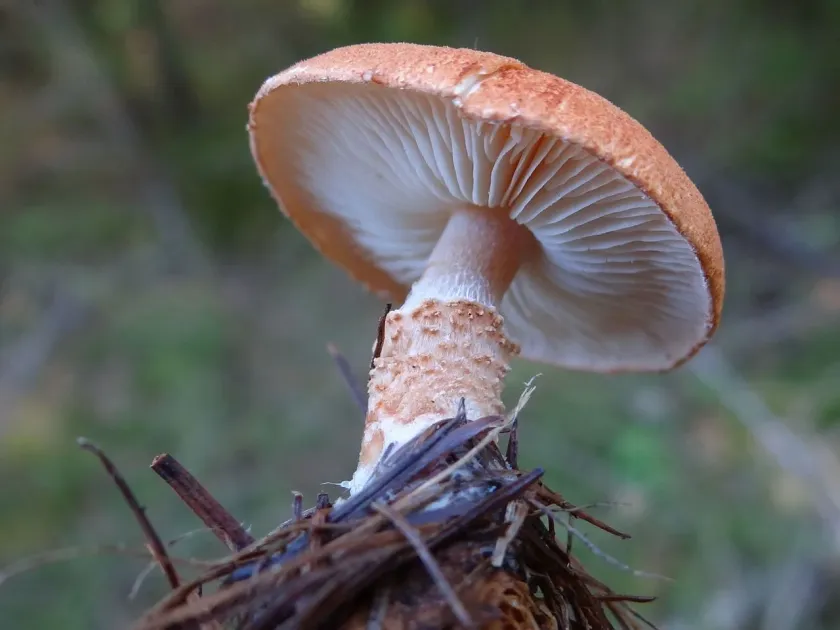
The fungus is distinguished by its vibrant, cinnabar-red color and granular cap surface. It plays a beneficial role in the environment by contributing to organic decomposition.
Scientific literature classifies it strictly as a non-parasitic mushroom, confirming that it does not cause any form of plant disease or yield degradation.
Conditions for development
This fungus requires high moisture levels and cool temperatures to develop its fruiting bodies, usually peaking in late summer or autumn.
It thrives in environments rich in decomposing organic material, which provides the necessary nutrients for its mycelium growth.
Shaded areas with poor air circulation are preferred by the fungus, as direct sunlight and dry conditions inhibit its expansion.
In gardens, it may emerge where mulch layers have become waterlogged or where soil moisture remains consistently high over an extended period.
Its distribution is heavily tied to the presence of specific forest soils or soils amended with high quantities of organic matter.
Why it matters
Cystoderma cinnabarinum poses zero risk to horticultural, ornamental, or field crops, as it does not possess phytopathogenic traits.
It does not interfere with the nutrient uptake of plants, nor does it excrete substances that could damage plant physiology or health.
The fungus is not responsible for any type of rot, blight, or wilt in agriculture; attributing crop failure to this species is scientifically incorrect.
Because it is not a parasite, its presence does not warrant the use of chemical pesticides or fungicidal treatments in an agricultural context.
Growers should view its appearance as a sign of organic activity in the soil rather than an indicator of plant disease or infestation.
Protection
Since the species is not harmful to crops, no protective measures or management strategies are required to control it.
If physical removal is desired for aesthetic reasons in landscaped areas, simply picking the mushrooms or improving site drainage is sufficient.
Prevention involves maintaining good soil structure, ensuring proper aeration, and avoiding excessive, waterlogged mulch layers.
There is no economic justification for applying fungicides against this saprotrophic organism, as it does not negatively impact farm productivity.
Sustainable agricultural practices that prioritize soil health and moderate moisture levels are inherently sufficient to manage such fungi.
Discussion
No discussions yet — be the first.