
Cystoderma amianthinum
Cystoderma amianthinum
Description
Pathogen
Cystoderma amianthinum is a species of gilled fungus in the family Agaricaceae. It is classified as a saprotrophic organism, meaning it feeds on dead organic matter.
This fungus plays a vital ecological role by breaking down complex organic compounds in forest litter and mossy soils. It is not capable of parasitizing living plant tissues.
In terms of agricultural pathology, it does not act as a plant disease agent. It lacks the biological mechanisms to infect crops, vegetables, or ornamental plants.
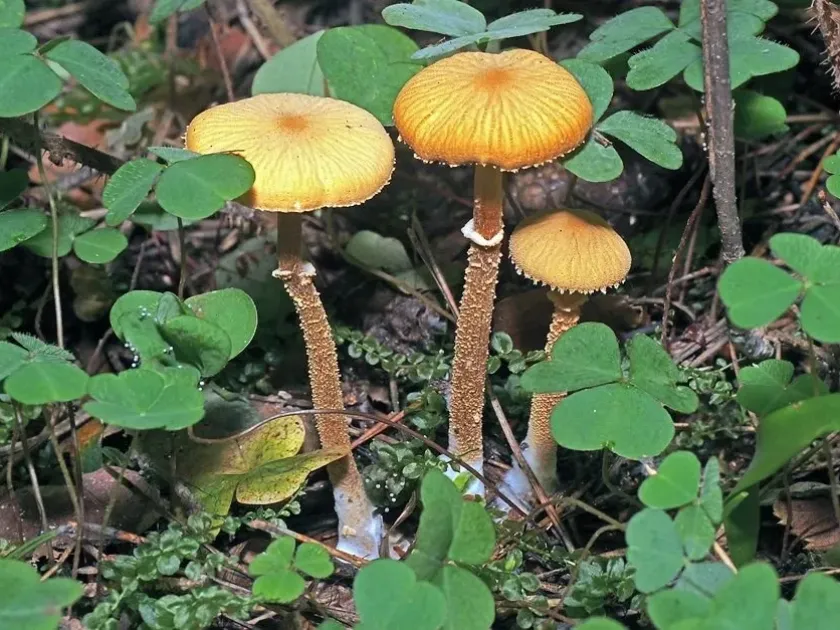
The morphology of the fungus features a granular or mealy cap surface, ranging from pale yellow to ochre, which is a distinctive characteristic for identification.
Because it is a decomposer, its presence in the soil should be considered a natural component of a healthy, organic-rich ecosystem rather than a threat.
Conditions for development
The growth and fruiting of Cystoderma amianthinum are highly dependent on environmental moisture. It thrives in humid, shaded environments with abundant organic content.
Temperature plays a significant role, with the fungus favoring cool to moderate conditions, typically appearing in late summer or autumn when moisture is high.
It predominantly develops in coniferous or mixed woodland habitats, finding suitable substrates in needle litter and decaying moss layers.
Dispersal is managed through the release of spores, which are carried by air currents to colonize new organic substrates that match their specific requirements.
If environmental conditions shift towards high aridity or sunlight exposure, the mycelium becomes dormant, and fruiting bodies cease to appear.
Why it matters
There is no economic harm associated with Cystoderma amianthinum in agricultural settings. It does not damage crops or interfere with plant development.
Since the fungus does not possess phytopathogenic capabilities, there is no risk of root rot, stem blight, or any other plant disease originating from this species.
Its role is strictly limited to the recycling of nutrients in the soil. It contributes to the soil structure by participating in the formation of humus.
Growers should not be concerned if they identify this fungus in their fields or gardens, as it is a benign inhabitant of the soil biome.
Unlike parasitic fungi, this species never targets the vital tissues of plants, ensuring the health of the surrounding flora is maintained.
Protection
As Cystoderma amianthinum is not a plant pathogen, no chemical or biological control measures are required for its management.
If the visual presence of fruiting bodies is undesirable in landscaping, mechanical removal is the most effective and eco-friendly method.
Maintaining proper soil aeration and preventing excessive moisture accumulation are sufficient cultural practices to deter its appearance.
The application of fungicides is strongly discouraged, as these substances would disturb the beneficial microbial balance of the soil without targeting any real pest.
- Improve soil drainage.
- Remove excessive organic debris if necessary.
- Ensure adequate ventilation in greenhouse conditions.
Discussion
No discussions yet — be the first.