
Cystoderma
Cystoderma
Description
Symptoms
Signs of their presence are limited to the appearance of small, distinct fruit bodies on the soil surface or decaying organic substrate.
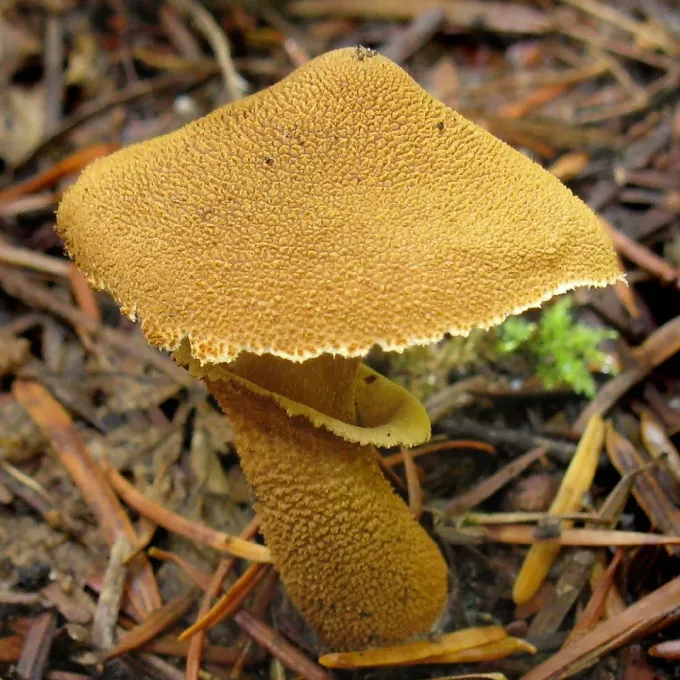
The caps exhibit small scales or granules, giving the mushroom a powdery or mealy appearance, which is distinct from smooth-capped species.
The hymenium consists of gills that are either attached to the stem or slightly decurrent, providing a diagnostic feature for identification.
Unlike common crop diseases, these fungi do not cause leaf spots, chlorosis, necrosis, or systemic plant decline.
Their growth is a bio-indicator of high soil moisture and the presence of significant decomposed organic layers.
Pathogen
Cystoderma is a genus of mushrooms in the family Agaricaceae. It is essential to clarify that in agricultural pathology, this genus is not considered a plant disease.
These are basidiomycetes that lead a strictly saprotrophic lifestyle. They do not infect living plant tissues, unlike true phytopathogens that cause root rot or wilting.
Biologically, these fungi play a vital role in forest ecosystems by decomposing organic matter such as leaf litter, needles, and wood debris.
Morphologically, mushrooms of this genus are characterized by a granular or scaly surface on the cap, which serves as a primary identification feature.
In agricultural settings, they are occasionally found near forest edges where organic content is high, but they remain strictly saprotrophic.
Conditions for development
Development is entirely dependent on substrate moisture. Prolonged rainy periods and cool temperatures provide the best conditions for growth.
They prefer acidic or neutral soils rich in humus, which is why they are commonly found in forests rather than intensive cropland.
In farming environments, they may inhabit windbreaks or areas with poor drainage where organic debris accumulates.
The temperature optimum for fruit body formation typically ranges between +10 and +18 degrees Celsius.
Shaded areas with minimal direct sunlight are preferred by the mycelium, contributing to their sporadic appearance in autumn months.
Why it matters
Cystoderma species pose no direct harm to crops. They are not pathogenic and do not interfere with plant physiology or crop yields.
There is no economic impact on agricultural production, as these fungi do not compete with crops for nutrients or sunlight.
The role of these mushrooms is largely beneficial to soil health as they participate in nutrient cycling and organic matter decomposition.
They do not require management or eradication, as they are not causative agents of any plant disease.
Concerns regarding these fungi are typically unfounded in a professional agricultural context, as they do not threaten crop vitality.
Protection
No specific control measures exist for this genus because it is not considered a plant pathogen requiring intervention.
Standard agronomic practices, such as clearing plant debris and maintaining proper drainage, effectively limit the habitat for all types of fungi.
The use of fungicides to combat Cystoderma is unnecessary, ineffective, and environmentally discouraged due to the non-pathogenic nature of the fungi.
Management should focus on crop health and general soil aeration, which naturally regulates the population of saprotrophic organisms.
Regular field maintenance and crop rotation are sufficient to manage the overall soil health without targeting saprotrophic mushroom species.
Discussion
No discussions yet — be the first.