
Curvularia leaf spot
Curvularia ovoidea
Description
Symptoms
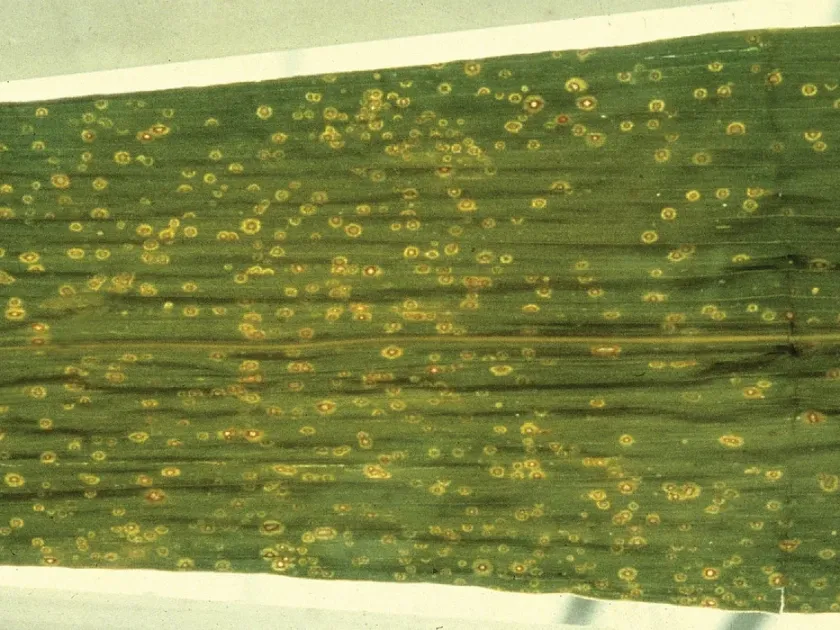
The most common symptoms include the appearance of small, circular to oval necrotic spots on the leaf blades. As the infection progresses, these spots often expand, taking on a characteristic dark brown or olive-black appearance.
In high humidity, the affected tissue is covered by a velvet-like, dark-colored mold, which is the physical manifestation of the fungus's sporulation process. This sign is a key diagnostic feature of the disease.
Lesions can also appear on stems, sheaths, and flower heads. On stems, the spots often elongate into dark streaks, which can weaken the plant's structural integrity and increase the risk of lodging.
When the reproductive parts of the plant, such as seeds or grain heads, are affected, the result is often the formation of discolored, shriveled, or poorly developed seeds. This damage directly reduces the yield and the quality of the harvested produce.
In severe cases, the lesions coalesce, leading to premature yellowing, withering, and death of the entire leaf. This loss of photosynthetic area severely hinders the plant's ability to fill grains or fruits effectively.
Pathogen
The causal agent of this plant disease is the fungus Curvularia ovoidea, a member of the dematiaceous hyphomycetes family. This pathogen is known for its ability to produce abundant conidia, which serve as the primary source of infection in agricultural fields.
The fungus is primarily a facultative parasite, capable of surviving for long periods on crop debris, in soil, and on seeds. Its mycelium and spores are highly resilient, allowing the pathogen to persist across different environmental conditions.
The pathogen utilizes a variety of host plants, ranging from cereals to broadleaf crops. Its biological cycle is heavily dependent on the availability of moisture and specific temperature ranges for the germination of spores and subsequent colonization of host tissues.
Infection is typically facilitated through natural openings such as stomata or wounds caused by insect damage, heavy rain, or mechanical operations. Once inside, the fungus secretes secondary metabolites that break down cell walls and facilitate nutrient uptake.
The rapid cycle of asexual reproduction allows the fungus to produce multiple generations of conidia during a single growing season, often leading to rapid spread if environmental conditions remain favorable.
Conditions for development
Curvularia ovoidea thrives in warm and humid environments. Optimal conditions for fungal growth and sporulation typically involve temperatures ranging between 22°C and 30°C coupled with high relative humidity.
Frequent rainfall, prolonged periods of leaf wetness, and high atmospheric moisture create a perfect microclimate for conidia to germinate and penetrate the host tissue. Such conditions often lead to severe disease outbreaks in fields.
Agricultural practices that promote high plant density often result in poor air circulation within the canopy. This traps humidity near the foliage, providing the pathogen with extended periods of leaf wetness necessary for infection.
Plant stress, whether caused by nutrient deficiencies, water logging, or competition from weeds, plays a significant role in disease susceptibility. Weakened plants are less capable of defending themselves against the encroachment of fungal hyphae.
The presence of infected debris in the field or surrounding areas acts as an inoculum reservoir. Proper field sanitation is crucial, as the pathogen can easily move from leftover stalks to the newly emerging crop.
Why it matters
The primary economic impact of Curvularia leaf spot is the significant reduction in crop yield. By destroying functional leaf tissue, the disease limits the energy production required for grain filling and biomass accumulation.
In addition to volume losses, the quality of the product is also compromised. The accumulation of potential mycotoxins in the infected grain can render the harvest unsuitable for feed or food processing, leading to significant market losses.
Weakened stems caused by the fungal infection increase the risk of plant lodging, which complicates harvesting processes and can result in additional mechanical losses during the collection of crops.
Seed-borne infection reduces the germination percentage and vigor of seeds in the following season, necessitating the use of high-quality, treated seed to prevent the early introduction of the pathogen.
For perennial crops, the disease can lead to chronic weakening of the plants, making them more vulnerable to subsequent winter stresses and reducing the long-term productivity of the stand.
Protection
Management of Curvularia leaf spot relies on an integrated approach, combining cultural, chemical, and biological strategies to maintain the pathogen population below the economic threshold.
Cultural methods form the backbone of prevention and are designed to break the disease cycle and limit the spread of inoculum between seasons.
Effective control measures include:
- Implementing crop rotation with non-host species to starve the pathogen.
- Using certified, fungicide-treated seeds to minimize primary infection sources.
- Deep plowing to bury infected crop residues and accelerate decomposition.
- Managing weed populations that could serve as alternative hosts for the fungus.
- Optimizing irrigation and planting density to improve canopy airflow.
Chemical control involving systemic fungicides, particularly those belonging to the triazole and strobilurin classes, is highly effective if applied at the early stages of disease development.
Consistent field scouting is essential for the timely detection of disease foci. Early intervention with localized fungicide sprays can often prevent the development of widespread epidemics across the entire field.
Discussion
No discussions yet — be the first.