
Rice curvularia leaf spot
Curvularia oryzae-sativae
Description
Symptoms
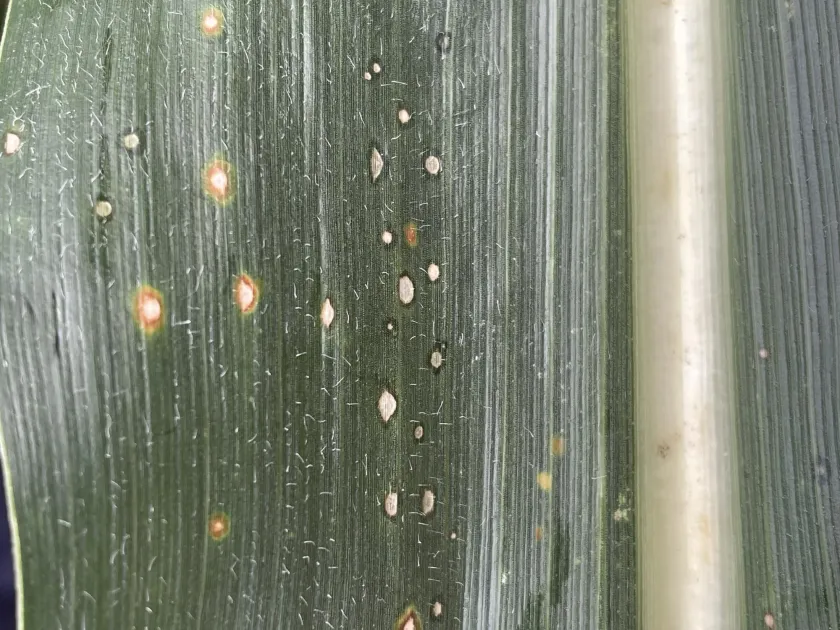
Symptoms typically manifest as small, irregular lesions on leaves, leaf sheaths, and panicles. These lesions often transition from yellowish to dark brown or black as the tissue dies and necrosis expands across the leaf surface.
Under high humidity conditions, a velvety, dark-colored mold develops on the lesion sites, which is the sporulating structure of the fungus. This visible growth is a diagnostic indicator that confirms active infection in the field.
The infection of panicles is particularly damaging, as the fungus affects grain development directly. Affected grains may become discolored, shriveled, and light in weight, significantly reducing the overall yield quality and quantity.
Leaf blight symptoms include premature senescence and death of the leaf blades, which disrupts photosynthesis. In severe cases, the entire canopy may show symptoms, leading to reduced vigor and stunted growth of the rice plants.
Distinguishing Curvularia leaf spot from other fungal diseases often requires laboratory assessment, as field symptoms can be similar to other spot-causing pathogens. Early detection is critical for effective management of the disease.
Pathogen
The causal agent of this disease is the fungus Curvularia oryzae-sativae, a pathogen belonging to the order Hyphomycetes. This fungus is highly adaptable and capable of persisting in diverse agricultural environments where rice is cultivated.
The fungus invades host tissues, disrupting cellular processes and causing localized necrosis. Dispersal primarily occurs via conidia, which are efficiently transported by wind currents and water splashes throughout the rice field.
Primary inoculum sources include infected seeds and rice stubble left in the soil after harvest. The mycelium can remain viable in crop debris for extended periods, serving as a reservoir for infection in the following growing season.
As a facultative parasite, the fungus exploits stressed or senescing plant tissues to initiate infection. Its biological cycle is optimized for rapid colonization under suitable environmental conditions, making it a persistent threat.
Under microscopic analysis, the conidia appear as dark brown, multicellular structures. These specialized spores are well-adapted to survive fluctuations in moisture and temperature, facilitating the spread of the pathogen during the rice reproductive stage.
Conditions for development
Warm and humid weather conditions are the primary drivers of disease development. High relative humidity and frequent rainfall provide the essential moisture needed for fungal spores to germinate and colonize host tissues.
The optimal temperature range for the pathogen's development lies between 25 and 30 degrees Celsius. In these temperatures, the fungus can rapidly complete its life cycle, potentially leading to outbreaks in susceptible rice varieties.
Poorly ventilated fields, often caused by excessively dense planting, create microclimates that trap moisture. This high-humidity environment significantly increases the likelihood of fungal establishment and subsequent spread.
Agronomic mismanagement, such as excessive application of nitrogenous fertilizers, can promote lush, succulent growth. Such plants are more susceptible to infection by fungi due to the increased abundance of easily degradable nutrients in their tissues.
Mechanical injuries resulting from pest feeding or improper field maintenance act as entry points for the pathogen. Once the physical barrier of the plant cuticle is breached, the fungus can easily enter and infect the underlying cells.
Why it matters
The primary harm caused by Curvularia leaf spot is a significant reduction in rice yield. The damage to panicles leads to increased sterility and grain filling issues, which translate into substantial weight losses at harvest.
Grain quality is severely compromised, as infected seeds are often unattractive, discolored, and may carry fungal toxins. This leads to high rates of rejection during processing and a lower market value for the harvested product.
Early-stage infection can result in the mortality of seedlings, leading to poor crop establishment. This necessitates field replanting, which increases labor and input costs while delaying the production schedule.
The weakened state of the plant due to persistent infection makes it more vulnerable to secondary opportunistic pathogens. This complex disease scenario often leads to increased chemical management costs for the producer.
The accumulation of pathogen inoculum in the field complicates future cropping cycles, necessitating longer rotations. Overall, the disease poses a direct threat to the economic sustainability of rice farming operations.
Protection
An integrated approach to managing Curvularia leaf spot is essential for effective control. The process starts with the use of high-quality, certified seeds that are treated with broad-spectrum fungicides to eliminate surface-borne inoculum.
Implementing a rigorous crop rotation schedule is vital for breaking the disease cycle. Rotating rice with non-host crops reduces the population of the fungus in the soil, preventing long-term survival of the pathogen.
Field sanitation is a critical practice; destroying rice stubble and debris after the harvest significantly lowers the amount of fungal spores available to infect the next season's crop. Weed control is also important to remove alternative hosts.
In-season management involves the judicious use of systemic fungicides if infection thresholds are met. Regular scouting during critical growth phases, such as flowering and grain fill, allows for timely intervention.
- Selection and cultivation of resistant or tolerant rice varieties.
- Balanced fertilization to prevent overly succulent plant growth.
- Integrated pest management to prevent tissue damage by insects.
- Management of planting density to optimize field ventilation.
- Regular field monitoring to detect early signs of leaf spot infection.
Discussion
No discussions yet — be the first.