
Curvularia leaf spot
Curvularia malina
Description
Symptoms
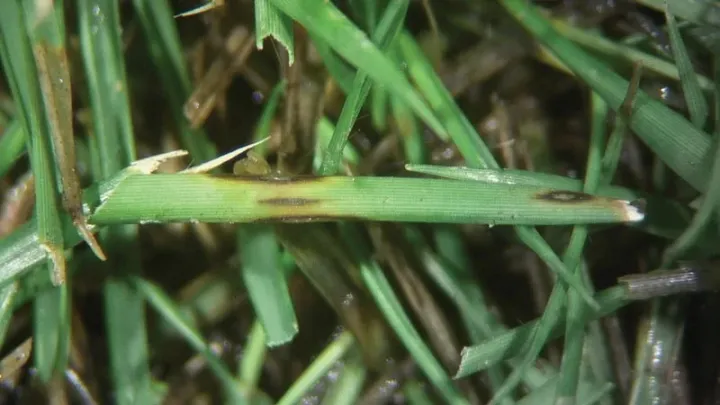
The primary symptom of Curvularia infection is the development of necrotic spots on leaves, which vary in shape and size depending on the host plant. These spots typically appear brown to dark brown.
In many cases, the lesions are surrounded by a chlorotic halo or a yellow margin, indicating the local impact of fungal phytotoxins on the host’s photosynthetic cells.
Under humid conditions, the centers of the spots often become covered with a characteristic olive-black or dark grey velvety growth, which consists of the fungus's conidiophores and conidia.
Infections can also occur on stems and stalks, leading to the formation of dark, elongated streaks or lesions, which may eventually cause the plant to weaken or lodge.
- Dark, elliptical to irregular spots on leaves.
- Darkening of the grain or ear tips in cereals.
- Seedling blight leading to poor stand establishment.
- Leaf necrosis and premature senescence.
- Black rot or lesions on the basal portion of the stem.
Pathogen
Curvularia leaf spot is caused by various species of the fungal genus Curvularia, including C. lunata, C. geniculata, and C. malina. These fungi are globally distributed, occurring in soil and on decaying organic matter.
The fungus is characterized by the production of dark, multicellular, multi-septate conidia. The spores often possess a distinctively curved or bent shape, which is a key diagnostic feature of this pathogen.
The pathogen survives between crop cycles as mycelium or spores (conidia) in soil, on infected seeds, or on crop residues. It can act as a saprophyte, utilizing plant debris as a nutritional base.
Infection is initiated when conidia land on susceptible plant tissues and germinate under favorable moisture conditions. The fungus utilizes mechanical pressure and enzymatic action to penetrate the plant cuticle.
The disease cycle can be repeated multiple times during a single growing season, as the pathogen produces large numbers of conidia on the surface of existing necrotic lesions, facilitating rapid spread.
Conditions for development
Curvularia species thrive under conditions of high relative humidity (above 80%) and warm temperatures, typically ranging from 25°C to 30°C, which are optimal for spore germination.
Rainy weather, high humidity, and prolonged morning dew periods are critical for the spread of conidia via rain splashes or wind-borne movement within the canopy.
Plants that are stressed due to nutrient deficiencies, poor soil aeration, or damage from insect pests are significantly more susceptible to successful colonization by the fungus.
High plant density increases the humidity within the crop canopy, creating a microclimate that is highly conducive to the rapid spread of the disease between plants.
Over-application of nitrogenous fertilizers, which promotes lush and succulent vegetative growth, often makes plant tissues more vulnerable to initial pathogen penetration.
Why it matters
The disease causes substantial yield losses by reducing the photosynthetic area of the leaves, which directly impairs the plant's ability to fill grain or produce biomass.
Curvularia is a significant concern for seed quality, as it can cause seed discoloration, reduced germination rates, and severe blight, resulting in poor crop stands.
Infected crops often exhibit premature maturation and senescence, which limits the period of grain filling and results in lighter, shriveled grains of lower market value.
Some species of Curvularia are capable of producing mycotoxins, which can pose potential safety concerns if the infected produce is utilized for animal feed or human consumption.
The economic impact is further magnified by the costs of repeated fungicide applications and the potential need for crop replacement when severe early-season infection occurs.
Protection
Integrated management begins with the use of certified, disease-free seed and the application of appropriate systemic fungicide seed treatments to prevent early-stage infection.
Crop rotation remains a fundamental practice, as it prevents the buildup of pathogen inoculum in the soil by alternating host crops with non-host species.
Implementing cultural practices such as deep tillage to bury crop debris is essential, as it accelerates the decomposition of infected plant material and reduces the primary inoculum source.
During the growing season, if environmental conditions favor disease development, foliar applications of fungicides, such as triazoles or strobilurins, are highly effective in controlling the spread.
Breeding and selecting varieties with genetic resistance or high tolerance to Curvularia leaf spots is the most sustainable and cost-effective approach for long-term disease management.
Discussion
No discussions yet — be the first.