
Curvularia leaf spot
Curvularia geniculata
Description
Symptoms
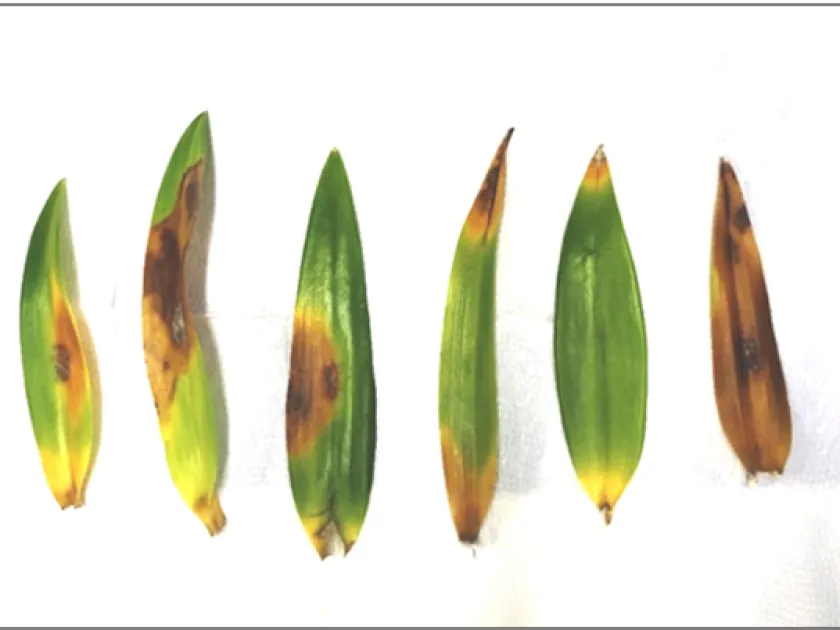
Initial symptoms of Curvularia leaf spot manifest as chlorotic spots on leaves, which gradually turn brown or dark gray. As the infection progresses, these spots enlarge, forming characteristic necrotic zones with a distinct border.
When stems are affected, softening and subsequent lodging may occur, especially under high humidity conditions. A velvety olive-black coating, consisting of fungal conidia, is often visible on the surface of the infected tissues.
The root system of plants affected by Curvularia geniculata can undergo decay, leading to growth retardation and suppression of general crop development. Severe infection may result in the premature drying of the entire plant.
Seeds contaminated with this fungus often show dark discoloration or exhibit reduced germination rates. In field conditions, infection foci frequently appear as irregular patches affecting groups of plants.
An important diagnostic feature is the asymmetry of the spots and their rapid expansion across the leaf blade. Microscopic analysis of spores is required to differentiate this disease from other types of leaf spots.
Pathogen
The causal agent of this disease is the imperfect fungus Curvularia geniculata (teleomorph stage Cochliobolus geniculatus), belonging to the class of deuteromycetes. The fungal mycelium develops within plant tissues, actively producing conidiophores with characteristic dark-pigmented, multicellular conidia.
The fungus is a facultative parasite capable of surviving for long periods in soil, on plant debris, and in seeds. The pathogen has a broad host range, infecting both cereals and broad-leaved crops, which makes it a significant threat in various crop rotation systems.
Conidia are primarily dispersed by wind, rain splashes, or through insect vectors. A key aspect of the fungal life cycle is its ability to infect weakened plants, where it rapidly colonizes damaged tissues.
The genetic variability of the pathogen allows it to adapt to various climatic zones. High enzymatic activity of the fungus facilitates the rapid degradation of host cell walls, which assists the infection process inside the plant.
Disease development is often linked to the compromised immune status of the host plant due to abiotic stress factors. Research indicates that the fungus can secrete specific toxins that suppress the plant's metabolic processes.
Conditions for development
Optimal conditions for infection include high relative humidity, often exceeding 85-90%. The fungus is most aggressive at temperatures ranging from +25°C to +30°C.
Frequent rainfall during the vegetative period creates ideal conditions for conidia germination and mass sporulation. Poor agronomic practices that lead to water stagnation in fields significantly accelerate the spread of the disease.
The presence of free moisture on leaves is a necessary factor for the infection to penetrate plant tissues successfully. Damage caused by hail, pests, or mechanical equipment serves as entry points for the pathogen.
Deficiencies in soil nutrients, especially imbalances in potassium and nitrogen, make crops more susceptible to the fungus. Dense planting, which hinders aeration, helps maintain a microclimate favorable to fungal growth.
Periods of drought followed by heavy rainfall induce stress in plants, making them easier for the pathogen to colonize and causing a rapid increase in infection levels.
Why it matters
The economic impact of Curvularia leaf spot arises from a sharp decrease in the photosynthesizing leaf area. This leads to metabolic disruptions and, consequently, significant yield losses and reduced quality of harvested produce.
Infection of the grain head or panicle results in poorly developed kernels, reducing both grain weight and seed viability. Contaminated seeds act as an inoculum source for future generations, complicating the production of healthy seed material.
Severe disease outbreaks during early growth phases lead to stand thinning and may necessitate field replanting. Total yield losses in years favorable to the pathogen can reach 20-30% of the potential harvest.
Toxins produced by the fungus can accumulate in the produce, making it unsuitable for feed use or lowering its grade during storage and commercialization.
Economic damage includes not only the loss of crop yield but also the increased costs associated with repeated fungicide applications throughout the growing season.
Protection
The primary method of control is the implementation of crop rotation, excluding susceptible crops from the same field for at least 3-4 years. This interrupts the fungal life cycle by depriving it of a suitable substrate.
Using healthy, treated seed material is a critical preventative step. Systemic fungicide seed treatments effectively suppress primary infection carried on seeds.
Agronomic practices, such as the timely incorporation of plant debris into the soil, reduce the inoculum density. A balanced nutrient supply, particularly adequate potassium fertilization, enhances the plant's natural resistance to the pathogen.
Upon detecting the first symptoms in the field, it is advisable to use fungicides from the triazole or strobilurin groups. Applications should be performed according to regulatory guidelines once the disease threshold is reached.
- Selection of cultivars resistant to fungal diseases;
- Adherence to optimal planting dates to avoid high-risk infection periods;
- Regular monitoring of crop health during periods of high humidity;
- Control of weeds that may serve as alternative hosts for the pathogen.
Discussion
No discussions yet — be the first.