
Curvularia leaf spot
Curvularia crepinii
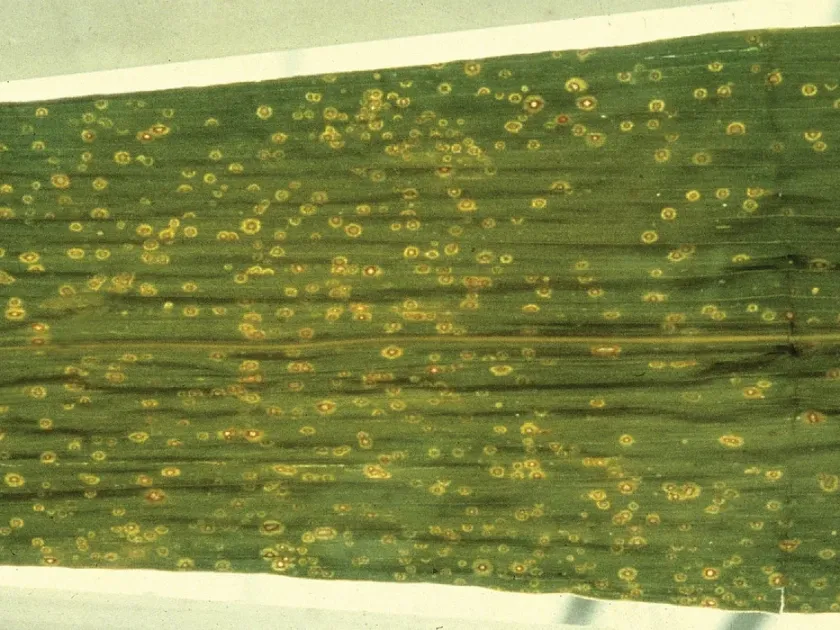
Description
Symptoms
The first signs of infection appear as small light-brown or yellowish spots of irregular shape on leaves and stems. Over time, these spots enlarge, acquiring a dark-brown color with a distinct border.
A typical sign is the appearance of a dark, almost black coating on the necrotic zones. Under high humidity, this coating becomes particularly visible, indicating active sporulation of the pathogen.
In cases of severe infection, premature leaf drying and curling of the leaf blade are observed. The disease can spread to leaf sheaths and the head, causing partial or total loss of fertility in reproductive organs.
When seeds or seedlings are infected, rotting occurs, characterized by a dark coating on the surface and subsequent death of the plant before emergence or in the early stages, leading to crop thinning.
- Chlorotic zones appearing at initial stages
- Necrotic lesions with a dark border
- Velvety coating on affected plant parts
- Deformation and premature drying of foliage
- Rotting of the crown area in young seedlings
Pathogen
The disease is caused by the microscopic imperfect fungus Curvularia crepinii, which belongs to the class of hyphomycetes. This pathogen is capable of surviving in the soil, on plant debris, and can be seed-borne, ensuring its wide dissemination in agricultural fields.
The fungal life cycle involves the formation of dark multicellular conidia, which are dispersed by wind, rain splashes, or during field operations. The pathogen shows high adaptability to various climatic conditions, primarily parasitizing weakened plants.
The fungus penetrates host tissues through stomata or micro-injuries in the epidermis. During its metabolic activity, it releases toxins that suppress plant metabolism and promote cell wall degradation, leading to necrotic lesions.
Mycelial development of Curvularia crepinii occurs within the intercellular spaces. As spores mature, a characteristic dark olive or almost black velvety coating, consisting of conidiophores and conidia, forms on the surface of the affected areas.
Systematically, this pathogen is often considered in complex with other Curvularia species that cause leaf spotting. Its resistance to extreme temperatures allows the pathogen to survive during unfavorable periods, maintaining its infectious potential until the next season.
Conditions for development
The development of Curvularia leaf spot is favored by high air temperatures combined with excessive atmospheric humidity. The optimal range for active fungal growth is between 25 and 30 degrees Celsius.
Frequent rainfall, fog, and dew create ideal conditions for spore germination on leaf surfaces. Prolonged leaf wetness is a critical factor for initiating the infection process.
Poor agricultural practices, particularly high-density planting, contribute to impaired air circulation and increased micro-climatic humidity within the crop canopy. This significantly accelerates the spread of infection between plants.
Weakened plant immunity due to nutrient deficiencies or pest damage increases the susceptibility of crops to the pathogen. Plants under stress are significantly more prone to severe infection.
The presence of large amounts of crop residue on the soil surface after harvest serves as the primary reservoir for the infection, providing a source for the next season.
Why it matters
The primary damage from Curvularia leaf spot is the reduction of the leaf assimilating surface, which directly leads to decreased photosynthesis intensity and biomass accumulation.
Infection of reproductive organs leads to shriveled grain, reduced grain weight, and poor seed quality. In severe cases, the grain might be completely absent or die prematurely.
Infected plants become less competitive and more vulnerable to other pathogens and environmental stress factors, which often results in the premature death of the crop.
Economic losses are expressed not only in reduced total harvest yield but also in quality degradation. Contaminated grain may contain mycotoxins, rendering it unsuitable for human or animal consumption.
The disease can lead to stand thinning at early development stages, requiring replanting and resulting in additional material costs for seeds and field operations.
Protection
The foundation of protection is the use of healthy, certified seed material. Mandatory treatment of seeds with broad-spectrum fungicides before planting is a critical step.
Agronomic measures include crop rotation, which breaks the pathogen's development cycle. It is important to avoid planting the same crop in the same field for at least 3–4 years.
Effective incorporation of crop residues and deep plowing facilitate the rapid decomposition of infected material in the soil. Timely weed management reduces the infection reservoir.
During the growing season, under conditions favorable for the disease, spraying the crops with fungicides is necessary. The choice of the chemical depends on the crop type and the intensity of symptom spread.
Regular monitoring of crop status allows for early detection of the disease, preventing epiphytotic development. Balanced fertilization enhances the natural resistance of the plants.
Discussion
No discussions yet — be the first.