
Curvularia blight of cacti
Curvularia cactivora
Description
Symptoms
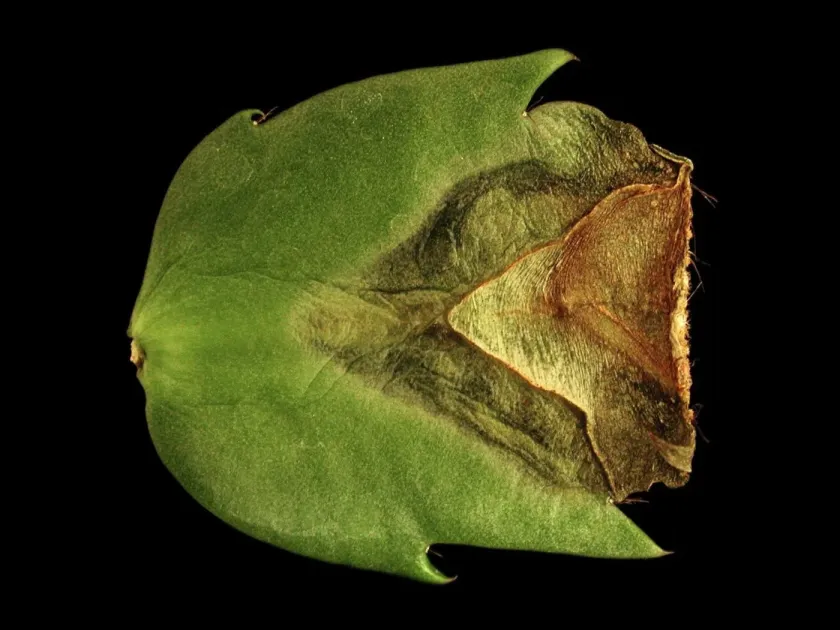
The first visible signs of infection are small, brownish or reddish-tan spots appearing on the surface of the stem. As the disease progresses, these spots become depressed and enlarge significantly.
Tissues in the affected areas eventually soften and become watery. A characteristic yellowing often appears around the perimeter of the lesions, indicating cellular death caused by fungal toxins.
Under high humidity conditions, a velvety olive-green or black coating may develop on the surface of the lesions. This is the fungus's spore mass, which is highly contagious and ready to spread to adjacent plants.
When the base of the stem or the root neck is infected, the cactus loses its turgidity and begins to lean or fall over. This indicates a systemic failure of the plant's vascular system due to fungal damage.
Internally, infected tissues appear dark and often exhibit a foul odor, which is usually a result of secondary bacterial colonization thriving on the decaying organic matter.
Pathogen
The causative agent of this disease is the microscopic fungus Curvularia cactivora, a member of the ascomycete fungi. This pathogen is a highly specialized parasite that exclusively targets various species of cacti.
The fungus spreads primarily through conidia, which are dispersed by wind currents, water droplets during watering, or contaminated gardening tools. The pathogen can survive for extended periods in infected soil or decaying plant debris.
Fungal spores penetrate plant tissues through micro-abrasions, spine punctures, or injuries caused by pests. Infection is especially rapid under conditions of high ambient humidity.
The biology of the fungus involves the rapid germination of spores on the cactus epidermis. Once inside, the mycelium secretes specific enzymes that break down cell walls, leading to tissue necrosis and plant decay.
The growth of the mycelium inside the succulent stem is aggressive. Without proper intervention, the fungal colony can quickly consume the internal structure of the cactus, making it nearly impossible to save.
Conditions for development
The primary factor facilitating the development of Curvularia blight is high humidity (exceeding 75%). Excessive watering and standing water in pots create the perfect environment for fungal spores to thrive.
Optimal temperatures for Curvularia cactivora range from +22 to +28 degrees Celsius. Warm and stagnant conditions in greenhouses are particularly conducive to widespread outbreaks of the disease.
Poor ventilation in areas where cacti are housed causes moisture to linger around the plant stems. Without proper air circulation, the plant surface remains damp for too long, significantly increasing the risk of infection.
Crowded spacing of plants prevents adequate airflow, allowing fungal spores to travel easily from one plant to another through airborne movement or accidental contact.
Neglecting basic horticultural hygiene, such as using unsterilized growing media or failing to disinfect tools after each use, provides numerous entry points for the pathogen to enter the collection.
Why it matters
Curvularia blight is extremely dangerous because it often goes undetected until the internal tissue has been severely damaged. By the time symptoms are visible, the structural integrity of the cactus may already be compromised.
The disease frequently leads to the total loss of the plant. If the fungal colonization is extensive, chemical treatment is usually ineffective, and the plant must be discarded to prevent the spread to others.
The high contagiousness of the fungus makes it a significant threat to entire collections. A single infected cactus can jeopardize dozens of healthy plants within a very short timeframe.
Economic damage is substantial, as rare or slow-growing species are often the first to be lost, and the loss of entire batches of nursery stock can be devastating for growers.
Furthermore, plants that survive the initial infection are often permanently weakened, showing stunted growth and becoming highly susceptible to recurring bouts of the disease.
Protection
Strict quarantine measures for all new additions to a collection are essential. Isolating new plants for at least a month allows for the monitoring and early detection of potential latent infections.
Treatment involves the surgical removal of infected tissues down to healthy, green areas. Disinfecting the resulting wounds with powdered charcoal or a fungicide paste is critical to prevent reinfection.
Systemic fungicides are recommended for management. Regular preventive sprays can create a protective barrier that inhibits the germination of fungal spores on the plant surface.
Improving watering practices is crucial: switch to bottom-up watering to keep the stem dry and ensure the growing medium has sufficient time to dry out between watering sessions.
Key defense recommendations:
- ensure constant circulation of fresh air;
- use well-draining, lightweight potting media;
- sterilize tools with alcohol or appropriate disinfectants;
- maintain appropriate temperatures;
- promptly remove and incinerate all infected plant material.
Discussion
No discussions yet — be the first.