
Mahonia rust
Cumminsiella mirabilissima
Description
Symptoms
The initial signs of Mahonia rust appear as small, yellow, circular spots on the upper leaf surface. Over time, these spots increase in number and begin to show signs of darkening and necrosis.
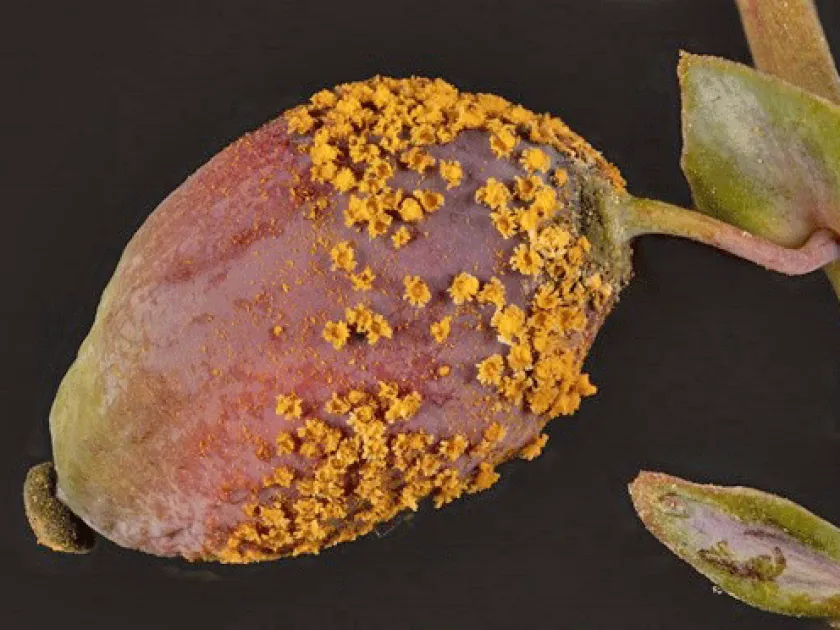
On the underside of the infected leaves, characteristic pustules emerge. These are rusty-brown or reddish-orange cushions containing masses of spores, which are visible to the naked eye upon closer inspection.
As the infection progresses, the spots coalesce, causing large portions of the foliage to discolor. Heavily infected leaves become brittle, curl significantly, and often drop prematurely from the stems.
Chronic infections can lead to the development of necrotic lesions on the stems themselves, which hinders the plant's ability to transport nutrients and water efficiently. This leads to an overall thinning of the shrub's canopy.
- Yellow spots appearing on the leaves.
- Rusty-brown pustules on the leaf undersides.
- Premature yellowing and leaf drop.
- Stem lesions and cankers.
- Reduced vigor and stunted overall growth.
Pathogen
The disease is caused by the specialized basidiomycete fungus Cumminsiella mirabilissima. This fungal pathogen is a host-specific parasite that exclusively targets plants belonging to the Mahonia genus, commonly affecting Oregon grape.
This rust fungus completes its full life cycle on a single host, making it highly effective at maintaining infection within a localized population. The pathogen can survive throughout the year by remaining in the plant's tissues or on infected plant debris.
Infection begins when basidiospores germinate on the surface of the leaves, sending hyphae into the epidermal layer. The fungus establishes a mycelial network that systematically extracts nutrients from the plant host, leading to cellular degradation.
The fungus produces urediniospores, which are responsible for the rapid spread of the disease during the growing season. These spores are easily disseminated by wind or splashing water, facilitating the rapid colonization of adjacent healthy mahonia shrubs.
Teliospores, formed later in the cycle, allow the pathogen to endure adverse conditions and survive the winter. This reproductive strategy ensures that the fungus remains present in the garden, ready to re-emerge when conditions become favorable.
Conditions for development
Mahonia rust thrives in environments with high humidity and moderate temperatures. Prolonged periods of damp weather provide the essential conditions for the successful germination of fungal spores on leaf surfaces.
Dense plantings that lack adequate airflow are particularly prone to infection. Poor ventilation allows moisture to persist on the foliage for longer periods, creating a highly conducive environment for fungal development.
Plants under stress, whether from nutrient deficiencies or poor soil conditions, are significantly more susceptible to Cumminsiella mirabilissima. A weakened immune system makes the plant unable to suppress the initial stages of fungal invasion.
Frequent rain showers or improper overhead irrigation can wash spores from infected leaves onto healthy ones, accelerating the epidemic. Water droplets act as a carrier, facilitating the transmission of the disease across the shrub.
Fallen leaves left under the shrub throughout the winter serve as a primary reservoir for the pathogen. These decaying leaves harbor the spores, which will infect new growth when the weather warms up in the spring.
Why it matters
The primary impact of the rust is the substantial reduction in photosynthetic capacity. By damaging the leaf tissue, the fungus starves the plant of necessary energy, resulting in significantly stunted growth.
Early leaf drop forces the plant to enter the winter season in a weakened state. Without the ability to produce adequate carbohydrate reserves, the shrub becomes highly vulnerable to winter injury and cold damage.
The aesthetic value of the plant is completely compromised, making it unsuitable for landscape usage. As a decorative shrub, the loss of its vibrant, glossy green foliage renders it undesirable for garden design.
Infestation in nurseries can lead to significant economic losses. Infected stock cannot be sold, and the disease can easily spread to other areas, requiring expensive and time-consuming quarantine measures.
Long-term infestation weakens the overall vitality of the Mahonia, making it prone to secondary infections from other pathogens or pest infestations. This cumulative stress often leads to the eventual death of individual branches or the entire plant.
Protection
Sanitation is the most effective management strategy. Gardeners must meticulously collect and destroy all fallen leaves during the autumn to remove the overwintering reservoir of fungal spores.
Improving the cultural environment is crucial. Proper spacing during planting and regular thinning of branches will increase air circulation, keeping the foliage dry and unfavorable for fungal growth.
Applying systemic fungicides at the first sign of symptoms can effectively suppress the spread. It is recommended to use products approved for ornamental rust control and to rotate active ingredients to prevent resistance development.
Providing balanced fertilization, particularly with adequate phosphorus and potassium, helps strengthen the plant's natural defenses. A well-nourished shrub is better equipped to resist infection and recover from initial damage.
Always water at the base of the plant rather than over the leaves. Avoiding overhead irrigation prevents the moisture-heavy environment that the rust fungus requires to successfully complete its life cycle.
Discussion
No discussions yet — be the first.